

Moving water is the single most reliable trigger for saltwater feeding activity. A moving tide — whether incoming or outgoing — pushes bait, oxygenates the water column, and positions predators exactly where you can reach them. The role of tides in saltwater fishing comes down to one rule: fish the run, not the slack.
Here’s your immediate action plan:
- Target the mid-run. Current builds strongest in the middle third of each tidal phase. That’s your prime window.
- Focus on current breaks. Eddies behind pilings, the lee side of points, and channel mouths are where predators stage.
- Arrive early. Check your tide chart and be on the water 30–60 minutes before the mid-run begins. Outdoor Life confirms that timing arrival before the run and fishing the initial flow consistently produces the best action.
Key Takeaways
Moving tides create the most reliable saltwater feeding windows because current concentrates bait, oxygenates the water, and positions predators at predictable ambush points.
| Point | Details |
|---|---|
| Fish the moving tide | Both flood and ebb produce fish; slack water is the least productive phase in most inshore settings. |
| Arrive before the mid-run | Be on the water 30–60 minutes before peak current to catch the most aggressive feeding window. |
| Match gear to current strength | Use lighter presentations on incoming flats; switch to heavier rigs and bottom setups in strong ebb funnels. |
| Plan with NOAA tide data | Check tide time, tidal range, and moon phase together; spring tides near new and full moons produce the strongest bites. |
| Build local pattern knowledge | Log tide phase, range, and catch data from every trip to develop a reliable personal pattern for your home water. |
Table of Contents
- How do tides actually work for saltwater anglers?
- Why tidal movement triggers fish to feed
- Which tide phase produces the best fishing at each type of spot?
- Where to position and what to throw during each tide phase
- How to read tide charts and plan your trip
- Common angler rules about tides: when to trust them
- Safety, local variation, and conservation on tidal water
- An angler’s honest take on reading tides
- Gear up with Highclasstackleco for your next tidal trip
- Sources
How do tides actually work for saltwater anglers?
Tides are the periodic rise and fall of sea level driven by the gravitational pull of the moon and sun. For anglers, the practical vocabulary breaks down like this:
- Incoming tide (flood): Water rising toward high tide; current flows landward.
- Outgoing tide (ebb): Water falling toward low tide; current flows seaward.
- High tide: Peak water level; current slows and stalls.
- Low tide: Minimum water level; current again slows and stalls.
- Slack water: The brief, low-energy pause at the turn between flood and ebb (or ebb and flood). Current is near zero.
- Tidal range: The vertical difference between high and low tide at a given location.
Think of the tidal cycle in four phases: incoming (building current), peak/high slack (current stalls), outgoing (building current in reverse), and low slack (current stalls again). The two “building” phases are where the bite lives.
Spring vs. neap tides are where lunar phases enter the picture. Spring tides occur during full and new moons, producing the strongest tidal ranges and fastest currents — and typically the most aggressive predator feeding windows. Neap tides, which happen during quarter moons, bring weaker water movement and less predictable bite windows. If you can only pick one week a month to fish, plan around the new or full moon.
Why tidal movement triggers fish to feed
Current does three things that matter to every predator in the water: it moves bait, it delivers oxygen, and it creates ambush geometry.
When the flood tide pushes clean ocean water onto shallow flats, it carries dissolved oxygen and cooler temperatures into areas that can stagnate at low water. That influx draws marine species shoreward and activates feeding. Forage fish, shrimp, and crabs get swept along with the flow, and predators don’t have to chase them — they just hold in the right spot and let the current do the work.
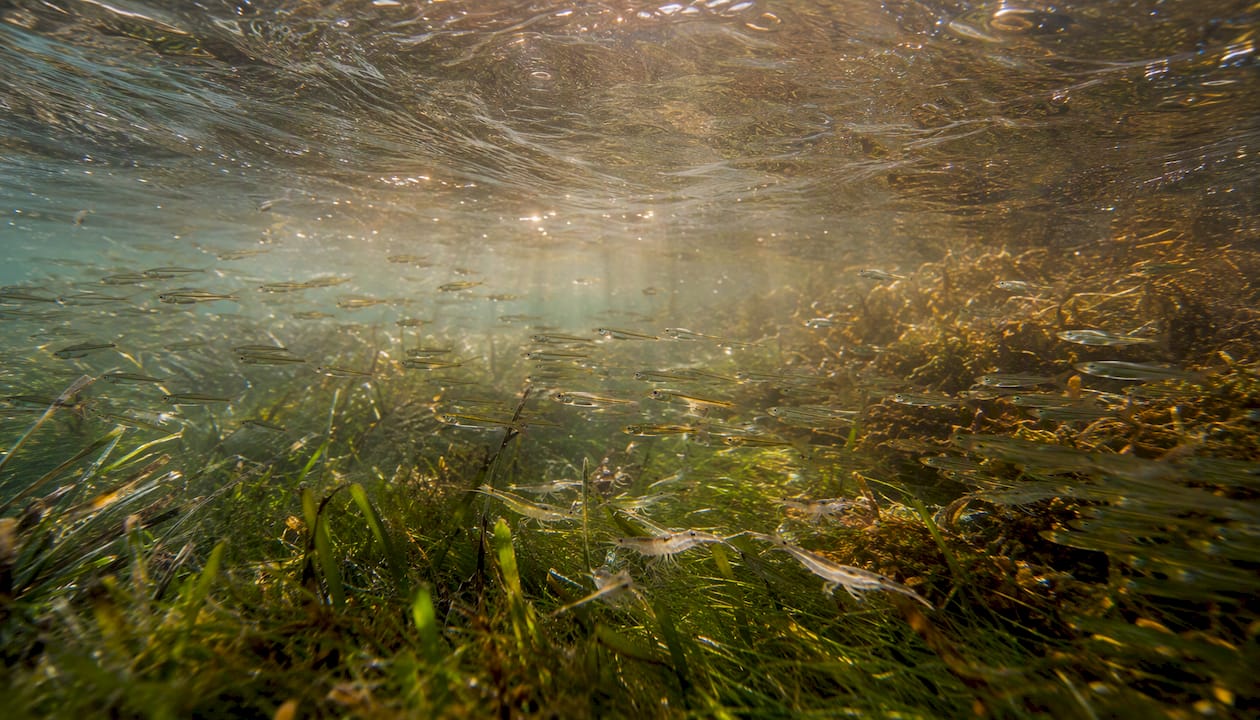
Tidal movement reshapes the habitat every six hours. Flood brings oxygen-rich ocean water to the flats; ebb funnels bait into drains, passes, and channel mouths. Both phases create exploitable opportunities — they just require different spots and different presentations.
The ambush geometry piece is what separates anglers who understand current from those who don’t. Predators conserve energy by positioning on the down-current side of structure: behind bridge pilings, on the back edge of a reef, in the slack water immediately downstream of a point. They face into the current and let prey come to them. Identify those spots before you cast.
Pro Tip: Look for the seam where fast water meets slow water — the visible “crease” on the surface behind a piling or rock. That eddy is a predator’s dining room. Cast just up-current of it and let your presentation swing through.
Which tide phase produces the best fishing at each type of spot?
The honest answer is that both flood and ebb produce fish — in different places. Knowing which phase to match to which spot is the real skill.
| Tide Phase | Best Target Areas | Why It Works |
|---|---|---|
| Incoming (flood) | Shallow flats, grass beds, mangrove edges | Rising water pushes bait onto new ground; predators follow the edge |
| High slack | Staging areas near drop-offs, sight-fishing on peak-high flats | Brief window for visual hunting before current reverses |
| Outgoing (ebb) | Creek mouths, passes, channel funnels, jetty ends | Bait concentrates as water drains; predators stack at the exit points |
| Low slack | Deep holes, bottom structure | Least productive overall; useful for bottom species or gear prep |
Incoming tide shines on shallow flats and near estuary edges. Cleaner, cooler ocean water floods in, bait gets pushed ahead of it, and species like redfish, flounder, and striped bass cruise the advancing edge. Sight-fishing is often at its best during the last two hours of the flood.
Outgoing tide is the power phase for channel and pass fishing. As water drains back through narrow exits, bait gets funneled and compressed. Predators stack at these pinch points and feed aggressively. The mid-run period of the transitional phases consistently outperforms static high or low water — and the early ebb at a pass or creek mouth is one of the most reliable setups in inshore fishing.
Offshore and nearshore reefs are less tide-dependent than inshore flats, but tidal current still matters at structure. Reefs, wrecks, and nearshore ledges fish better when current is moving — it positions baitfish against the structure and triggers the same ambush behavior. Near inlets, tidal direction can be the difference between a dead reef and a screaming bite.
Where to position and what to throw during each tide phase
Knowing the phase is half the battle. Executing the right presentation in the right spot closes the deal.
Incoming tide tactics
Fish the advancing water edge on flats. Cast up-current and work your presentation back with the flow. Lighter rigs shine here: weedless soft plastics, shallow-running jerkbaits, and live shrimp under a popping cork all work well when current is moderate and water is clear. Slow your retrieve — let the current do most of the movement. For PNW anglers fishing tidal salmon bays, the flood-tide approach follows the same logic: work the edges as water rises.
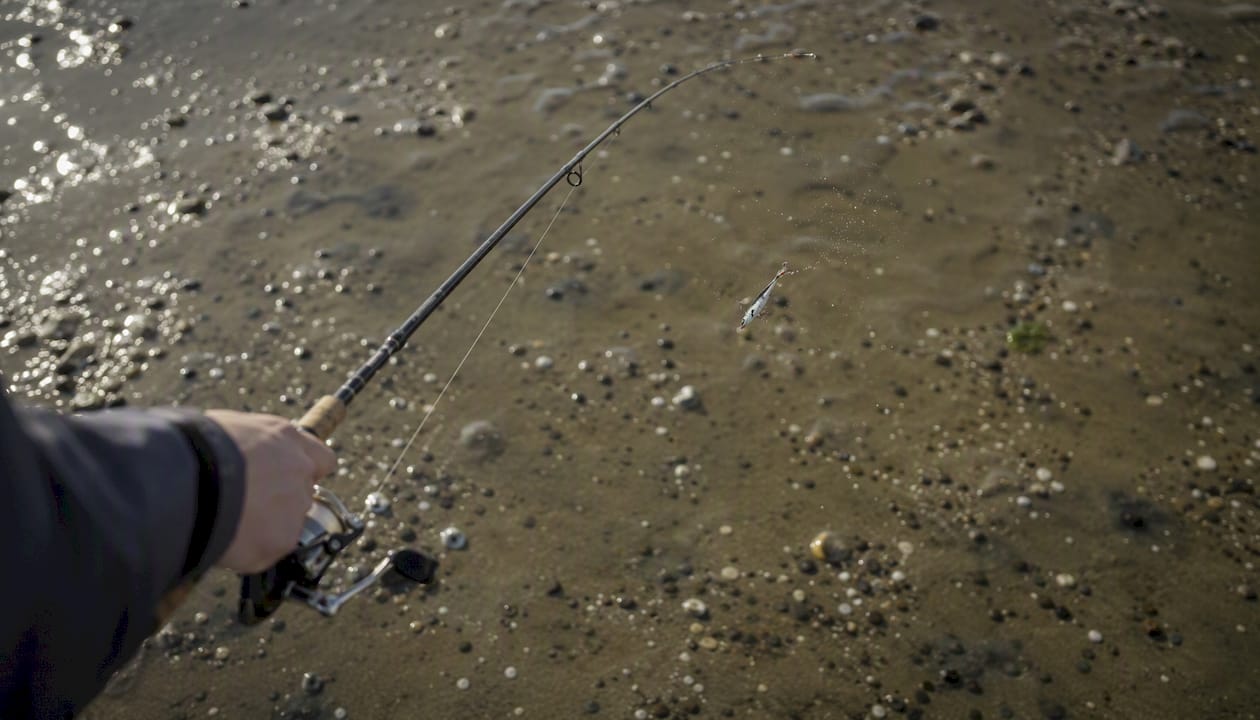
Outgoing tide tactics
Move to the exits. Channel mouths, creek drains, jetty ends, and passes are your targets. Heavier rigs hold bottom in stronger current: bottom rigs with circle hooks, weighted soft plastics, and subsurface swimbaits delivered into the funnel and allowed to swing through. Anchor or hold position up-current of the structure and let your bait drift into the strike zone. The first two hours of the ebb are often the most productive window.
Slack water tactics
Use slack to re-rig, change line class, or swap lure size for the next phase. Slack is rarely productive in inshore scenarios — bait disperses and predators lose their ambush advantage. If you must fish it, target deep holes and bottom structure where fish may be holding. Slower presentations work better: drop-shot rigs, finesse jigs, or a slow-rolled swimbait near the bottom.
Pro Tip: During slack, watch the surface for bait schools. They’ll often ball up near structure when current stops. Mark those spots — they’ll be the first to fire when the tide turns.
Practical gear checklist for tidal fishing:
- Lighter jigs and soft plastics (1/8–1/4 oz): Incoming flats, moderate current
- Heavier bottom rigs and weighted swimbaits (1/2–1 oz+): Strong ebb current, channel mouths
- Popping corks and live bait: Incoming flats, sight-fishing windows
- Drop-shot and finesse rigs: Slack water, deep holes
- Spinnerbaits and blades: Transitional current, low-clarity water
How to read tide charts and plan your trip
Tide charts give you the raw data. Your job is to translate that data into a fishing plan.
What to check on every tide chart:
- Time of high and low tide for your specific location (not the nearest major port — use a local correction if your spot is up an estuary or inside an inlet).
- Tidal range (the vertical difference between high and low). A 4-foot range moves a lot more water than a 1-foot range. Bigger range means faster current and more defined feeding windows.
- Direction of movement during your fishing window. Is the tide flooding or ebbing when you plan to be on the water? Is it mid-run or near slack?
- Moon phase. Cross-reference with a lunar calendar. Spring tides around new and full moons amplify everything.
Tools that work:
- NOAA Tides & Currents is the authoritative U.S. source for tide predictions, current data, and historical records. Use it for precise local predictions.
- Tide apps (Tides Near Me, Tide Alert, My Tide Times) pull NOAA data and present it in a mobile-friendly format. Most let you set location-specific alerts.
- Local harbor charts and inlet guides often include tidal current data that generic apps miss.
- Combine tide data with wind and weather forecasts. A strong onshore wind can push water higher than predicted; an offshore wind can suppress the flood.
Step-by-step trip planning:
- Pull the tide chart for your exact location 24–48 hours before the trip.
- Identify the mid-run window for the phase you want to fish (flood for flats, ebb for passes).
- Plan to arrive 30–60 minutes before that window opens.
- Note the slack periods and plan to use them for re-rigging or scouting.
- Check the moon phase. If it’s within three days of a new or full moon, expect stronger current and more aggressive feeding.
- Check wind and weather. Strong winds can alter water clarity and current behavior.
Safety first. Strong tidal current in narrow inlets, passes, and channels can overwhelm small boats and wade anglers. Know your limits:
- Check NOAA’s Notices to Mariners for current advisories before entering tight channels.
- Leave shallow flats well before low tide to avoid grounding.
- Always wear a PFD in strong current, especially when wading or in a kayak.
- Anchor with appropriate scope in current — a dragging anchor in a fast ebb is a serious hazard.
Common angler rules about tides: when to trust them
A few heuristics get passed around on every dock. Here’s what they actually mean and when they hold up.
“Moving tide is best.” This is the most reliable rule in inshore fishing. Both incoming and outgoing tides create predictable feeding opportunities by moving bait and positioning predators. The exceptions: very small tidal ranges (less than 1 foot), deep offshore water where tidal current is negligible, and locations where local geography nearly eliminates tidal flow.
Practically, it means the bite often fires hardest in the middle of the run — not at the very start or the very end. Plan your prime fishing time around that central window.
This isn’t a scientific formula; it’s a patterning shorthand. Use it to prioritize your time on the water and avoid burning energy during slack.
- These rules work best in classic inshore settings: estuaries, flats, passes, and nearshore structure.
- They’re less reliable in locations with minimal tidal range, in deep offshore water, or in heavily modified coastal areas (ports, marinas) where current patterns are disrupted.
- Local geography always overrides the general rule. A narrow inlet can accelerate current to dangerous speeds even during a modest tidal range. A wide, shallow bay may barely feel a 2-foot tide.
Safety, local variation, and conservation on tidal water
Tides aren’t just a fishing tool — they’re a force to respect and plan around.
Safety essentials:
- Never wade or launch a small boat into a fast-moving inlet without knowing the current speed and direction.
- Exit shallow flats at least 90 minutes before predicted low tide. Tidal flats drain faster than most anglers expect.
- In strong current, anchor from the bow and use adequate scope — at least 5:1 in moving water.
- Wear your PFD. Tidal current can pin a wader against structure or sweep a kayak off course in seconds.
- Check local Notices to Mariners and Coast Guard advisories for any temporary hazards in your area.
Local geography changes everything. A 3-foot tidal range in a wide bay produces gentle current. The same 3-foot range funneled through a 50-yard inlet pass can run at 4–5 knots. Jetties, bridge pilings, and narrow channels all amplify tidal effects. Local tidal understanding is what separates consistent producers from anglers who rely on general rules. Log your trips, note the tide phase and range, and build a personal pattern database for your home water.
Conservation reminders:
- Avoid targeting fish stacked in low-water drains during spawning seasons — concentrated fish in minimal water are highly vulnerable to stress and mortality.
- Respect seasonal closures and size/possession limits. In U.S. coastal waters, these vary by state and species; check your state fish and wildlife agency before every trip.
- Practice careful catch-and-release in warm, low-oxygen water. Fish stressed in stagnant low-tide conditions recover poorly. Revive thoroughly before release.
An angler’s honest take on reading tides
There’s a version of tide fishing that looks like this: pull up an app, note the high and low, show up at high tide because “that’s when the water’s up,” and wonder why the bite is dead. We’ve all been there.
The shift happens when you stop treating the tide chart as a schedule and start treating it as a current map. The question isn’t “is it high tide?” — it’s “is water moving, in which direction, and how fast?” That reframe changes everything about where you position, what you throw, and when you expect the bite to fire.
Combine that with local observation — watching where bait stacks, noting which points create the strongest eddies, logging which phase produced fish at your specific spot — and you build something no app can give you: a personal pattern that holds up trip after trip. Total tidal understanding isn’t about memorizing rules. It’s about reading the water in front of you and knowing why it’s doing what it’s doing.
Gear up with Highclasstackleco for your next tidal trip

Tides create the opportunity. Your tackle closes the deal. At Highclasstackleco, we build gear that performs when the current is screaming and the bite window is short. From terminal tackle and hooks built for strong-current rigs to the full lineup of saltwater-ready gear, we’ve got everything you need to fish the run hard. Gear up before your next trip.
Sources
These are the most authoritative resources used in this guide. Bookmark them before your next trip.
- How do Tides Affect Boating and Fishing? - Yamaha Outboards
- Incoming vs Outgoing Tides for Saltwater Fishing | In The Spread
- What tides are the best for fishing? | Outdoor Life
- There’s no substitute for total tidal understanding in fishing
Recommended
- Tide Fishing Salmon Bays: The PNW Angler’s Guide – High Class Tackle Co.®
- Saltwater Bottom Fishing Rigs: Build, Tie, and Fish Them – High Class Tackle Co.®
- Offshore Saltwater Tackle Types: 2026 Angler’s Guide – High Class Tackle Co.®
- Inlet Fishing Setup: Your Complete Gear Guide – High Class Tackle Co.®
0 comments