

Offshore saltwater tackle types are specialized rods, reels, lines, lures, and terminal tackle built to handle brutal saltwater conditions and the raw power of pelagic species. Choosing the wrong gear offshore does not just cost you fish. It costs you equipment. The right setup matches your target species, your technique, and the depth you are fishing. This guide breaks down every major category of offshore fishing equipment so you can rig up with confidence and fish harder.
1. What are the main offshore saltwater tackle types?
Offshore saltwater tackle covers five core categories: rods, reels, lines, lures, and terminal tackle. Each category has subcategories built for specific techniques, species, and depth ranges. Understanding how these categories connect is what separates anglers who land fish from those who lose them at the boat.
The industry organizes gear around line class standards. A 50 lb class rod pairs with a size 50 conventional reel spooled with 80–100 lb braid. That matching system is the backbone of offshore rigging, and it applies whether you are trolling for wahoo or dropping jigs on deep structure.
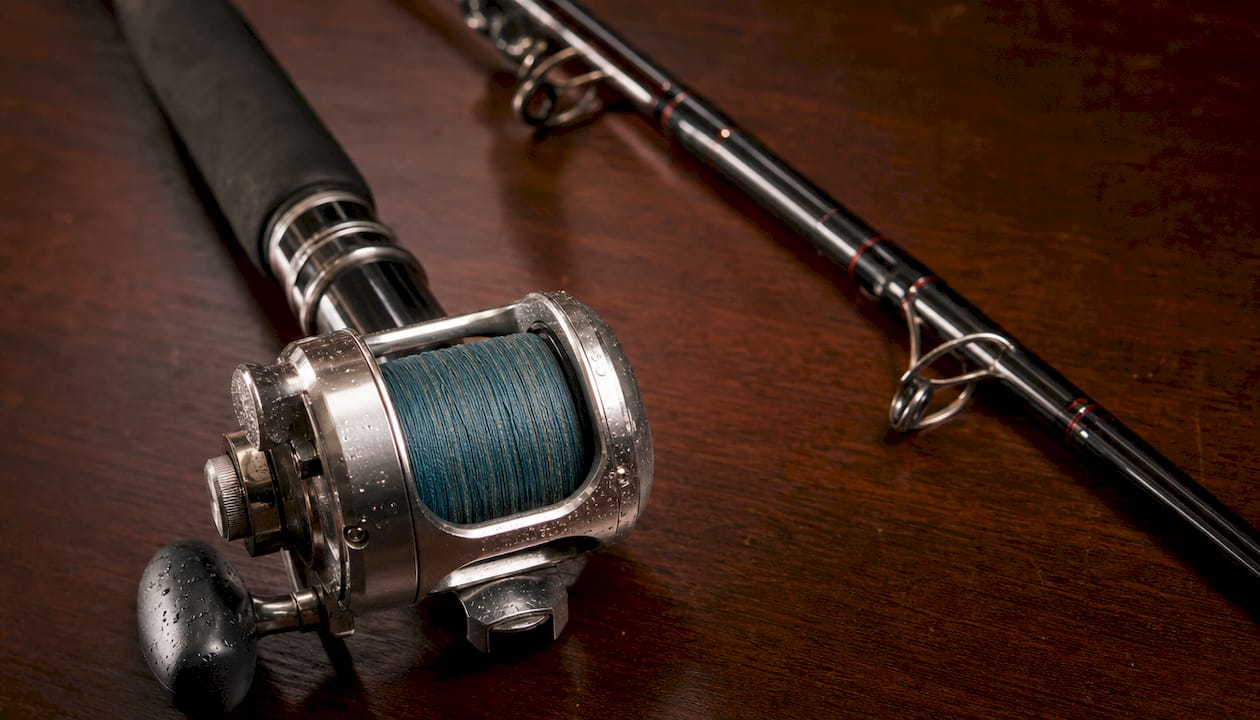
2. Offshore fishing rods: lengths, power, and action
Rod lengths for offshore fishing fall between 6 and 8.5 feet, with shorter rods offering control near the boat and longer rods adding casting distance and shock absorption. Power ratings run from medium-heavy to extra-heavy, matched to the size of your target species. Action describes where the rod bends: fast action bends near the tip for quick hooksets, while moderate action bends deeper into the blank for more flex and forgiveness.
- 6–6.5 ft rods: Best for stand-up trolling and fighting big fish close to the boat
- 7–7.5 ft rods: Versatile for jigging, live bait, and light trolling
- 8–8.5 ft rods: Ideal for casting poppers and surface lures to breaking fish
- Medium-heavy power: Targets mahi, smaller tuna, and inshore pelagics
- Heavy to extra-heavy power: Handles yellowfin tuna, wahoo, and billfish
Corrosion resistance is non-negotiable offshore. Look for guides with aluminum oxide or silicon carbide inserts, stainless steel frames, and graphite or composite blanks sealed against saltwater intrusion.
Pro Tip: Match your rod action to your technique. Fast action rods excel at jigging and live bait because they load quickly. Moderate action rods absorb the head shakes of big fish during trolling, reducing pulled hooks.
3. Conventional vs. spinning reels for offshore fishing
Conventional reels provide superior torque and drag power for trolling, deep-drop bottom fishing, and grinding on heavy pelagics. Spinning reels are favored for casting to surface feeders, working poppers, and situations where backlash-free performance matters. Both reel types have a clear place in a complete offshore setup.
Sizing follows a logical system. Conventional reels range from size 20 to 80 for offshore use, with size 50 matching 50 lb class rods and 80–100 lb braid. Spinning reels for offshore start at size 6000 and climb past 20000 for large game. Sizes 8000–10000 cover most mahi and tuna casting situations effectively.
- Conventional reels: Best for trolling, bottom fishing, and live bait on heavy tackle
- Lever drag conventional reels: Offer precise drag adjustment critical for big pelagics
- Two-speed conventional reels: Switch to low gear for power when a fish runs deep, high gear for fast retrieves
- Spinning reels (8000–10000): All-around offshore performers for casting and popping
- Spinning reels (14000–20000+): Built for giant tuna and billfish on heavy spinning setups
Pro Tip: Carry both reel types on every offshore trip. Conventional reels handle the trolling spread while spinning setups stay rigged and ready for casting at breaking fish. That combination covers nearly every offshore situation you will encounter.
4. Offshore lure and bait types and their uses
Popular offshore lures include jigs, plugs, soft plastics, spoons, and skirted lures targeting tuna, mahi, wahoo, and billfish. Each lure type works a specific depth range and triggers strikes through a different action. Knowing which lure to throw and when is as important as the tackle holding it.
Jigs work from 20 to 300 feet deep and are deadly on amberjack, tuna, and grouper. Diamond jigs and vertical speed jigs cover most deep-water situations. Topwater plugs create surface explosions when fish are feeding on top. Poppers and walk-the-dog style plugs draw violent strikes from mahi and tuna. Diving plugs run at controlled depths during trolling and are go-to lures for wahoo and kingfish. Soft plastics rigged on jig heads mimic baitfish and work well for casting to schooling fish. Skirted trolling lures are the backbone of offshore trolling spreads, targeting billfish and large tuna at speed.
| Lure Type | Target Species | Depth Range | Best Application |
|---|---|---|---|
| Vertical jigs | Tuna, amberjack, grouper | 20–300 ft | Deep jigging |
| Topwater plugs | Mahi, tuna | Surface | Casting to breaking fish |
| Diving plugs | Wahoo, kingfish | 10–50 ft | Trolling |
| Soft plastics | Mahi, snapper | 0–100 ft | Casting, slow trolling |
| Skirted lures | Billfish, large tuna | Surface | High-speed trolling |
Live bait and cut bait remain the most effective saltwater bait types for many offshore situations. Ballyhoo, squid, mackerel, and pilchards are standard offshore baits. Live bait fished on a flat line or kite rig draws strikes from fish that ignore artificial lures entirely. Matching your bait size to the forage in the area is the fastest way to trigger bites.
5. Terminal tackle and rigging for offshore success
Terminal tackle including hooks, leaders, weights, and swivels is what connects your line to the fish. Getting this part wrong loses fish at the worst possible moment. Every component in your terminal rig needs to match the species you are targeting and the technique you are running.
Hooks are the most critical terminal component. Circle hooks improve hook retention and reduce deep hooking, making them the standard for live bait and slow-trolling applications. J-hooks work well for rigged baits and lures where a quick hookset is needed. Double hooks appear on skirted trolling lures. Treble hooks are common on plugs and spoons. For toothy species like wahoo and kingfish, wire leaders are non-negotiable.
- Circle hooks: Best for live bait, kite fishing, and catch-and-release applications
- J-hooks: Standard for rigged ballyhoo and cut bait presentations
- Wire leaders: Required for wahoo, kingfish, and any toothy pelagic
- Fluorocarbon leaders: Low visibility and high abrasion resistance for clear water situations
- Monofilament leaders: Stretch adds shock absorption for billfish and fast-running fish
- Ball-bearing swivels: Prevent line twist in trolling applications
- Crimps and sleeves: Create strong, reliable connections in heavy leader rigs
Weights and sinkers matter for bottom fishing and deep-drop applications. Bank sinkers, egg sinkers, and torpedo weights each serve different rigging needs. For terminal tackle and rigging components, the principle is the same across species: match weight to current and depth so your bait stays in the strike zone.
6. Choosing the right line for offshore fishing situations
Line choices offshore include monofilament, braided line, and fluorocarbon, each with distinct advantages. Braided lines in 50–80 lb class are standard for jigging and popping because of their thin diameter, zero stretch, and high sensitivity. Monofilament offers stretch and abrasion resistance that protects against pulled hooks during long fights. Fluorocarbon is nearly invisible underwater and resists abrasion better than mono, making it the top choice for leaders.
- Braided line: Maximum strength in thin diameter, zero stretch, ideal for jigging and deep drops
- Monofilament: Forgiving stretch, good abrasion resistance, works well as main line and top shots
- Fluorocarbon: Low visibility, abrasion resistant, the standard for offshore leaders
Top-shot leaders connect your braided main line to a length of monofilament or fluorocarbon. This setup gives you the sensitivity of braid with the forgiveness of mono at the business end. Spooling correctly matters: fill your reel to within an eighth of an inch of the spool lip for maximum casting distance and smooth line flow under pressure.
Pro Tip: Rinse your line and reel with fresh water after every offshore trip. Salt crystals work into the braid and weaken it over time. A quick rinse extends line life significantly and keeps your drag system running smooth.
Key takeaways
Matching your offshore saltwater tackle to your target species and technique is the single most effective way to increase hookups and reduce lost fish.
| Point | Details |
|---|---|
| Rod length and power matter | Use 6–8.5 ft rods with medium-heavy to extra-heavy power matched to your target species. |
| Carry both reel types | Conventional reels dominate trolling; spinning reels excel at casting to surface feeders. |
| Lure selection is depth-driven | Match lure type to depth: jigs for deep water, topwater plugs for breaking fish, skirted lures for trolling. |
| Terminal tackle protects your rig | Use circle hooks for live bait, wire leaders for toothy fish, and fluorocarbon for clear water. |
| Line type affects performance | Braid for sensitivity and strength, fluorocarbon for leaders, mono for shock absorption. |
What I have learned building offshore setups from scratch
The biggest mistake I see offshore anglers make is buying one rod and reel combo and expecting it to do everything. Offshore fishing demands specialization. A 7 ft medium-heavy spinning setup rigged with 30 lb braid and a fluorocarbon leader handles mahi and smaller tuna beautifully. That same rod is completely outgunned when a 200 lb yellowfin shows up. You need range in your arsenal.
My honest take on gear selection in 2026 is this: start with two setups, not one. Get a size 50 conventional reel on a heavy trolling rod for your main spread, and pair it with a size 8000–10000 spinning reel on a 7.5 ft fast-action rod for casting. Those two setups cover the majority of offshore situations you will face. Add a deep-drop jigging rod third if your budget allows.
Corrosion resistance is the detail most anglers underestimate until their gear fails. Saltwater destroys cheap hardware fast. Invest in sealed drag systems, quality guides, and rinse everything after every trip. The anglers I know who fish hard for decades are the ones who treat their gear like it matters. Because offshore, it does.
— Nick
Premium offshore tackle built for the water
Highclasstackleco builds gear for anglers who take offshore fishing seriously. The lineup covers everything from terminal tackle and rigging components to rods, reels, and accessories designed to perform in real saltwater conditions.
Browse the full terminal tackle collection for hooks, leaders, swivels, and rigging hardware built for offshore applications. Whether you are setting up a trolling spread or rigging live bait, Highclasstackleco has the components to get it done right. Head to highclasstackleco.com to shop the full catalog and gear up for your next offshore run.
FAQ
What rod length works best for offshore saltwater fishing?
Offshore rods typically range from 6 to 8.5 feet. Shorter rods give you control near the boat, while longer rods improve casting distance and shock absorption.
What size spinning reel do I need for offshore fishing?
Spinning reels sized 8000–10000 work as all-around offshore performers for mahi and tuna. Larger species require sizes 14000 and above.
What is the best line for offshore jigging?
Braided line in the 50–80 lb class is the standard for offshore jigging. Pair it with a fluorocarbon leader for low visibility and abrasion resistance at the business end.
When should I use circle hooks offshore?
Circle hooks are best for live bait, kite fishing, and catch-and-release situations. They improve hook retention and reduce the chance of deep hooking.
What lures work best for offshore trolling?
Skirted trolling lures are the backbone of most offshore trolling spreads and target billfish and large tuna. Diving plugs work well for wahoo and kingfish at controlled depths.
Recommended
- Great Lakes Salmon Gear Differences: 2026 Angler’s Guide – High Class Tackle Co.®
- Buoy 10 Fishing Guide: Salmon Season 2026 – High Class Tackle Co.®
- Super Bait Secrets: Top Picks for Salmon and Steelhead – High Class Tackle Co.®
- Types of Hooks for Steelhead Fishing: PNW Guide – High Class Tackle Co.®
0 comments