

An inlet fishing setup is defined as a specialized combination of rod, reel, line, leader, and terminal tackle built to handle the fast currents, shifting structure, and aggressive fish behavior found in coastal inlets. Unlike standard surf or bay rigs, this system accounts for tidal pressure, abrasion from jetty rocks and sandbars, and the need to keep bait in the strike zone despite constant water movement. Get the setup wrong and you lose fish, blow out bait, and burn through tackle. Get it right and inlets become some of the most productive water you’ll ever fish. This guide breaks down every component, every rig, and every technique you need to fish inlets with confidence.
What is an inlet fishing setup and why does it matter?
An inlet fishing setup is a purpose-built rig system designed for the unique demands of tidal inlet environments. Inlets connect bays, estuaries, and rivers to open coastal water, which means fish funnel through them on every tide cycle. That concentration of baitfish and predators makes inlets deadly productive. But the same current that pushes fish in also makes rigging harder than standard inshore fishing.
The core components of any inlet rig are a medium-power spinning rod, a matched reel, braided main line, a fluorocarbon leader, and terminal tackle sized to the current. Each piece serves a specific function. The rod handles casting distance and fish-fighting leverage. The reel manages drag under pressure. The braid gives sensitivity and strength without stretch. The fluorocarbon leader resists abrasion from rocks, shells, and structure. Terminal tackle keeps your bait where fish are feeding.
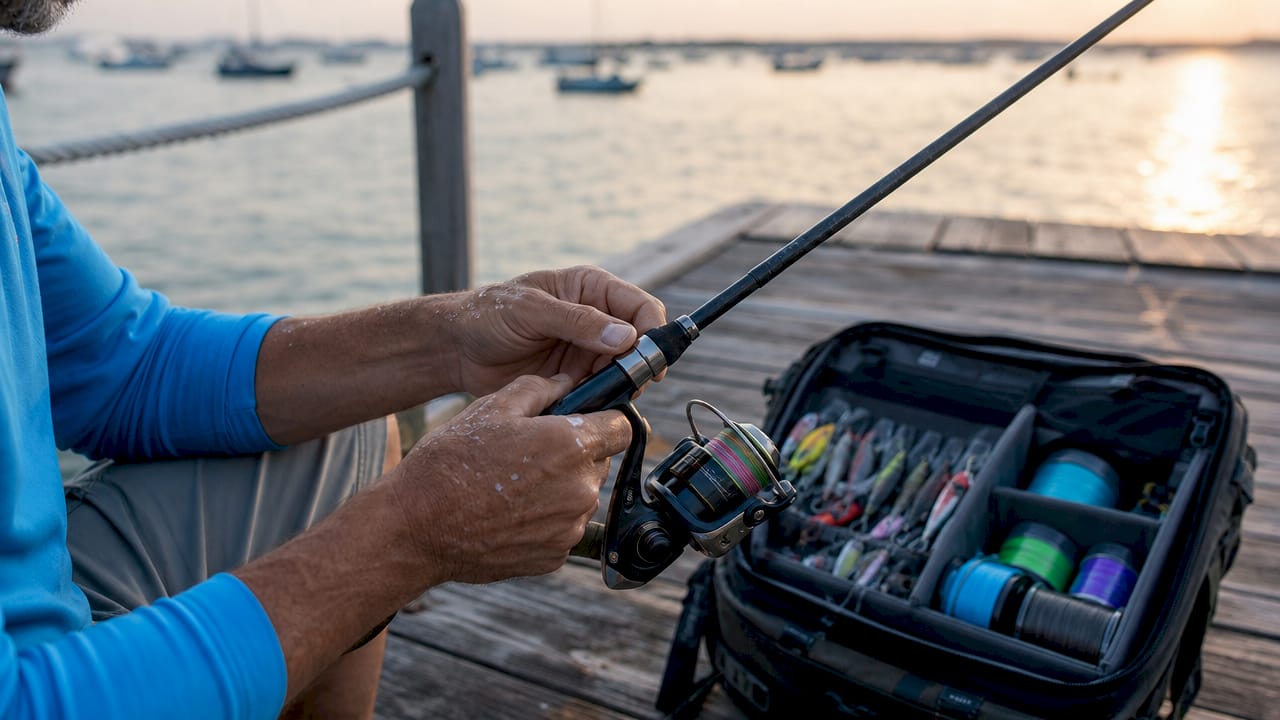
Many inlets feature jetties, sandbars, and channels that create distinct current breaks and ambush points. Those structural features are where fish stack up. Your setup needs to reach those spots and hold position in moving water.
What are the essential rod and reel specs for inlet fishing?
The right rod and reel combination makes every other part of the setup work. A 7 to 7.5-foot medium-power spinning rod paired with a 2500 to 4000 series reel is the standard for inlet fishing. That rod length gives you casting distance from jetty walls or shoreline, and medium power handles the full range of inlet species without being too stiff for live bait work.
Reel size matters more than most anglers realize. A 2500 series works for lighter applications targeting flounder or smaller redfish. A 4000 series handles the drag demands of larger stripers, snook, or bull redfish running through current. Smooth drag is non-negotiable in inlets because fish use the current to amplify their runs.
Line and leader specs are just as critical as the rod and reel:
- Main line: 10–30 lb braided line. Braid cuts through current better than mono and gives you direct contact with the bait.
- Leader: 20–40 lb fluorocarbon. Fluorocarbon is nearly invisible underwater and resists abrasion from jetty rocks and barnacles.
- Connection: A double uni knot or FG knot connects braid to fluorocarbon cleanly without bulk at the guides.
- Leader length: 18 to 36 inches is standard. Longer leaders help in clear water; shorter leaders work in heavy current where you need direct bait control.
Pro Tip: Bump your leader up to 40 lb when fishing around rock jetties or oyster bars. The abrasion resistance saves you from losing fish to frayed line on the final run.
Which terminal tackle and rigs work best in inlet setups?
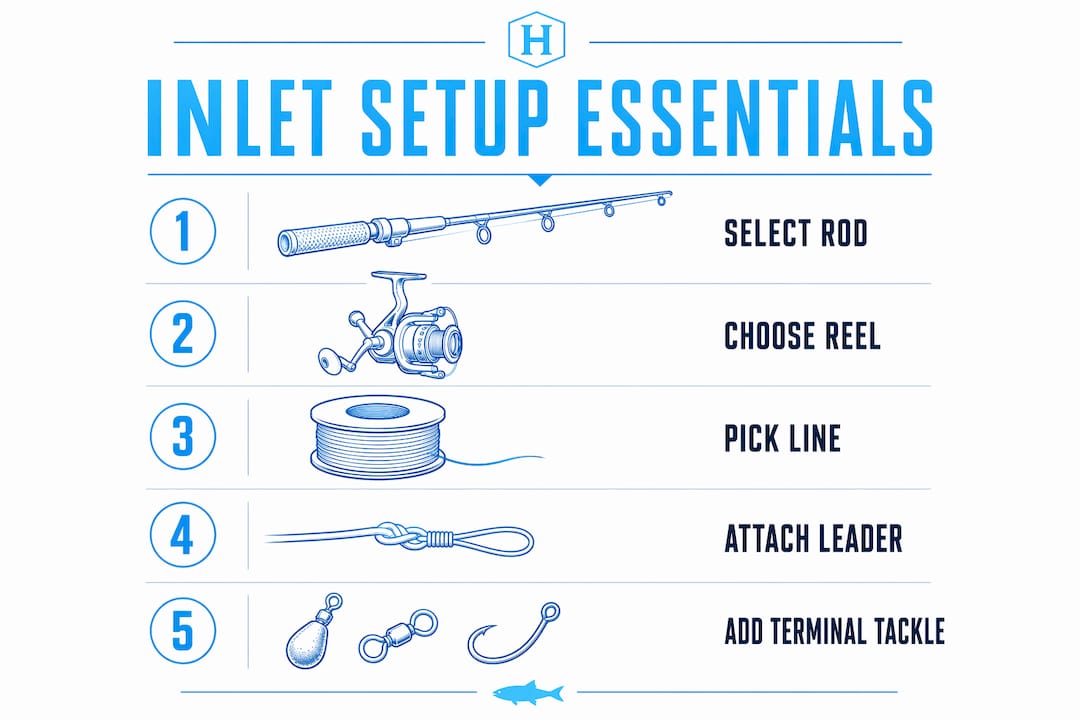
Terminal tackle is where inlet fishing setups separate from generic inshore rigs. The three rigs that consistently produce in inlets are the knocker rig, the fish-finder rig, and the double dropper rig. Each solves a specific problem created by current and structure.
Knocker and fish-finder rigs keep live bait moving naturally while the sinker rests on the bottom, reducing snag potential. The knocker rig slides the sinker directly on the leader above the hook, so the weight stays tight to the bait. The fish-finder rig uses a sliding sinker on the main line above a swivel, which lets a fish pick up the bait and run without feeling resistance. The double dropper rig allows fast hook changes and reduces snag risk, which is critical when fishing rocky or reef-like inlet structure.
Sinker weight is the variable you adjust most often. Light current calls for 1/2 to 1 oz. Moderate current needs 1 to 2 oz. Fast tidal flow demands 2 to 4 oz to keep bait pinned in the strike zone. For a deeper look at building rigs from scratch, the terminal tackle components at Highclasstackleco cover hooks, swivels, and sinkers sized for exactly these conditions.
| Rig | Sinker weight | Best situation | Target species |
|---|---|---|---|
| Knocker rig | 1–3 oz | Rocky bottom, moderate current | Redfish, snook, stripers |
| Fish-finder rig | 1/2–2 oz | Sandy bottom, live bait | Flounder, drum, weakfish |
| Double dropper rig | 1/2–1 oz | Light current, multiple baits | Flounder, croaker, spot |
Pro Tip: When the tide is screaming, go heavier than you think you need. Using weight over 2 oz keeps your bait in the strike zone instead of lifting off the bottom and drifting past feeding fish.
How do inlet currents and tide stages affect your technique?
Tidal timing is the single biggest factor in inlet fishing success. The most productive window runs from 2 hours before to 2 hours after high tide. During that window, baitfish push through the inlet with the current and predators stack up at current breaks to ambush them. Outside that window, fish scatter and feeding activity drops sharply.
Current speed changes everything about how you rig and fish. Here is how to adjust your approach at each tide stage:
- Incoming tide (2 hours before high): Fish are actively feeding. Use moderate sinker weights (1–2 oz) and cast upcurrent, letting the bait drift naturally into structure.
- High tide (slack water): Current slows. Drop to lighter sinkers (1/2–1 oz) and work bait slowly along channel edges and jetty walls.
- Outgoing tide (2 hours after high): Baitfish flush out of the bay. Position yourself to intercept fish feeding at the inlet mouth. Casting with the current maintains natural bait presentation and improves strike rates.
- Heavy outgoing current: Switch to 3–4 oz sinkers. Light tackle in fast current lifts off the bottom and blows past fish entirely.
Eddies and current breaks behind jetty rocks, bridge pilings, and sandbars are where fish rest between feeding bursts. Experienced captains target these feeding zones created by tidal flow rather than fishing open water. Cast to the edge of the eddy, not into the dead center, and let the bait swing naturally into the current seam.
Reading tide strength and adjusting rigs accordingly is what separates anglers who consistently catch fish from those who get skunked on the same water. Carry a range of sinker weights every trip. The tide does not always run the same speed, and neither should your rig.
What are the best baits and presentation tactics for inlets?
Bait selection in inlets is about one thing: keeping the presentation natural in moving water. Streamlined baits like live finger mullet and silver mullet hold their shape and swim naturally in strong current. They do not spin, they do not tumble, and they look exactly like what predators are already chasing.
Avoid square-cut chunks of cut bait in heavy current. The flat surfaces catch water and spin the bait unnaturally, which kills strikes. If you are using cut bait, trim it into a tapered, streamlined shape that moves cleanly through the water column.
The best bait presentations for inlet fishing setups:
- Free-lined live bait: No sinker, just a hook and a live mullet or pinfish. Works best during slack tide when current is minimal. Fish can feel zero resistance and run freely.
- Live bait under a knocker rig: The go-to for moderate to heavy current. Keeps the bait near bottom where most inlet predators feed.
- Jigs along structure: A 1/4 to 1/2 oz jig head with a paddle tail swum along jetty walls and channel edges covers water fast. Work it with the current, not against it.
- Topwater lures at dawn: During the first hour of incoming tide, topwater plugs worked near the inlet mouth produce explosive strikes from stripers and snook.
For salmon and steelhead anglers who fish Pacific Northwest inlets, the same current-reading principles apply. Check out bait strategies for strong current from Highclasstackleco for species-specific tips that translate directly to tidal inlet conditions. For rigging guidance that covers sinker weights and terminal tackle in detail, the rig alternatives guide at Highclasstackleco is worth your time.
Key Takeaways
A complete inlet fishing setup requires matched rod, reel, line, leader, and current-appropriate terminal tackle to keep bait in the strike zone through every tide stage.
| Point | Details |
|---|---|
| Rod and reel specs | Use a 7 to 7.5-foot medium-power rod with a 2500 to 4000 series spinning reel. |
| Line and leader | Spool 10–30 lb braid and attach a 20–40 lb fluorocarbon leader for abrasion resistance. |
| Rig selection | Match your rig to the structure: knocker rig for rocky bottom, fish-finder rig for sandy flats. |
| Sinker weight | Adjust weight from 1/2 oz to 4 oz based on current speed to keep bait on the bottom. |
| Peak fishing window | Fish 2 hours before through 2 hours after high tide for the highest feeding activity. |
What fishing inlets for 10 years actually taught me
The biggest mistake I see anglers make at inlets is under-rigging for the current. They show up with a light surf setup, throw a 1/2 oz sinker into a screaming outgoing tide, and wonder why they cannot feel the bottom. The bait is 20 feet off the bottom and drifting past every fish in the inlet. Go heavier than feels comfortable. You can always drop down in weight when the tide slows.
The second thing I learned is that structure reading matters more than bait selection. I have caught fish on cut bait, live bait, and plastic jigs from the same spot within the same hour. What those catches had in common was position. Every one of them came from the edge of a current seam behind a jetty rock or at the corner of a sandbar. The fish were not scattered. They were stacked in predictable spots, waiting for the current to deliver food. Once you see that pattern, you stop randomly casting and start hunting specific water.
Quick hook changes also matter more than most anglers admit. The double dropper rig shines here because you can swap a fouled or bent hook in seconds without retying the entire leader. In a fast bite window, that speed keeps your bait in the water instead of on your lap. For a solid reference on building terminal rigs that hold up under pressure, the PNW terminal gear checklist from Highclasstackleco covers the fundamentals cleanly. Inlets reward anglers who stay adaptable, stay patient, and stay in the water.
— Nick
Gear up for your next inlet session with Highclasstackleco
Highclasstackleco builds tackle for anglers who fish hard water. Whether you are rigging up for a West Coast salmon inlet or a Southeast redfish pass, the premium terminal tackle collection covers everything you need: hooks, swivels, sinkers, and leader material sized for real current conditions.

The full lineup at Highclasstackleco includes rods, reels, braided lines, fluorocarbon leaders, and specialty terminal components built to perform when the tide is running hard. No filler gear. No compromises. Just tackle that works when it counts. Browse the full collection and build your inlet setup right.
FAQ
What is an inlet fishing setup made of?
An inlet fishing setup includes a 7 to 7.5-foot medium-power spinning rod, a 2500 to 4000 series reel, 10–30 lb braided main line, and a 20–40 lb fluorocarbon leader. Terminal tackle includes sinkers from 1/2 to 4 oz and rigs like the knocker, fish-finder, or double dropper.
What is the best time to fish an inlet?
The best time to fish an inlet is during the 2 hours before through 2 hours after high tide. Fish feed most aggressively during this window as baitfish push through with the current.
What rigs work best for inlet fishing?
The knocker rig, fish-finder rig, and double dropper rig are the most effective for inlet fishing. Each rig manages current differently and suits specific bottom types and target species.
What bait works best in strong inlet current?
Streamlined live baits like finger mullet and silver mullet hold their presentation in fast current and attract more strikes than square-cut chunk baits, which spin unnaturally and reduce hookups.
How heavy should my sinker be for inlet fishing?
Match sinker weight to current speed: 1/2 to 1 oz for light current, 1 to 2 oz for moderate flow, and 2 to 4 oz for fast tidal current. Heavier weights keep bait pinned in the strike zone and prevent line lift.
Recommended
- Steelhead Terminal Gear Checklist for PNW Anglers – High Class Tackle Co.®
- Weekend Fishing Trip Packing: The 2026 Angler’s Guide – High Class Tackle Co.®
- Brad Cut Plug Mastery: Expert Rigging Guide for PNW Anglers – High Class Tackle Co.®
- Great Lakes Salmon Gear Differences: 2026 Angler’s Guide – High Class Tackle Co.®
0 comments