

Estuary fishing works by matching tidal movement to fish behavior: tides push bait through shallow, brackish habitat, predators stack along structure to ambush it, and your job is to put the right presentation in the right spot at the right moment. Get that equation right and you’ll find fish on almost every trip.
Quick wins to take to the water now:
- Best tide window: Fish the first 90 minutes of an incoming or outgoing tide. Moving water concentrates bait and triggers feeding.
- Go-to rig: A running sinker with a fluorocarbon leader of medium length and a small to medium hook size covers most estuary situations.
- Top bait: Live prawns or fresh-cut pilchard strips. When live bait isn’t available, fresh local frozen bait is a solid fallback.
- When to move: If you haven’t had a bite or seen bait activity in 20 minutes, reposition to the next piece of structure.
Pro Tip: Thread your sinker on the main line before tying to a swivel. This lets the sinker slide freely so a fish picks up the bait without feeling resistance. Drop to the lightest sinker that still holds bottom and you’ll get dramatically more hook-ups in clear water.
Key Takeaways
Estuary fishing rewards anglers who match tidal timing to structure, fish light presentations, and read the water before making a cast.
| Point | Details |
|---|---|
| Fish moving tides | The first 90 minutes of an incoming or outgoing tide is the most productive window. |
| Target structure first | Edges, drop-offs, channel mouths, and pylons concentrate bait and predators. |
| Start with a running sinker | A 50–60 cm fluorocarbon leader and size 4–8 hook covers most estuary scenarios. |
| Scan before you cast | Check birds, boils, current seams, and bait activity the moment you arrive. |
| Match bait to conditions | Live prawns or fresh-cut pilchard strips outperform generic frozen bait in most situations. |
Table of Contents
- Why do estuaries produce so many fish?
- How tides drive fish behavior and when to be on the water
- Where to concentrate your effort inside an estuary
- What tackle, rigs, and hook sizes actually work in estuaries
- What baits and lures to use, and when to switch
- Tactics that catch fish: edge fishing, drifting, and sight-fishing
- Common U.S. estuary species and what catches them
- Reading the water: the 80/20 rule for estuary anglers
- Safety, conservation, and rule checks before you fish
- An angler’s perspective: what I actually do before every estuary trip
- Sources
Why do estuaries produce so many fish?
An estuary is where a river meets the sea, creating a brackish mixing zone that’s one of the most productive ecosystems on the planet. NOAA Fisheries confirms that estuaries support a large share of commercially and recreationally important species, functioning as nursery habitat where juvenile fish grow before moving offshore.
For anglers, that productivity translates directly to opportunity. The tidal exchange delivers a constant food conveyor: shrimp, crabs, worms, and baitfish get swept through channels and across flats twice a day. Predators don’t need to chase food far. They hold near structure and let the tide bring dinner to them.
Common estuary features you’ll see on arrival:
- Channels and channel mouths: Deep-water highways where current concentrates bait
- Shallow flats: Feeding grounds at high tide, exposed or abandoned at low
- Mangrove perimeters and root systems: Ambush cover for snook, redfish, and juvenile fish
- Oyster and rock beds: Rough bottom that holds crabs and small baitfish
- Bridge pylons and dock pilings: Current breaks where predators sit and wait
- Drop-offs and edges: The transition from shallow to deep is where most bites happen
Understanding estuary habitat is the foundation of every tactic in this guide. Once you see the structure, the tactics make immediate sense.
How tides drive fish behavior and when to be on the water
Tides are the engine of estuary fishing. Fishing World Australia explains that predators use run-in and run-out tides as feeding highways, positioning themselves at ambush points where bait gets funneled by current. The tide change is consistently the most productive window.
Here’s how each stage plays out:
- Incoming tide: Water pushes bait onto flats and into mangroves. Fish move shallow and aggressive. Work edges and channel mouths with lures or live bait.
- High slack: Bait disperses, fish scatter. Bite rate drops. Use this window to reposition and scout your next spot.
- Outgoing tide: Bait gets swept back toward deeper water. Predators stack at channel mouths and drop-offs to intercept. This is often the deadliest stage.
- Low slack: Similar to high slack. Fish tend to sit deep and inactive. Rest, re-rig, or move to a new area.
Pro Tip: The first 45–90 minutes of each tidal run is your prime window. Set up on a known edge or channel mouth before the tide turns and be ready to fish the moment water starts moving. Use slack tide to reposition quietly so you’re already in place when the run kicks in.
Where to concentrate your effort inside an estuary
Most anglers spread themselves too thin. The fish are stacked in predictable spots, and structure combined with tidal flow creates the most reliable holding areas. Narrow your focus and you’ll catch more fish.
High-value structure to target:
- Edges and drop-offs: The single most productive feature. Any transition from shallow to deep concentrates bait and predators.
- Channel mouths: Where current funnels bait into or out of a system. Fish the seam between fast and slow water.
- Mangrove perimeters: Cast tight to the roots. Snook, redfish, and juvenile tarpon use this cover heavily.
- Oyster racks and rock beds: Sheepshead, black drum, and flounder hold here. Rig weedless or use a float to avoid snags.
- Bridge pylons and dock pilings: Current breaks. Fish the down-current side where predators sit in the slack water behind structure.
- Flats: Fish these on the push of an incoming tide when water temperature is comfortable. Sight-fishing opportunities are highest here.
Site-selection checklist on arrival:
- Water color: clear to slightly stained is ideal; muddy water after heavy rain is tough
- Bait presence: look for nervous water, ripples, or jumping baitfish
- Current seams: visible lines where fast and slow water meet
- Bird activity: diving birds mean bait near the surface and predators below
- Nearby structure: always have a second spot in mind before you commit to the first
Pro Tip: Approach edges from the deep-water side. Whether you’re on a boat or wading, staying in deeper water and casting toward the shallows keeps you off the fish’s radar. A spooked flat is a dead flat.
What tackle, rigs, and hook sizes actually work in estuaries
Fish light whenever conditions allow. Lighter sinkers, thinner leaders, and smaller hooks produce more natural presentations and more bites, especially in clear estuarine water. Scale up only when you’re targeting big predators or fishing snag-heavy structure.
General gear ranges:
- Light setup (bream, whiting, small trout): 6–7 ft light spin rod, 2500 reel, 6–8 lb braid main line, 4–6 lb fluorocarbon leader
- Medium setup (redfish, flounder, spotted seatrout): 7 ft medium spin rod, 3000 reel, 10–15 lb braid, 10–12 lb fluorocarbon leader
- Heavy setup (striped bass, snook, large redfish near structure): 7–8 ft medium-heavy rod, 4000 reel, 20–30 lb braid, 20–25 lb fluorocarbon leader
For detailed rig-building steps, the Highclasstackleco inlet fishing setup guide walks through terminal tackle choices that translate directly to estuary rigs.
Rig recipes:
The running sinker rig is the go-to starting setup for most estuary situations. Thread a ball sinker onto your main line, tie to a swivel, then attach a fluorocarbon trace of medium length. Choose a small to medium hook size that suits target species such as bream, whiting, and trout. Size 1/0–3/0 for redfish and flounder. Select a hook that lets the bait cover most of the shank with the point exposed.
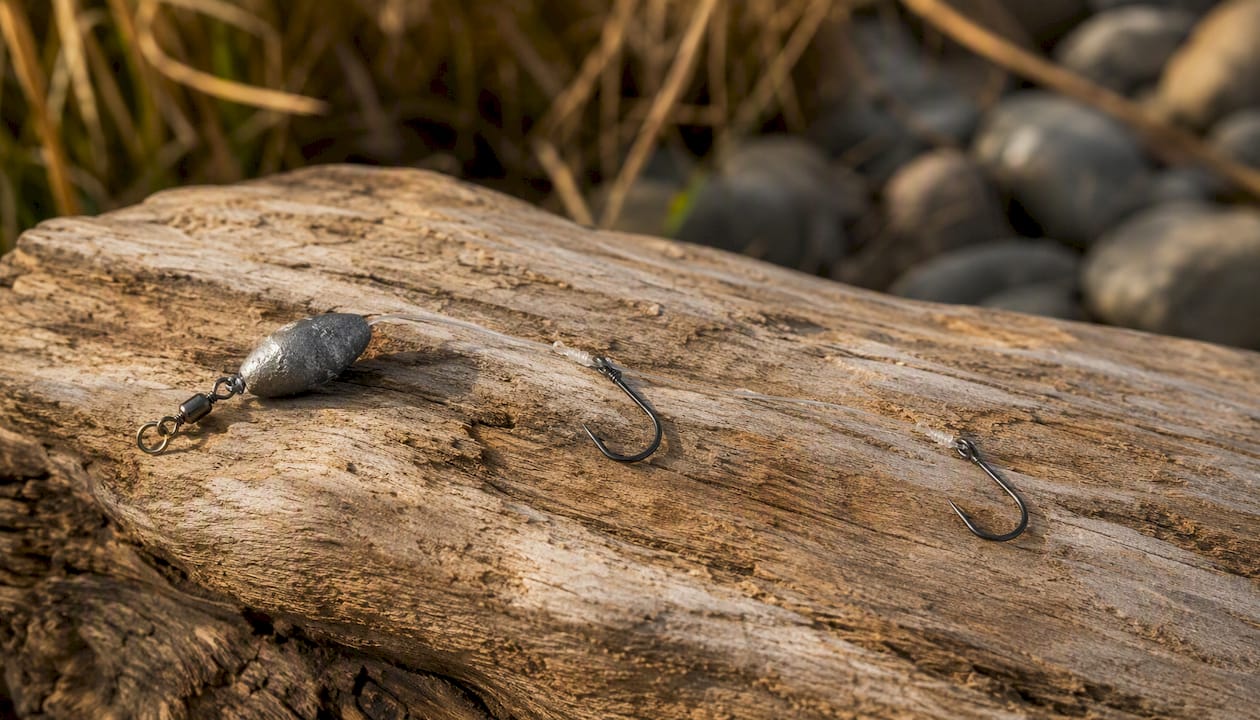
| Rig | Best conditions | Target species |
|---|---|---|
| Running sinker | Moderate current, sandy or muddy bottom | Bream, whiting, redfish, flounder |
| Float rig | Shallow flats, mangrove edges, light current | Trout, snook, juvenile redfish |
| Paternoster | Fast current, snag-prone rocky bottom | Sheepshead, black drum, croaker |
| Unweighted live bait | Calm, clear water over flats | Striped bass, snook, large trout |
| Jig-head soft plastic | Any depth, active searching | Flounder, redfish, trout, striped bass |
Pro Tip: Drop one sinker size smaller than you think you need. A lighter sinker drifts more naturally with the current, keeps bait in the strike zone longer, and reduces line visibility. In clear estuaries, that difference in presentation can be the gap between a slow session and a screaming one.
For more rig options and knot details, the Highclasstackleco saltwater bottom fishing rigs guide covers paternoster builds and leader knots that hold up in heavy current.
What baits and lures to use, and when to switch
Live bait wins most of the time in estuaries. Live prawns and local nippers outperform frozen bait when you can get them, because their movement and scent profile are impossible to fake. When live bait isn’t an option, fresh local frozen bait beats generic store-bought every time.
Natural baits and when to use them:
- Live prawns: Universal. Work on almost every estuary species. Best fished under a float or on a running sinker with minimal weight.
- Fresh pilchard strips: Cut to hook size. Excellent for redfish, flounder, and trout. Holds scent well in current.
- Bloodworms and sandworms: Deadly for sheepshead, croaker, and black drum near oyster beds and rock structure.
- Nippers (sand crabs): Excellent for sheepshead and black drum. Fish tight to structure.
- Mullet chunks: Big bait for big predators. Striped bass and large redfish respond well.
Lure categories by situation:
- Soft plastics on jig heads: The most versatile estuary lure. Paddle tails and shad bodies in 3–4 inch sizes cover flounder, trout, and redfish. Match color to water clarity: natural in clear water, chartreuse or white in stained.
- Vibrating blades (vibes): Excellent in deeper channels and on the outgoing tide. Let them sink and hop them off the bottom.
- Small hardbodies (suspending minnows): Work the edges and channel mouths during the incoming tide. Pause-and-twitch retrieves trigger reaction strikes.
- Topwater lures: Deadly on shallow flats at dawn and dusk, especially for snook and striped bass.
For custom lure options built for estuary predators, check out Highclasstackleco’s custom superbaits.
Pro Tip: Match the size and color of what’s already in the water. Flip over a rock or scoop a handful of water near bait schools to see what’s there. A 3-inch white paddle tail imitating glass minnows will consistently outfish a flashy 5-inch lure when the bait is small and silver.
Tactics that catch fish: edge fishing, drifting, and sight-fishing
Knowing where fish are is half the battle. Getting your presentation in front of them without spooking them is the other half.
Edge fishing step-by-step
Edge fishing on the run-out tide is one of the most reliable estuary tactics. Here’s how to execute it:
- Position yourself in deeper water, casting toward the shallower edge.
- Cast beyond the edge so your lure or bait lands in the shallows and retrieves toward deep water.
- Use a slow, steady retrieve with occasional pauses. The pause triggers strikes from ambush predators.
- If using bait, let it sit on the edge of the drop-off and watch your line for subtle takes.
- Work along the edge systematically, covering 5–10 feet of new water with each cast.
Drifting and anchoring
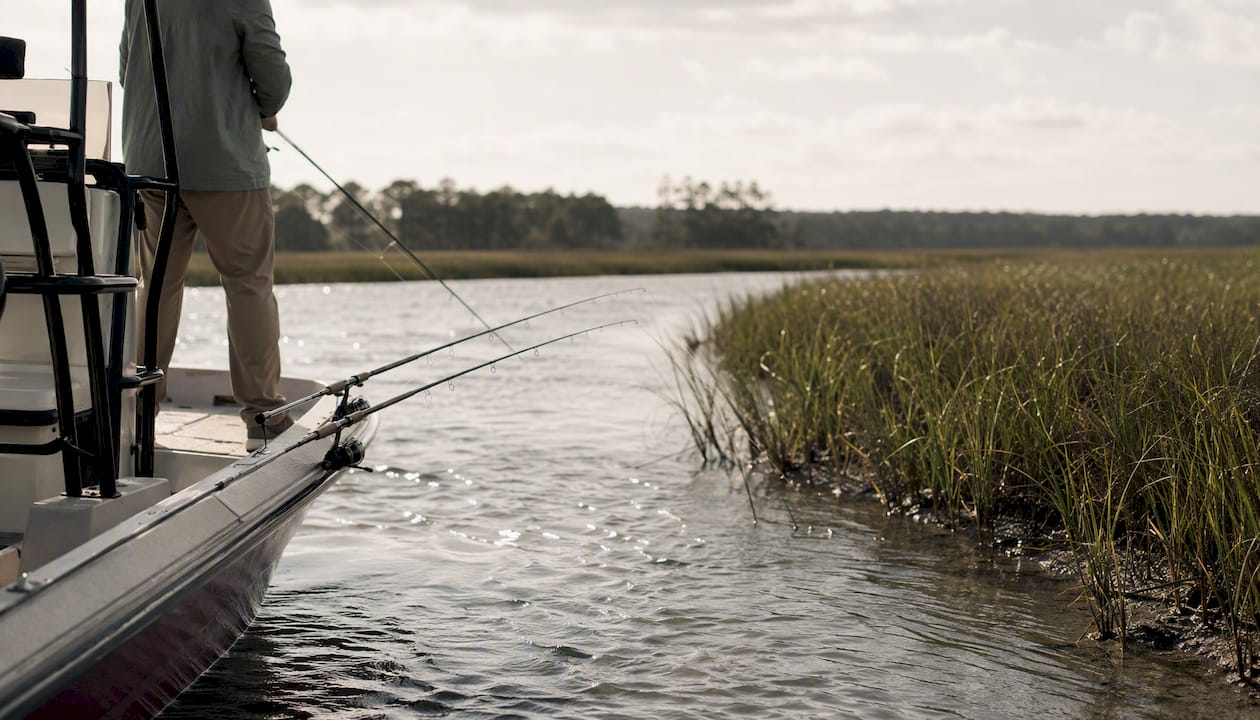
On a boat, drift with the current across flats or along channel edges. Keep baits near the bottom and let the drift do the work. Drop anchor when you find active fish and work the area thoroughly before moving.
Sight-fishing
Polarized glasses are non-negotiable for sight-fishing on flats. Look for:
- Tailing fish (redfish and bonefish pushing their tails above the surface)
- Wakes and nervous water moving against the current
- Dark shadows cruising in shallow, clear water
Cast ahead of the fish’s direction of travel, not directly at it. Let the lure or bait settle before the fish arrives.
When to move:
- No bites or bait activity after 20 minutes
- Tide has gone slack and you’re not seeing surface action
- Birds have moved to a different area of the estuary
Pro Tip: Active lure-work shines during moving tides when fish are aggressive and hunting. Switch to patient bait fishing during the last hour of a run when fish slow down and hold tight to structure. Reading that transition is what separates consistent anglers from occasional ones.
Common U.S. estuary species and what catches them
U.S. estuaries from the Gulf Coast to the Northeast hold a diverse mix of species. Here’s what you’re likely to encounter and what works:
- Striped bass: Channel mouths, bridge pylons, and deep edges. Bucktail jigs, live eels, and large soft plastics. Incoming and outgoing tides both produce.
- Redfish (red drum): Shallow flats and mangrove edges. Gold spoons, soft plastics, and live shrimp. Incoming tide on the flats is prime.
- Spotted seatrout: Grass flats and channel edges. Soft plastics, suspending minnows, and live shrimp under a popping cork.
- Flounder/flatfish: Sandy bottom near structure and channel edges. Slow-dragged soft plastics and live finger mullet on a jig head.
- Sheepshead: Oyster beds, dock pilings, and rock structure. Fiddler crabs, sandworms, and nippers fished tight to structure.
- Black drum: Similar structure to sheepshead. Shrimp, crabs, and cut mullet on the bottom.
- Bluefish: Open water and channel mouths during bait runs. Metal spoons, poppers, and fast-retrieved jigs.
- Croaker: Sandy and muddy bottoms throughout the estuary. Bloodworms and shrimp on small hooks near the bottom.
Regional variation matters. Gulf Coast estuaries run warmer and hold redfish and trout year-round. Northeast estuaries see striped bass and bluefish dominate spring through fall, with species pushing offshore or south in winter. Adapt your presentation to what’s local and seasonal.
Reading the water: the 80/20 rule for estuary anglers
Most of your success on any given trip comes from a small number of observations made in the first few minutes on the water. Scan first, fish second.
Spotting bait schools, bird activity, and surface boils gives you the highest-value information about where predators are feeding right now. Everything else is secondary.
High-value cues to scan on arrival:
- Diving birds: Terns and pelicans diving mean bait near the surface and predators pushing from below. Get there fast.
- Surface boils: Predators busting bait. Cast into the boil and retrieve quickly.
- Nervous water: Subtle ripples or flickering on a calm surface. Baitfish reacting to something below.
- Current seams: Visible lines where fast and slow water meet. Bait stacks here; predators follow.
- Water color changes: Stained water meeting clear water creates a feeding edge.
- Mullet jumping: Mullet leap when disturbed by predators below. Work that area.
Converting cues into action:
- Birds diving over open water: switch to a fast-retrieved metal jig or topwater lure
- Boils near structure: cast a soft plastic or hardbody past the structure and retrieve through the boil
- Current seam with no visible surface activity: run a drifted live bait or soft plastic along the seam at mid-depth
Pro Tip: Run this checklist the moment you arrive: (1) birds, (2) surface boils, (3) nervous water, (4) current seams, (5) water color, (6) bait on sonar, (7) structure nearby, (8) wind direction, (9) sun angle, (10) tide stage. Ten seconds of scanning beats 20 minutes of blind casting.
Safety, conservation, and rule checks before you fish
No fish is worth a fine or a dangerous situation. Run through these before you leave the dock or the parking lot.
Safety checklist:
- Life jackets on board and accessible (required by U.S. Coast Guard regulations for all vessels)
- Check the weather forecast and wind speed before launching
- Anchor technique: in a boat, anchor from the bow, never the stern, in current
- Wear sun protection and carry water on hot days
- Wear wading boots or closed-toe shoes on flats and oyster beds; bare feet on oyster shell is a bad day
- File a float plan with someone onshore if fishing alone
Regulations to check before every trip:
- Your state’s fish and wildlife agency website for current size and bag limits
- NOAA Fisheries for federal species protections and habitat advisories
- Local shellfish closure advisories (posted at boat ramps and on state health department sites)
- Estuary-specific closures during spawning seasons
Conservation practices:
- Wet your hands before handling fish you plan to release
- Keep fish in the water as much as possible during hook removal
- Use circle hooks with live bait to reduce gut-hooking
- Avoid crushing grass beds and oyster structure with anchors or wading carelessly
- Know your limits and keep only what you’ll eat
An angler’s perspective: what I actually do before every estuary trip
Before I leave the dock, I run a short mental checklist that’s saved more sessions than any single tactic. Tide screenshot on my phone, bait confirmed (live if possible, fresh frozen as backup), a quick scan of the state fisheries site for any new closures, and terminal tackle restocked. Hooks, swivels, sinkers, and spare leaders go in a dedicated compartment so I’m not digging through a pile of gear when the tide turns.
On the water, I scout edges before I fish them. I idle along the drop-off, watch for bait on the sonar, and look for current seams before I ever make a cast. The first cast of the day is almost never the most important one. The first observation is.
My favorite rig tweak for clear estuary water: drop to a 6 lb fluorocarbon leader even when targeting fish that could run heavier. The extra bites in gin-clear conditions more than offset the occasional break-off. Pair that with a size 6 long-shank hook on a live prawn and you’ve got a setup that’s hard to beat for most inshore species.
Highclasstackleco’s terminal tackle lineup covers everything you need to build these rigs from scratch: hooks, swivels, sinkers, and traces in the exact sizes that work in estuary conditions. If you want a ready-made solution, the component tackle box is a clean way to get organized fast.
Sources
These are the resources worth bookmarking before your next estuary trip:
- Estuary Habitat | NOAA Fisheries
- Estuary fishing basics - Fishing World Australia
- What Is Estuary Fishing? Tips, Techniques & Best Spots | Charter Fish Narooma
Recommended
- Saltwater Bottom Fishing Rigs: Build, Tie, and Fish Them – High Class Tackle Co.®
- Inlet Fishing Setup: Your Complete Gear Guide – High Class Tackle Co.®
- Tide Fishing Salmon Bays: The PNW Angler’s Guide – High Class Tackle Co.®
- Offshore Saltwater Tackle Types: 2026 Angler’s Guide – High Class Tackle Co.®
0 comments