

What every angler needs to know before cleaning a catch
To clean your fish catch properly, you need four things working together: the right tools, immediate gutting, rapid cooling, and a clean workspace. Skip any one of those and you’re risking spoiled meat, off flavors, or a foodborne illness nobody wants after a great day on the water.
Here’s what to have ready before you make the first cut:
- Sharp fillet knife (a long, flexible blade for filleting; a shorter blade for gutting whole fish)
- Fish scaler (inexpensive and far cleaner than improvising with a spoon)
- Sturdy cutting board (non-porous surface, easy to sanitize)
- Ice-packed cooler (your single most important piece of gear after the knife)
- Clean water source (for rinsing the cavity and your hands)
- Disposable gloves (reduces cross-contamination risk)
- Sealable storage bags (for transport and freezing)
- Paper towels or clean cloths (for wiping surfaces and the fish itself)
Pennsylvania State Extension is direct on this: clean fish promptly, because digestive enzymes will spoil the flesh fast and off-flavors develop quickly. The moment you decide to keep a fish, the clock is running.
How to clean your fish catch properly, step by step
Good technique here protects both the flavor and your safety. Work on a stable surface, keep your knife sharp, and move deliberately.
-
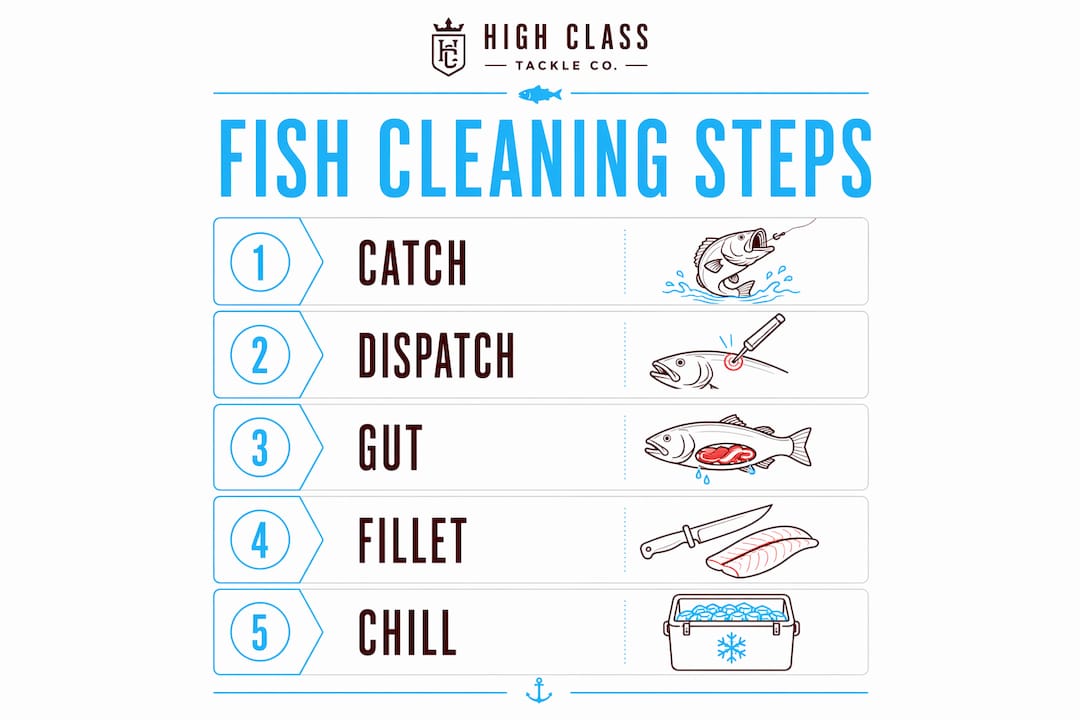
Dispatch the fish quickly. A swift blow to the head or a cut through the gill arches kills the fish fast. The Maine Department of Inland Fisheries & Wildlife notes that a prolonged, stressful death causes lactic acid buildup, which softens the flesh and creates an undesirable texture. Speed here directly affects the quality of your meal.
-
Scale under running water. Hold the fish firmly and run your scaler from tail to head in firm, even strokes. Cold running water keeps scales from flying across your workspace. Pay extra attention near the chin and at the base of the tail, where scales cling tightest.
-
Clip the fins. Use kitchen shears to remove dorsal, pectoral, pelvic, and anal fins before gutting. Sharp fins cause serious puncture wounds, so don’t skip this.
-
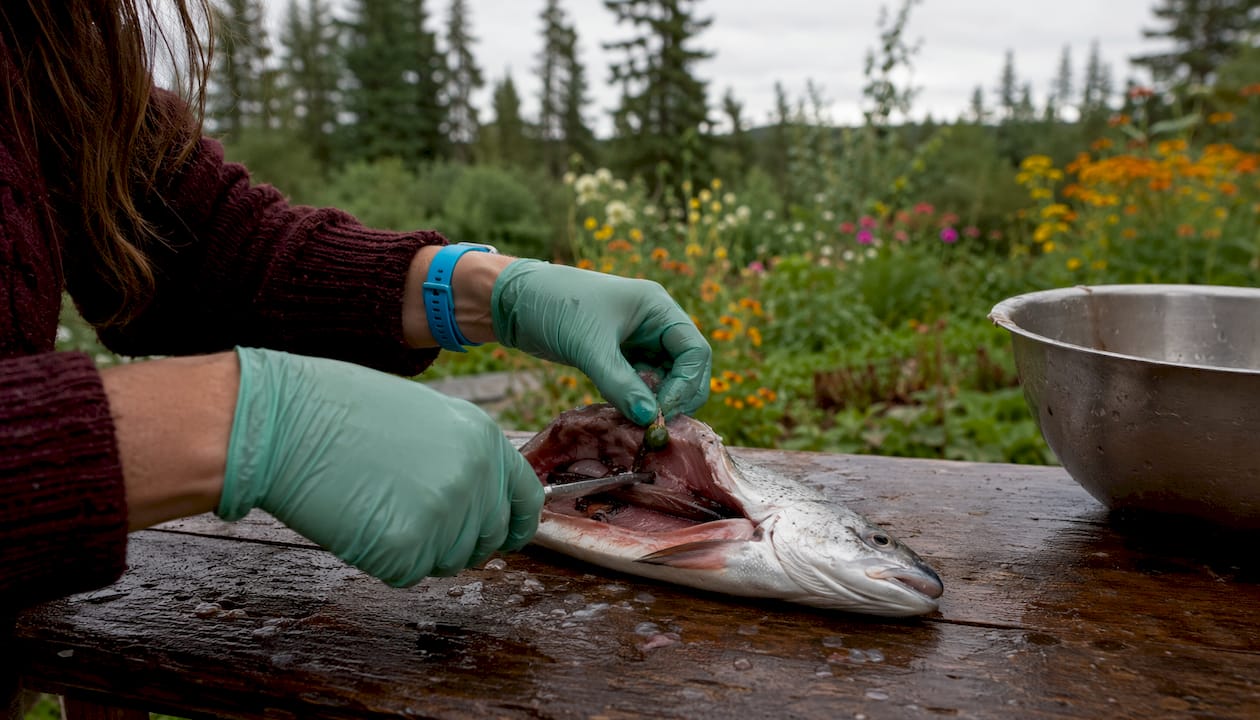
Open the belly. Rest the fish on your cutting board. Insert the knife tip near the anal opening and slice toward the head, keeping the blade shallow. The goal is to open the belly without puncturing the intestines.
-
Remove the entrails. Spread the cavity open and pull out all internal organs. If intestinal contents spill inside the cavity, rinse immediately with clean, cold water.
-
Remove the kidney. The dark tissue running along the spine is the kidney. Scrape it out with a spoon or your thumbnail, according to the Oregon Department of Fish & Wildlife. Leaving it behind causes a metallic, off-putting flavor in cooked fish.
-
Rinse the cavity thoroughly. Run a strong stream of cold water through the body cavity. Some fish have a dark lining along the abdominal wall; scrape it off to prevent a strong, oily taste. Blood and internal contents degrade flavor fast if left behind.
-
Fillet for larger fish. Score the skin along the spine from head to tail, then use long, shallow strokes to slice the fillet away from the ribs. Keep the knife close to the bone and lift the fillet as you go so you can follow the fish’s natural shape. Repeat on the other side.
-
Check for pin bones. Run your fingertip along the center of each fillet. Use needle-nose pliers or fish tweezers to pull any remaining bones straight out, following the angle they sit in the flesh.
-
Sanitize your workspace. Collect guts, scales, and scraps and discard them properly. Wash your cutting board, knife, and hands with warm, soapy water before handling the cleaned fish again.
Pro Tip: The gallbladder is a small green sac near the liver. Cut into it and bile will soak into the surrounding flesh, leaving a bitterness you cannot cook out. Cut carefully around it and remove it intact. If it ruptures, rinse the affected area immediately and thoroughly with cold water.
A Mustad 6" fillet knife gives you the flexible, slender blade that makes steps 8 and 9 dramatically cleaner and faster.
How to keep your catch fresh after cleaning
The fastest way to ruin a great fish is to let it sit warm after cleaning. Cooling is not optional.
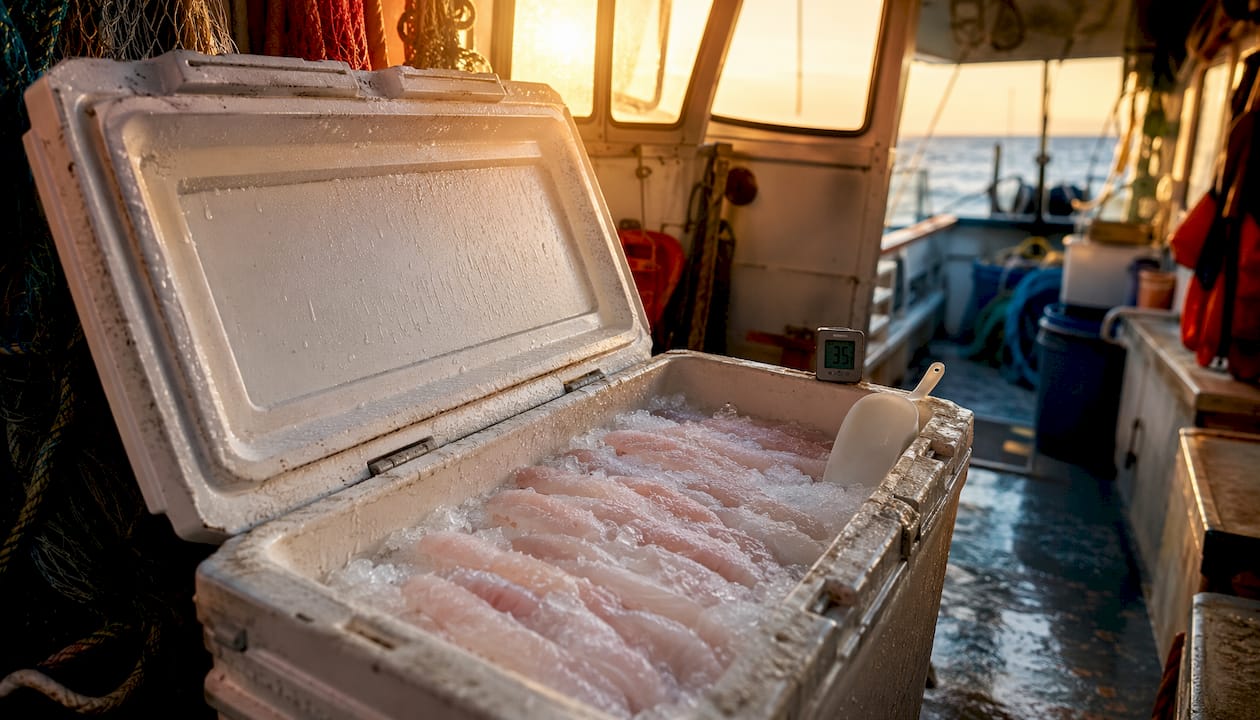
- Target temperature: 35°F–40°F. Get your cleaned fish down to this range as fast as possible. Bacterial and enzymatic activity both accelerate sharply above 40°F.
- Ice-packed cooler. For most fishing situations, a cooler loaded with ice is the best method. Layer ice above and below the fish, not just underneath it.
- Stringer in cold water. When water temperature sits at or below 40°F, a stringer works as a short-term option. The Maine Department of Inland Fisheries & Wildlife recommends this only when water is cold enough, and only if the fish is already dead.
- Vacuum sealing for the freezer. The Oregon Department of Fish & Wildlife recommends vacuum sealing as the best method for freezer storage, protecting against freezer burn. Vacuum-sealed fish should be eaten within a few months for best quality.
- Freezing in a water block. Quick-freeze individual portions on aluminum foil first, then place each in a zip-lock freezer bag, fill with water, and freeze solid. This is a solid alternative when a vacuum sealer isn’t available.
- Clean tools between every fish. Wipe your knife with clean water or alcohol swabs between cuts. Wash hands, knife, and cutting board with warm, soapy water frequently throughout the process.
Always verify water safety with your local health department before keeping fish from any body of water. Mercury, PCBs, and other contaminants accumulate in fish tissue, and trimming skin and fat deposits reduces exposure when advisories are in effect.
Common fish cleaning mistakes that cost you flavor and safety
Most problems at the cleaning table come down to rushing or skipping steps. Here’s what to watch for:
- Puncturing the gallbladder. Bile contamination spreads bitterness through the flesh fast. Slow down when working around the liver.
- Delaying gutting. Digestive enzymes don’t wait. Every minute the organs stay inside a warm fish, spoilage accelerates.
- Leaving blood and kidney tissue. Both cause off flavors. Rinse the cavity completely and scrape the kidney out every time.
- Using a dull knife. A dull blade tears flesh instead of slicing it cleanly, damages the fillet, and increases the risk of a slip injury. Sharpen before every session.
- Ignoring consumption advisories. Some waters carry mercury or PCB advisories. Check with your state fish and wildlife agency before keeping fish from unfamiliar water.
- Filleting before you’re legally allowed to. In Maine, for example, it’s unlawful to alter the length of landlocked salmon, trout, togue, lake whitefish, or bass until the fish is being prepared for immediate cooking. Other states have similar rules. Always check local regulations before filleting in the field.
- Skipping workspace sanitation. Cross-contamination from a dirty cutting board or knife can introduce bacteria into otherwise clean fillets.
Gear up with Highclasstackleco
You put in the work on the water. Don’t let sloppy cleaning undo it. Highclasstackleco carries the premium fishing tackle and tools built for anglers who take their catch seriously, from the hook to the plate. Gear up and fish with confidence.
Key Takeaways
Cleaning your fish catch properly starts the moment you land it: dispatch fast, gut immediately, cool to 35°F–40°F, and sanitize throughout.
| Point | Details |
|---|---|
| Gut immediately after catch | Digestive enzymes spoil flesh fast; clean the fish as soon as possible after landing it. |
| Cool to 35°F–40°F fast | Bacterial and enzymatic activity accelerate above 40°F; use an ice-packed cooler for most conditions. |
| Remove kidney and gallbladder carefully | The kidney causes metallic flavor; a ruptured gallbladder leaves permanent bitterness in the flesh. |
| Vacuum seal for freezer storage | Vacuum-sealed fish should be eaten within a few months for best quality. |
| Check local regulations and advisories | Some states prohibit field filleting of certain species; always verify water safety before keeping fish. |
Recommended
- Weekend Fishing Trip Packing: The 2026 Angler’s Guide – High Class Tackle Co.®
- Best Bait Presentations for Salmon Fishing in 2026 – High Class Tackle Co.®
- What Is a Fishing Tournament? Your Complete Guide – High Class Tackle Co.®
- What Is Float Fishing? A Beginner’s Complete Guide – High Class Tackle Co.®
0 comments