

A fishing tournament is an organized competition where anglers catch fish within defined rules, time limits, and scoring systems to win prizes based on weight, length, or species counts. These events range from small community derbies on local lakes to elite offshore invitationals with entry fees exceeding $5,000. Whether you’re targeting bass on a Pacific Northwest reservoir or chasing salmon offshore, tournaments give competitive fishing a structure that rewards both skill and preparation.
What is a fishing tournament, and how does it work?
A fishing tournament is a timed event where participants compete under a shared rulebook to catch the most impressive fish within a defined area. The core elements are always the same: a target species, a fishing window, a scoring method, and a weigh-in or documentation process. Most tournaments also charge an entry fee, which funds the prize pool.
The scale varies wildly. Local club events on a river might cost $20 to enter and run a single morning. Regional championships can span two days with hundreds of boats. Elite offshore tournaments like those run by B.A.S.S. or the Bassmaster Classic operate at a professional level with national sponsorships and live broadcasts. Understanding this range helps you find the right starting point.
Scoring is the backbone of every tournament. Most events score by total weight of fish brought to the weigh-in, while others use total length or a points system tied to species diversity. The format you fish determines everything from your gear choices to how you handle fish on the water.
What are the common types and formats of fishing tournaments?
Fishing competition types fall into a few clear categories. Knowing the difference before you register saves you from showing up with the wrong gear or wrong expectations.
Live weigh-in format
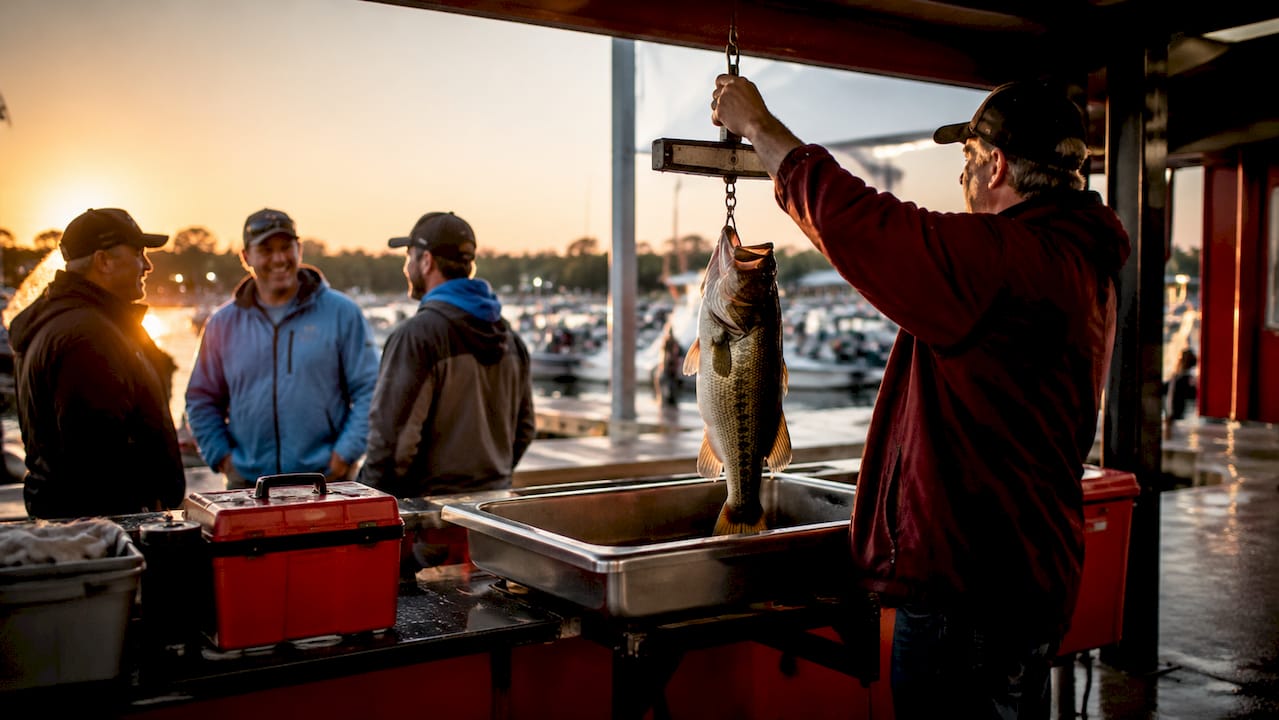
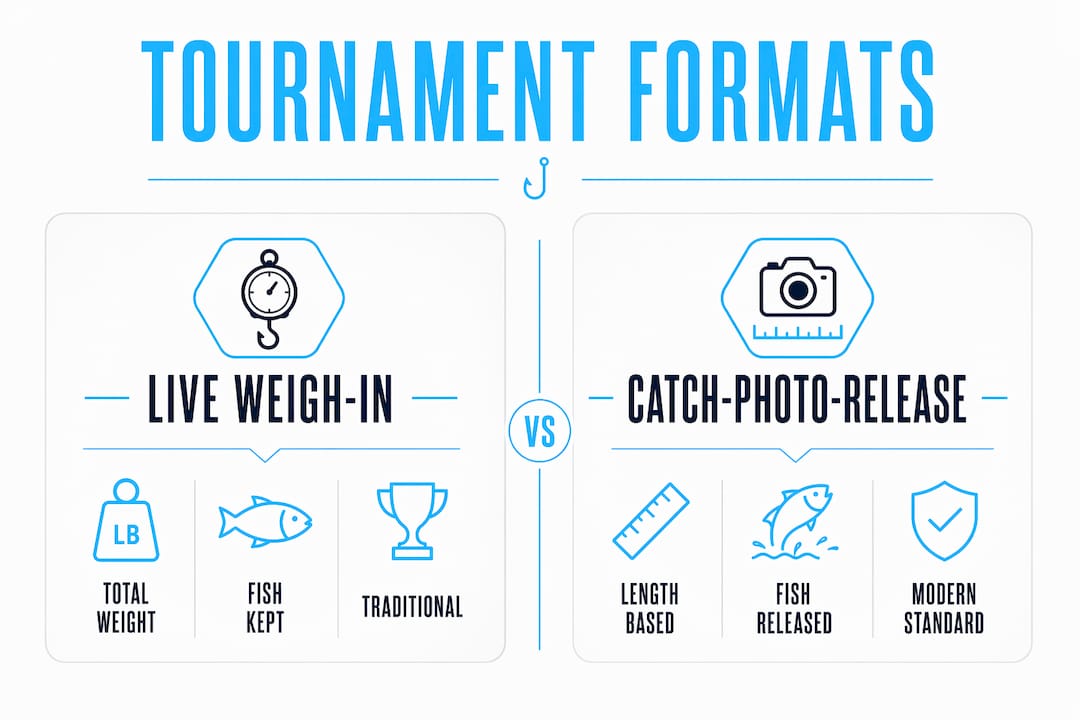
The live weigh-in is the most traditional format. Anglers keep fish alive in a livewell aboard their boat, then bring them to a central weigh-in station at the end of the fishing day. Bass tournaments commonly use this format, with a five-fish limit per angler. B.A.S.S. events apply a four-ounce dead-fish penalty per fish, which pushes anglers to maintain livewell water quality throughout the day.
Catch-photo-release (CPR) format
Catch-photo-release has become the standard in many modern tournaments. Anglers measure fish against certified boards, photograph them, and release them immediately. No live transport required. This format reduces fish mortality and opens tournaments to waters where live transport is restricted or impractical.
Slam format
Slam tournaments require anglers to catch at least one of each species in a defined group. The Florida Inshore Slam, for example, targets Snook, Redfish, Spotted Sea Trout, and Tarpon. Failing to complete the full set disqualifies your score. Side awards for the biggest individual species add another layer of competition within the same event.
Here is a quick comparison of the three main formats:
| Format | Scoring method | Conservation level | Best for |
|---|---|---|---|
| Live weigh-in | Total fish weight | Moderate | Bass, walleye events |
| Catch-photo-release | Length or points | High | Trout, salmon, inshore |
| Slam | Species completion | High | Inshore, multi-species |
Pro Tip: If you are new to competitive fishing, start with a catch-photo-release event. You need no livewell setup, and the format is forgiving for beginners learning documentation procedures.
Beyond format, tournaments also differ by tier. Club and local events are low-pressure, low-cost, and great for building experience. Regional tournaments attract more serious competitors and larger prize pools. Elite invitationals like the Bassmaster Elite Series or FLW Tour are professional circuits with strict qualification requirements.
What are typical rules, procedures, and scoring methods?
Tournament rules exist to keep competition fair and fish populations healthy. Every event publishes a rulebook before registration closes. Read it completely. Most disqualifications come from anglers who skimmed the rules and missed a detail.
Here is what to expect on tournament day:
- Captain’s meeting. This pre-tournament briefing covers boundaries, fishing hours, weigh-in times, and any last-minute rule changes. Experienced anglers use this meeting to ask clarifying questions about weather contingency plans and protest procedures. Skipping it is one of the most common beginner mistakes.
- Defined fishing hours. Most bass tournaments run from 6:00 a.m. to 3:00 p.m. Salmon and offshore events may use different windows based on tides or species behavior. Fishing outside the defined hours results in immediate disqualification.
- Tackle and bait restrictions. Some events ban live bait entirely. Others restrict hook counts or lure types. Salmon tournaments on the West Coast often have specific terminal gear rules tied to state regulations.
- Weigh-in or photo submission. Live weigh-in events require fish to be alive at the scale. CPR events require timestamped photos with a certified measuring board. Missing the weigh-in deadline forfeits your entire catch.
- Penalties. Dead fish in a live weigh-in event typically cost four ounces per fish. Short fish, meaning fish under the legal size limit, result in disqualification of that fish and sometimes a penalty weight deducted from your total.
Pro Tip: Bring a printed copy of the rulebook on tournament day. When a question comes up on the water, you want the answer in your hand, not back at the dock.
Scoring methods vary by event. Weight-based scoring rewards anglers who find big fish. Length-based scoring, common in CPR formats, rewards precision measurement and honest documentation. Slam formats score by species completion first, then by total length or points as a tiebreaker.
How to enter and prepare for a fishing tournament
Registration is straightforward. Most tournaments post entry forms on their club website or through platforms like Fishing Chaos or TourneyX. Entry fees range from under $10 for charity derbies to over $100 for most local club events, with optional side pots that let you buy into additional prize categories. Offshore and elite events can run much higher.
Before you show up, preparation separates competitive anglers from casual participants. Here is a solid pre-tournament checklist:
- Read the full rulebook. Every page. Pay attention to boundary maps, legal species sizes, and documentation requirements.
- Prepare your measuring tools. For CPR events, bring a certified bump board and a waterproof camera or phone mount. For live weigh-in events, confirm your livewell is running clean and your aerator is functioning.
- Organize your tackle. A component tackle box keeps your rigs sorted and accessible under pressure. Fumbling through loose gear costs you fishing time.
- Scout your water. Pre-tournament practice days are legal in most events. Use them. Mark waypoints, test presentations, and identify backup spots.
- Attend the captain’s meeting. Arrive early. Sit up front. Ask questions about anything unclear in the rulebook.
For live weigh-in events, livewell management is a skill in itself. Tournament boats function as precision systems where livewell water quality and quiet boat control can matter more than raw angling skill. Change livewell water regularly, use an aeration additive, and keep fish out of direct sunlight.
Pro Tip: For your first tournament, fish with a more experienced partner if the format allows it. Watching how a veteran manages the boat, documents fish, and handles weigh-in procedures teaches you more than any guide can.
What do conservation and sportsmanship look like in modern tournaments?
Tournament fishing has shifted toward conservation and community values over the past two decades. Winning still matters, but how you treat the fish and your fellow competitors defines your reputation on the water.
Key conservation practices now standard in most events include:
- Catch-photo-release adoption. Photo weigh-in formats have reduced fish mortality significantly. Fish are measured, photographed, and returned to the water within seconds.
- Proper fish handling. Wet your hands before touching fish. Keep them horizontal. Minimize air exposure. Quick release and careful handling increase survival rates and protect the fishery for future tournaments.
- Livewell best practices. Use fresh, aerated water. Add a fish care product like Sure Life Please Release Me to reduce stress. Check water temperature throughout the day.
- Honest documentation. In CPR formats, accurate measurement and unaltered photos are the foundation of fair competition. Cheating on a photo submission is grounds for lifetime bans in most organizations.
Sportsmanship runs deeper than rule compliance. The fishing tournament community is tight. Sharing information at the dock, respecting other anglers’ water, and celebrating good catches from competitors builds the culture that keeps these events worth entering. Skill development happens fastest inside a community that pushes each other.
Key takeaways
A fishing tournament is a structured competition scored by weight, length, or species completion, and preparation, fish care, and rule knowledge matter as much as angling ability.
| Point | Details |
|---|---|
| Core definition | Tournaments are timed, scored competitions with defined species, rules, and prize structures. |
| Format variety | Live weigh-in, catch-photo-release, and slam formats each require different gear and strategies. |
| Rules and procedures | Captain’s meetings, fishing hours, and weigh-in deadlines are non-negotiable; missing any can disqualify you. |
| Entry preparation | Read the rulebook fully, prep your measuring tools, and scout water before tournament day. |
| Conservation mindset | Modern tournaments prioritize fish survival through CPR formats, proper handling, and honest documentation. |
Why the captain’s meeting changed how I fish tournaments
I used to treat the captain’s meeting like a formality. Show up, grab the map, grab a coffee, leave. That changed the first time I got penalized for fishing a boundary I misread on the printed chart. The tournament director had clarified the exact boundary line at the meeting. I had already left.
That four-ounce dead-fish penalty in B.A.S.S. events sounds minor until it costs you a top-three finish. The captain’s meeting is where you ask whether that penalty applies to your event, what happens if weather forces an early weigh-in, and whether the boundary follows the main channel or the shoreline. Experienced anglers leverage pre-tournament meetings to ask every uncomfortable question before lines go in the water.
My other hard-won lesson: your boat is your workplace. I have watched anglers with average casting skills beat better fishermen because their livewell was dialed in, their documentation was fast, and their boat positioning was quiet. Noise spooks fish in shallow water. A trolling motor running too loud at the wrong moment has cost more tournament fish than bad bait selection ever will.
Start small. Find a local club event or a charity derby. Fish it twice before you move up in stakes. The format, the pressure, and the community feel completely different from a solo day on the water. Once you get that first weigh-in under your belt, you will understand why anglers get hooked on competing.
— Nick
Gear up for your next tournament with Highclasstackleco
Ready to compete? Highclasstackleco builds tackle for anglers who take the water seriously. Whether you are rigging up for a West Coast salmon tournament or an inshore slam, the right gear makes the difference between a good day and a winning one.
The Highclasstackleco tackle lineup includes flashers, terminal gear, blades, and organization tools built for real tournament conditions. The new component tackle box keeps your rigs sorted and ready when the bite turns on. Gifting a tournament angler? A digital gift card lets them choose exactly what they need for their next event. Built by anglers, for anglers. That is the Highclasstackleco standard.
FAQ
What is a fishing tournament in simple terms?
A fishing tournament is an organized competition where anglers catch fish under defined rules and are scored by weight, length, or species to determine a winner. Events range from free community derbies to elite invitationals with entry fees over $5,000.
How do I enter my first fishing tournament?
Register through the tournament’s official website or a platform like TourneyX, pay the entry fee, and read the full rulebook before the event. Most local club events charge between $20 and $100 to enter.
What is a catch-photo-release tournament?
A catch-photo-release tournament requires anglers to measure fish against a certified board, photograph them, and release them immediately rather than transporting live fish to a weigh-in station. This format reduces fish mortality and is now standard in many modern events.
What happens at a captain’s meeting?
A captain’s meeting is a mandatory pre-tournament briefing where organizers review boundaries, fishing hours, weigh-in procedures, and rule clarifications. Skipping it is a common beginner mistake that leads to avoidable penalties and disqualifications.
What is a slam tournament in fishing?
A slam tournament requires anglers to catch at least one of every species in a defined group to qualify for scoring. The Florida Inshore Slam targets Snook, Redfish, Spotted Sea Trout, and Tarpon, with side awards for the largest individual catch in each category.
0 comments