

Chinook and Coho salmon are definitively separated by two physical markers: gum line color and tail spotting pattern. Black gums identify Chinook; white or pale gums identify Coho. Every angler targeting Pacific Northwest salmon needs to know this cold. Misidentifying your catch at boat-side is not just embarrassing. It can cost you a fine. This guide breaks down the physical differences between Chinook and Coho, explains how those differences shape your fishing strategy, and tells you exactly what gear to run for each species.
What visual traits clearly distinguish Chinook vs Coho salmon?
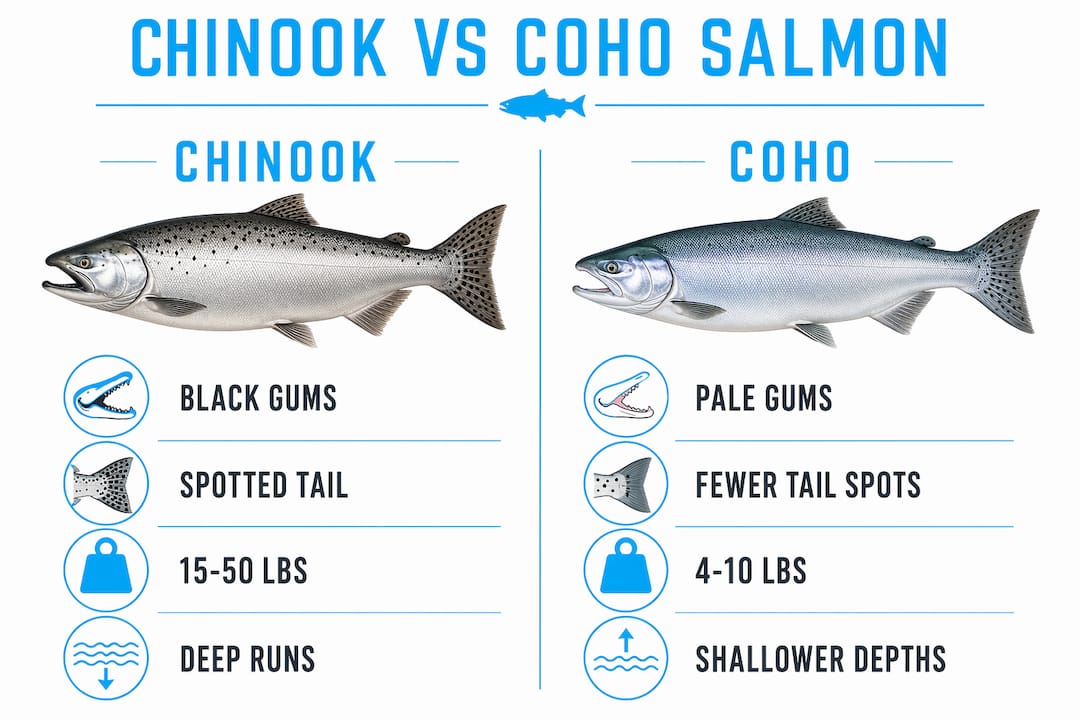
The gum line is your fastest, most reliable ID tool on the water. Chinook have black gums and a black mouth interior. Coho have white or pale gums. This marker holds up in saltwater, freshwater, and during spawning color changes when everything else looks confusing.
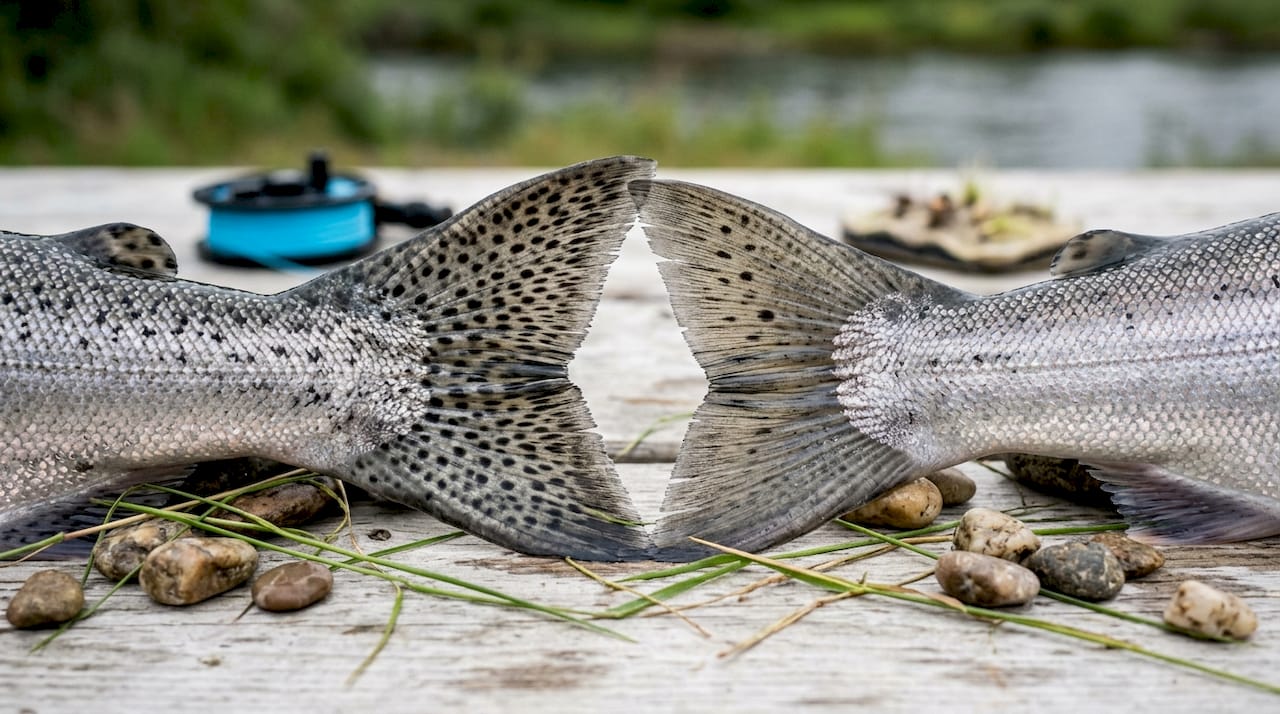
Tail spotting is your second check. Chinook carry black spots on both the upper and lower tail lobes, often extending up across the back. Coho spots appear only on the upper lobe. The lower half of a Coho tail is clean. You can often see this difference from a few feet away before the fish even hits the net.
Size rounds out the picture. Chinook adults typically run 15–50 lbs with a thick, powerful build. Coho average 4–10 lbs and carry a slimmer, more streamlined body. A big Coho can fool you on the scale, but the gum check settles it every time.
| Trait | Chinook | Coho |
|---|---|---|
| Gum color | Black | White or pale |
| Tail spots | Both upper and lower lobes | Upper lobe only |
| Average weight | 15–50 lbs | 4–10 lbs |
| Body build | Thick and robust | Slim and streamlined |
| Back spotting | Heavy, extends up the back | Lighter, less extensive |
Pro Tip: Flip the fish and check the gum line before you do anything else. It takes two seconds and removes all doubt, regardless of spawning color or water clarity.
The differences between Chinook and Coho also show up in body color during spawning. Chinook turn dark olive to maroon. Coho shift to bright red with a green head. Neither color change affects the gum line, which is exactly why experienced anglers rely on it first.
How do behavior and habitat differences shape your fishing strategy?
Chinook and Coho do not share the same water column, and that single fact changes everything about how you fish for them. Chinook hold deep, typically 30–100+ feet down. Coho work shallower mid-depths and sometimes push right to the surface. Targeting the wrong depth wastes your whole day.
Seasonal timing also separates the two species. Chinook run earlier in the season, with peak action often in late spring through midsummer depending on your region. Coho follow later, with strong runs through late summer and into fall. Anglers who know this plan their trips around species windows rather than just “salmon season” in general.
The fight style is where things get really interesting. Chinook run deep and hard, sometimes stripping 100+ yards of line in a single run. It is a marathon fight that tests your drag and your patience. Coho go aerial. They jump, they thrash, and they demand you keep constant tension or they throw the hook. Two completely different mental games.
Here is how to adapt your approach based on species behavior:
- Set your downrigger depth first. Run 30–60 ft for Coho, 60–100+ ft for Chinook. Adjust based on sonar readings.
- Match your retrieve speed to the species. Coho respond to faster, erratic retrieves. Chinook prefer a slower, steady presentation.
- Plan your fight before the hookup. For Chinook, clear the deck and prepare for long runs. For Coho, keep your rod tip up and stay ready for jumps.
- Watch the water temperature. Coho push shallower in cooler surface temps. Chinook stay deep regardless.
Pro Tip: When you mark fish on sonar but cannot identify the species, drop two rods at different depths simultaneously. The depth that produces first tells you which species is active.
Bait preference also splits cleanly between the two. Chinook respond strongly to cured baits and anchovy wraps. Coho hit spoons, flies, and downrigger lures more readily. Running the wrong presentation at the right depth still gets you skunked.
What gear and tackle should you run for each species?
Gear choice for Chinook starts with power. These fish are heavy, they run deep, and they fight long. A medium-heavy to heavy rod in the 8.5–10.5 ft range gives you the backbone to turn a big king without breaking off. Pair it with a level-wind reel loaded with 30–50 lb braid and a 20–30 lb fluorocarbon leader. Your drag needs to be set firm enough to set the hook but loose enough to let a 40 lb fish run without snapping your line.
Coho gear runs lighter and faster. A medium-action rod in the 8–9 ft range handles their acrobatic fight without overpowering the experience. Spool up with 20–30 lb braid and a 12–15 lb fluorocarbon leader. The lighter setup also improves lure action on spoons and hoochies, which Coho key on hard.
Key tackle considerations by species:
- Chinook: Cured roe, anchovy rigs, large spoons (3–4 oz), and herring wraps. Hook size 2/0–4/0. Flashers with UV finishes to trigger strikes at depth.
- Coho: Smaller spoons (1–2 oz), flies, pink hoochies, and surface or mid-depth lures. Hook size 1/0–2/0. Faster flasher rotation to match their aggressive, reactive feeding.
- Line strength: Never go under 20 lb mainline for either species in open water. Rocks, current, and big fish eat light line for breakfast.
- Hook sharpness: Check your hooks every single drift. Dull hooks are the number one reason anglers lose fish at the net.
For detailed salmon bait presentations that cover both species, Highclasstackleco has a full breakdown worth bookmarking before your next trip. If you fish Pacific Northwest rivers, the PNW salmon plug tactics guide covers river-specific setups for both Chinook and Coho in moving water.
Boat presentation matters too. A well-rigged fishing boat with clear deck space and organized tackle makes the difference between a smooth fight and a tangled mess. Anglers who take their setup seriously, right down to boat graphics and visibility, tend to fish with more confidence and less chaos on the water.
What identification mistakes do anglers make most often?
Beginner anglers most often misidentify species at boat-side, especially under pressure when the fish is still green and flopping. The fix is simple: build a two-step check into your routine before you touch the fish for anything else. Gum color first, tail spots second.
The adipose fin check is the next critical step. Hatchery fish are marked by adipose fin clipping. A clipped adipose fin means the fish is legal to retain in most hatchery-selective fisheries. An intact adipose fin on a wild fish means release, regardless of species. Skipping this check is how anglers end up with a citation.
Common mistakes to avoid:
- Relying on body color alone. Spawning color changes make both species look dramatically different from their ocean form. Color is a clue, not a confirmation.
- Assuming size equals species. A large Coho and a small Chinook overlap in weight. Always check the gum line.
- Skipping the adipose check. Regulations vary daily and by species. What was legal yesterday may not be legal today. Check current regs every morning before you launch.
- Rushing the ID. Take 10 seconds. A wrong call costs far more than 10 seconds.
Pro Tip: Keep a laminated ID card in your tackle box with gum color photos and tail spot diagrams. It sounds basic, but it has saved experienced anglers from expensive mistakes on unfamiliar water.
Conservation matters here too. Both Chinook and Coho populations face pressure from habitat loss and changing ocean conditions. Accurate identification and proper handling of wild fish directly supports sustainable fisheries for the next generation of anglers.
Key Takeaways
Chinook and Coho salmon are most reliably separated by gum line color, tail spotting pattern, and depth preference, and knowing all three makes you a more effective and legally compliant angler.
| Point | Details |
|---|---|
| Gum line is the definitive ID | Black gums mean Chinook; white or pale gums mean Coho, regardless of spawning color. |
| Tail spots confirm the ID | Chinook spots cover both tail lobes; Coho spots appear only on the upper lobe. |
| Fish the right depth | Target 30–100+ ft for Chinook; shallower mid-depths for Coho to maximize hookups. |
| Match gear to the fight | Heavy rods and 30–50 lb braid for Chinook; lighter setups and faster lures for Coho. |
| Check the adipose fin | A clipped adipose fin marks a hatchery fish legal to retain; an intact fin means release. |
What I have learned fishing both species hard
I have spent a lot of mornings on the water chasing both Chinook and Coho, and the honest truth is that most anglers underestimate how different these fish actually are. Not just in size, but in how they think and how they fight. A Chinook is a war of attrition. You have to be patient, keep steady pressure, and let the fish tire itself out. Rush it and you lose. A Coho is pure chaos. The moment that fish goes airborne, your whole body has to react instantly. Two completely different experiences on the same rod.
What surprises most people is how much the depth difference matters. I have watched anglers run their gear at 40 ft all day and wonder why they are only catching Coho when the Chinook are stacked at 80 ft on the sonar. The fish are right there. The depth is wrong. Once you commit to fishing the right column for the right species, your numbers change fast.
The regulation piece is the one I take most seriously. I have seen good anglers make honest mistakes on species ID and pay for it. The gum check takes two seconds. There is no excuse to skip it. If you are fishing somewhere like Buoy 10 where Chinook and Coho seasons can shift daily, you need that ID to be automatic. Build the habit now and it never costs you.
— Nick
Gear up for Chinook and Coho season with Highclasstackleco
Highclasstackleco builds tackle specifically for West Coast salmon anglers who want gear that performs when it counts. The fishing blades and terminal tackle lineup covers everything from Chinook-ready flashers to Coho-specific hook and leader setups. The new Component Tackle Box keeps your rig organized and ready to swap between species setups without digging through a pile of gear. If you are shopping for a fellow angler, the digital gift card lets them pick exactly what they need for their next trip. Built by anglers, for anglers. That is the standard at Highclasstackleco.
FAQ
What is the fastest way to tell Chinook from Coho?
Check the gum line. Chinook have black gums and a black mouth interior; Coho have white or pale gums. This marker is reliable in both saltwater and freshwater, even during spawning.
Do Chinook and Coho fight differently?
Yes, significantly. Chinook make long, deep runs that can strip 100+ yards of line, requiring patient drag management. Coho jump and thrash aerially, demanding constant rod tension to prevent hook throws.
Which salmon is better to eat?
Chinook is widely regarded as the richest-tasting Pacific salmon due to its high fat content and deep orange flesh. Coho is leaner with a milder flavor, making it a solid choice for lighter preparations and grilling.
How do I know if a salmon is legal to keep?
Check the adipose fin. A clipped adipose fin marks a hatchery fish, which is legal to retain in most selective fisheries. An intact adipose fin on a wild fish typically requires release. Always verify current daily regulations before you fish.
What depth should I target for each species?
Run your gear at 30–100+ feet for Chinook, which hold deep. Target shallower mid-depths for Coho, which often work the upper water column and respond well to surface and mid-depth presentations.
Recommended
- BC Sockeye Fishing Tackle Guide for PNW Anglers – High Class Tackle Co.®
- Salmon plug fishing rivers: Proven PNW tactics and gear – High Class Tackle Co.®
- Tide Fishing Salmon Bays: The PNW Angler’s Guide – High Class Tackle Co.®
- Salmon Fishing Low Water: Best Tactics for the PNW – High Class Tackle Co.®
0 comments