

BC sockeye fishing tackle is defined by one non-negotiable constraint: no bait, ever. The Fisheries and Oceans Canada (DFO) regulations governing Fraser River sockeye openings prohibit bait entirely, which means every rod, reel, leader, and hook you bring to the water must be built around flossing. Flossing is the technique of drifting a single hook at controlled depth so it passes near a sockeye’s mouth during its upstream migration. Sockeye in BC freshwater will not bite lures the way chinook or coho do. That changes everything about your setup. This BC sockeye fishing tackle guide breaks down every component you need, from rod length to hook style, so you show up ready to fish legally and effectively.
1. Best rods and reels for BC sockeye tackle setups
The right rod for sockeye flossing is 10 to 12 feet long with medium-heavy power. That length gives you line control across fast Fraser River currents and lets you mend your drift without repositioning your feet every cast. A fast or moderate-fast action tip loads quickly and telegraphs the subtle resistance of a floshed hook. Shorter rods under 9 feet lose that mending leverage fast.
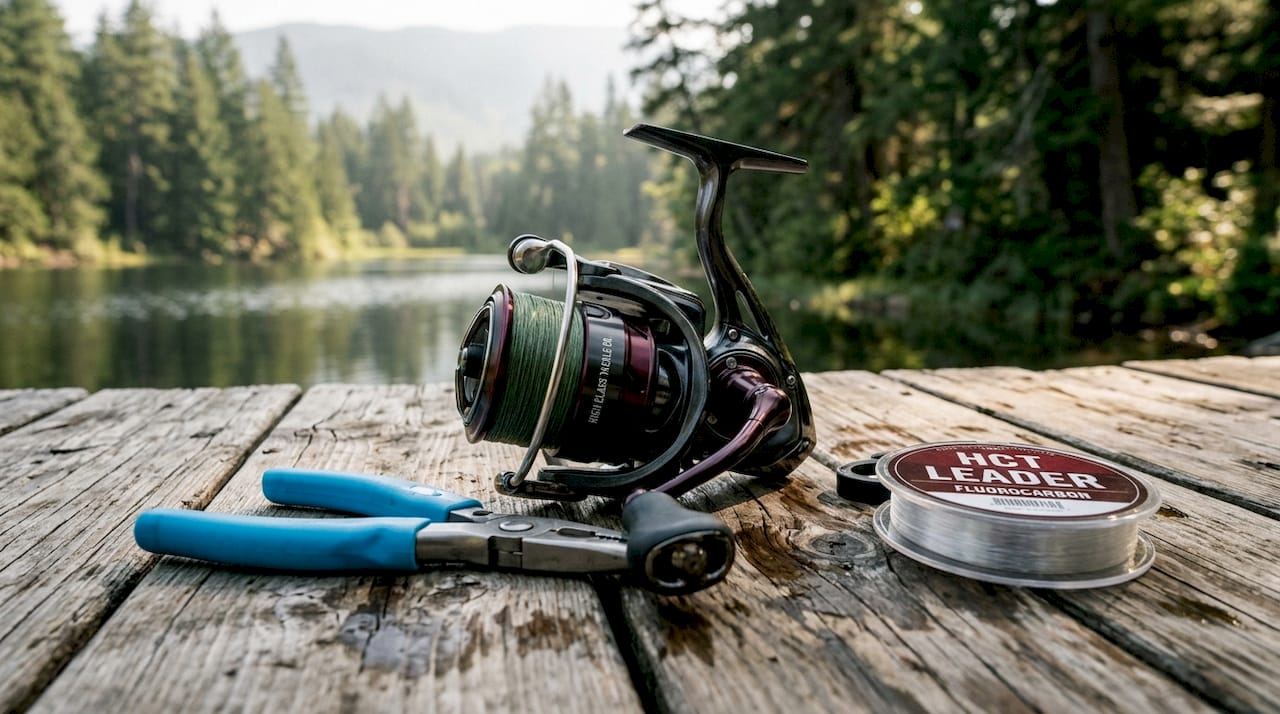
For reels, spinning reels rated for saltwater with rust-resistant components are the standard choice. Size 3500 to 4500 covers most sockeye river scenarios. You need at least 200 yards of line capacity and a drag system that runs smooth under sustained pressure because a fresh sockeye in current is a different animal than a lake-caught fish.
- Reel size: 3500 to 4500 class spinning reels
- Drag: sealed, smooth drag rated for 15 to 20 lbs of pressure
- Line capacity: 200+ yards of 40 to 65 lb braided mainline
- Rod length: 10 to 12 feet, medium-heavy power
- Action: fast or moderate-fast for sensitivity and hook-set speed
Baitcasting reels work for experienced anglers who want precise depth control, but the learning curve on a fast river is steep. Backlashes in heavy current cost you fish and time. Spinning gear wins for most anglers targeting sockeye in BC rivers.
Pro Tip: Spool your spinning reel with 50 lb braid as your mainline. It cuts through current better than mono, gives you direct feel on the drift, and holds up to rocky bottom contact without fraying after a single session.
2. Leader types, lengths, and hooks for sockeye flossing rigs
Leader selection is where most anglers either win or lose on the Fraser. Leader lengths of 3 to 5 feet are the standard range, but the right length depends on current speed and water clarity. Shorter leaders in the 3-foot range give you tighter control in fast, turbid water. Longer leaders in the 4 to 5-foot range work better in slower, clearer conditions where fish are more likely to spook from the mainline.
| Leader Material | Visibility | Flexibility | Best Condition |
|---|---|---|---|
| Monofilament (20-30 lb) | Higher | More flexible | Fast, murky water |
| Fluorocarbon (20 lb) | Near-invisible | Stiffer | Clear, slower water |
Fluorocarbon sinks faster and is nearly invisible underwater, which matters in clear water. Monofilament is more forgiving on the knot and absorbs shock better during the initial hook-set. Both work. Match the material to the conditions you are fishing that day.
For hooks, light-wire single hooks in sizes 2 to 1/0 are the go-to for flossing. Barbless hooks are required in many BC sockeye openings, so check your DFO regulations before you tie on anything. Light-wire hooks penetrate the jaw with minimal force, which is exactly what you need when the fish is not actively biting.
Pro Tip: Tie your leader with a loop-to-loop connection to your mainline. You can swap leader lengths in under 30 seconds streamside without retying your entire rig when conditions shift.
3. Rigging and terminal tackle setups for BC rivers
The flossing rig is the foundation of sockeye fishing in BC freshwater. The concept is straightforward. You drift a single hook at the right depth so it passes through the water column near a sockeye’s mouth. When the fish swims forward, the line contacts the outside of its jaw and the hook sets. Depth control and drift precision matter far more than lure color or flash.
Here is how to rig it:
- Weight: Use 1.5 to 3 oz pencil weights or slinky weights to get your rig to the bottom of the strike zone. Pencil weights snag less on rocky riverbeds.
- Swivel: Attach a barrel swivel between your mainline and leader to prevent line twist during the drift.
- Hook: Tie your single light-wire hook directly to the end of the leader. No snells, no dropper loops.
- Attractors: Yarn tied above the hook in red, orange, or pink is legal and adds visual interest without violating no-bait rules. Soft beads in the same colors work the same way.
- Drift: Cast upstream at a 45-degree angle, let the weight tick the bottom, and follow the drift with your rod tip. Keep tension without dragging the rig.
Spinners and hoochies have a place in sockeye fishing too, particularly in lake trolling scenarios. But on the Fraser River during a DFO-regulated sockeye opening, the flossing rig with yarn or a soft bead is your most effective and legally sound setup. Keep it simple. Complexity kills your drift.
4. How BC fishing regulations shape your tackle choices
DFO opened targeted sockeye retention on the Fraser River with a 2-fish daily limit, daylight-only hours running from one hour before sunrise to one hour after sunset, and a strict no-bait rule. That regulation framework is not a minor footnote. It is the single biggest driver of every tackle decision you make for BC sockeye.
The no-bait restriction means roe, sand shrimp, and scented gels are off the table entirely. Many anglers mistakenly use prohibited substances when targeting sockeye, risking fines and lost fishing opportunities. Yarn, soft beads, and unscented terminal tackle are your legal attractors. Know the difference before you rig up.
- Confirm the current DFO notice for your specific river section before each trip.
- Use barbless hooks where required and check whether your target section mandates them.
- Avoid gear that could intercept non-target species like chinook or steelhead, which may be under retention restrictions simultaneously.
- Stay aware of First Nations community fishery locations. DFO advises anglers to use selective methods and minimize gear conflicts with local fisheries.
Regulations are not static. Fraser River sockeye openings are announced with short notice and can close just as fast. Bookmark the DFO Pacific Region notices page and check it the morning of every trip.
5. Tackle setups for different BC sockeye fishing scenarios
Not every sockeye angler is standing on the Fraser River bank. BC offers river flossing, lake trolling for kokanee (the landlocked sockeye), and shore casting in tidal zones. Each scenario calls for different gear.
| Scenario | Rod | Reel | Line | Weight/Lure |
|---|---|---|---|---|
| River flossing | 10-12 ft, medium-heavy | Spinning 3500-4500 | 50 lb braid + 20 lb leader | 1.5-3 oz pencil weight, yarn hook |
| Lake trolling (kokanee) | 7-8 ft, medium-light | Spinning 2500-3000 | 10-15 lb mono or braid | Small dodger + Wedding Band lure |
| Shore casting | 9-10 ft, medium-heavy | Spinning 4000-5000 | 40-50 lb braid + 20 lb fluoro | 2-3 oz casting weight, spinner |
For river flossing, your gear is already covered above. Lake trolling for kokanee is a lighter game. A 7 to 8-foot medium-light rod with a size 2500 to 3000 reel and 10 to 15 lb line handles the smaller fish and the finesse presentations they respond to. Wedding Band lures behind a small dodger are the classic BC kokanee setup.
Shore casting for sockeye in tidal areas near river mouths calls for heavier gear. You need the casting distance and the power to handle fish that are still ocean-bright and full of energy. A 9 to 10-foot rod with 40 to 50 lb braid and a fluorocarbon leader gives you the range and the stealth.
- Budget option: Shimano Sienna or Penn Battle III in the 4000 class covers river and shore scenarios without breaking $100.
- Premium option: Shimano Stradic or Daiwa Certate for anglers who want sealed drag and long-term durability in wet conditions.
For spinning reel comparisons across price points, independent gear reviews break down drag performance and build quality in detail. Pair your reel choice with the right salmon river tactics to get the full picture on PNW river fishing setups.
Key takeaways
Effective BC sockeye fishing requires flossing-optimized tackle built around no-bait regulations, precise leader setups, and depth-controlled drifts rather than flashy lures or scented presentations.
| Point | Details |
|---|---|
| Flossing is the primary method | Sockeye will not bite lures; drift a single hook at controlled depth near their mouth. |
| No bait means legal attractors only | Use yarn, soft beads, or unscented terminal tackle to stay compliant with DFO rules. |
| Leader length drives hookup rates | Run 3 to 5 feet of fluorocarbon or monofilament matched to water clarity and current speed. |
| Reel size and line capacity matter | Use a 3500 to 4500 spinning reel with 200+ yards of 40 to 65 lb braid for river durability. |
| Regulations change fast | Check DFO Pacific notices the morning of every trip before rigging up. |
What years of BC sockeye fishing actually taught me
Most anglers who struggle on the Fraser River are over-rigged and under-prepared on the regulation side. They show up with flashy lures, scented gear, and a vague idea that sockeye are “like other salmon.” They are not. Success in BC sockeye fishing hinges less on lure brand quality and more on fishing method compatibility with sockeye behavior and regulations. That truth took me a few wasted trips to fully accept.
The mistake I see most often is anglers running leaders that are too long. A 6-foot leader in fast current gives you zero control over where your hook is sitting in the water column. Trim it to 3 feet, add a pencil weight that actually ticks the bottom, and your hookup rate changes immediately. The other common error is ignoring the DFO notice until the day before. Sockeye openings on the Fraser are rare and short. When one drops, you need to be ready to move within 24 hours, with your rig already built and your license confirmed.
The anglers who consistently land sockeye are not the ones with the most expensive gear. They are the ones who understand that technique over lure brand is the whole game. Get your drift right. Control your depth. Know your regulations cold. Everything else is secondary.
— Nick
Gear up with Highclasstackleco for your next sockeye trip
Highclasstackleco builds tackle for exactly this kind of fishing. The Component Tackle Box is built for anglers who need modular organization for leaders, hooks, weights, and yarn rigs all in one system. No more digging through a bag streamside when the bite window is short.
For no-bait rigging that performs, the Handford Reach Custom Brad’s SuperBaits are designed to work within BC’s regulatory framework while giving your rig a real edge. Browse the full lineup at Highclasstackleco and get your sockeye setup dialed before the next DFO opening drops.
FAQ
What tackle is best for BC sockeye fishing?
A 10 to 12-foot medium-heavy spinning rod paired with a 3500 to 4500 class reel, 50 lb braided mainline, and a 3 to 5-foot fluorocarbon or monofilament leader with a single light-wire hook is the most effective setup for BC sockeye flossing.
Why won’t sockeye bite lures in BC rivers?
Sockeye stop feeding actively once they enter freshwater on their spawning migration. Flossing works because it positions a hook near the fish’s mouth during its upstream swim rather than triggering a strike response.
Is bait allowed for sockeye fishing on the Fraser River?
No. DFO regulations for Fraser River sockeye openings prohibit bait entirely. Legal attractors include yarn, soft beads, and unscented terminal tackle only.
What hook size should I use for sockeye flossing?
Light-wire single hooks in sizes 2 to 1/0 are standard for sockeye flossing. Many BC openings require barbless hooks, so confirm the current DFO notice for your specific river section before fishing.
How do I know when a Fraser River sockeye opening is announced?
DFO Pacific Region posts targeted fishing notices with short lead times, sometimes 24 to 48 hours in advance. Check the DFO Pacific Region website directly and bookmark it for fast access during sockeye season.
Recommended
- Northwest Bait and Scent Guide for Serious Anglers – High Class Tackle Co.®
- Spinnerbait guide: boost your Pacific Northwest fishing – High Class Tackle Co.®
- Salmon plug fishing rivers: Proven PNW tactics and gear – High Class Tackle Co.®
- 360 Flasher Guide for PNW Salmon and Steelhead – High Class Tackle Co.®
0 comments