

Steelhead spoon fishing on rivers is defined as casting weighted metal lures across current seams to trigger aggressive strikes from migratory rainbow trout holding in Pacific Northwest river systems. Spoons, sometimes called casting spoons in the broader lure fishing world, are among the top steelhead fishing lures available because they combine flash, vibration, and depth control in a single piece of hardware. Brands like Dardevle have built decades of credibility on this style of fishing. This guide covers the right spoon sizes and colors, proven retrieve techniques, the best rivers for steelhead fishing in the PNW, and the regulations you need to know before you hit the water.
What are the best spoons, sizes, and colors for steelhead spoon fishing rivers?
Start with a 1/4-ounce spoon in water that runs 2–4 feet deep. That weight keeps the lure in the upper water column where steelhead hold without blowing past the strike zone. Move up to a 3/8-ounce spoon when the current picks up or the water pushes deeper than 4 feet.
Color choice is not a matter of preference. It is a visibility calculation. Chartreuse spoons cut through muddy water with high contrast, while orange performs better in stained but clearer conditions. Two-tone spoons that combine chartreuse and orange can push bite rates higher than either color alone. In stained water, flash, silhouette, and lure duration in the fish’s view matter more than the exact color on the spoon.
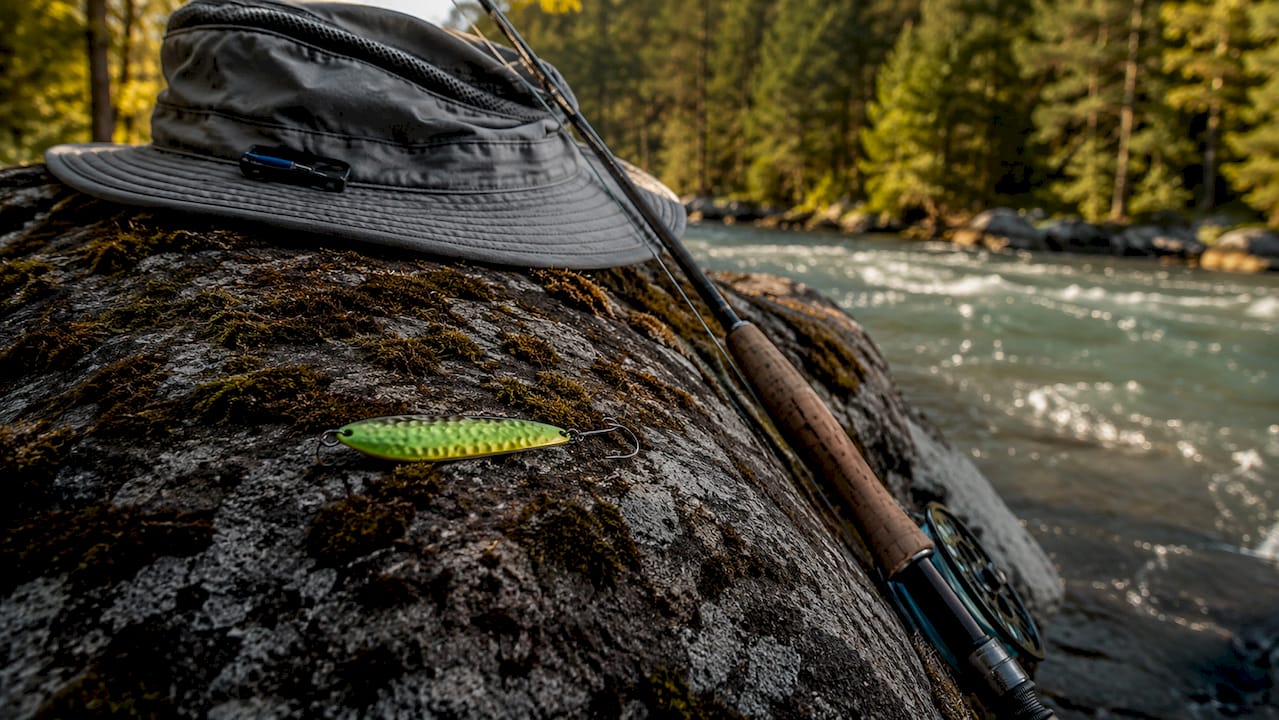
Finish makes a real difference too. Hammered and reflective finishes scatter light in multiple directions, which amplifies the flash signal in murky conditions. Flat painted finishes work better in clear, low water where a subtler profile draws less suspicion.
Pro Tip: Start every session with a chartreuse hammered spoon. It covers the widest range of conditions and gives you a reliable baseline to adjust from.
Spoon size and color quick reference
| Condition | Recommended Size | Best Color |
|---|---|---|
| Clear water, 2–4 ft depth | 1/4 oz | Silver, natural |
| Stained water, moderate current | 1/4 oz | Orange |
| Muddy water, any depth | 3/8 oz | Chartreuse |
| Heavy current, 4+ ft depth | 3/8 oz | Chartreuse/orange two-tone |
| Cold, slow water | 1/4 oz | Hammered gold |
How do you cast and retrieve spoons effectively for steelhead?
Casting angle controls everything downstream. Cast upstream at a 30–45 degree angle across the current. That angle gives the spoon time to sink to the right depth before it swings through the strike zone. A straight cross-current cast rushes the lure through too fast and too shallow.
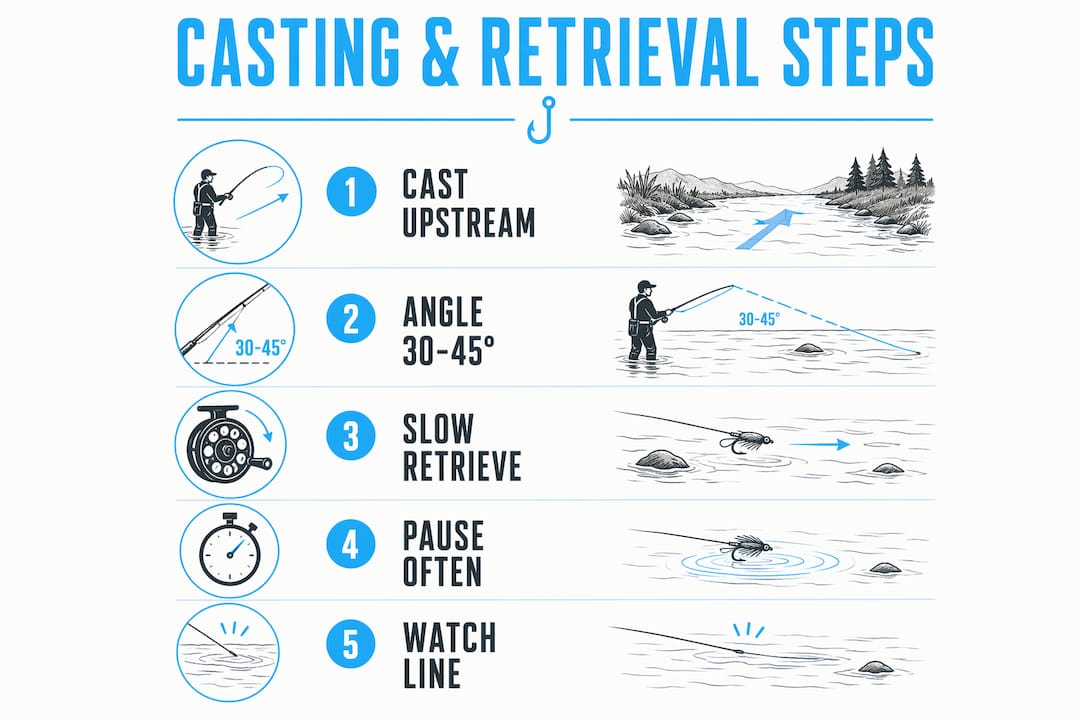
Matching retrieve speed to the subsurface current is the single most important retrieve skill you can develop. The spoon should move at roughly the same pace as the water just below the surface. Too fast and it rises out of the zone. Too slow and it drags bottom and snags.
Here is a step-by-step retrieve sequence that consistently produces strikes:
- Cast upstream at a 30–45 degree angle and let the spoon sink for 2–3 seconds before engaging the reel.
- Begin a slow, steady retrieve that keeps the lure in the top 3–4 feet of the water column.
- Every 4–6 turns of the reel handle, pause for one full second. Let the spoon flutter and drop slightly.
- After the pause, give the rod tip a single short twitch before resuming the retrieve.
- As the spoon swings across the current seam, slow the retrieve further to extend the lure’s time in the strike zone.
- At the end of the swing, let the spoon hover in the current for 3–5 seconds before recasting. Steelhead often follow and strike at the hang.
Slow, deep presentations outperform fast, flashy retrieves in cold water. Steelhead do not chase hard when water temperatures drop. Subtle movement and extended time in the zone trigger more bites than speed.
Pro Tip: Watch your line where it enters the water. Any sideways twitch or sudden slack signals a strike. Set the hook immediately. Steelhead hit spoons fast and drop them just as fast.
Which PNW rivers and conditions favor steelhead spoon fishing?
The Pacific Northwest holds some of the most productive steelhead water on the continent. The Deschutes River in Oregon, the Clearwater River in Idaho, the Skagit River in Washington, and the Hoh River on the Olympic Peninsula all produce consistent spoon fishing results. For Idaho options, rivers like the Big Wood and Swan Falls offer additional steelhead opportunities worth exploring in the broader PNW region.
Steelhead hold in both shallow fast water and deeper tailouts, which means spoon fishing requires constant depth and retrieve adjustments based on what the river is doing that day. The most productive water types share a few common features:
- Current seams: The line where fast water meets slow water. Steelhead stack here to rest and intercept food.
- Tailouts: The shallow, slowing water at the tail end of a pool. Prime holding water, especially in lower light.
- Eddies: Reverse current pockets behind boulders or structure. Fish sit here to avoid fighting the main flow.
- Deep pools: Water 4–8 feet deep with walking-speed current. The ideal depth range for spoon presentations.
Water clarity determines your color and weight choices before you even make a cast. Murky water calls for heavier spoons in high-visibility colors. Clear water demands lighter presentations and more natural finishes. Seasonal shifts matter too. Winter steelhead sit deeper and move less. Summer fish run shallower and respond to faster presentations.
Seasonal river condition summary
| Season | Water Condition | Recommended Approach |
|---|---|---|
| Winter | Cold, often high and murky | Heavy spoon, slow retrieve, deep seams |
| Spring | Clearing, moderate flow | Medium spoon, varied retrieve |
| Summer | Clear, low water | Light spoon, subtle colors, tailouts |
| Fall | Variable, early rains | Chartreuse or two-tone, seam focus |
What regulations must you know for PNW steelhead spoon fishing?
Regulations are not optional reading. They shape every decision you make on the water, from how you land a fish to which one you keep.
Oregon requires daylight-only steelhead fishing and mandates legally approved gear. Snagging is prohibited. Single-point hooks with specific size limits apply in many zones. Gaffs are banned. You must use a hand-held landing net.
Oregon’s Northeast Zone requires a Columbia River Basin Endorsement for salmon and steelhead fishing. Wild steelhead must be released immediately. Only hatchery fish may be retained, and closed areas and seasonal windows apply. Hatchery-only retention areas change how you fight and land fish. You minimize fight time and out-of-water exposure to protect wild fish you cannot keep.
Washington sets a 20-inch minimum size limit for steelhead with daily bag limits in place. Wild steelhead must be released. Retention is limited to hatchery fish during open seasons.
Know before you go. Check the current Oregon Department of Fish and Wildlife or Washington Department of Fish and Wildlife regulations for the specific river and zone you plan to fish. Rules change season to season and zone to zone.
Key compliance points to carry with you:
- Carry your license, steelhead tag, and any required endorsements on your person.
- Check for hatchery-only retention zones before keeping any fish.
- Use a rubber mesh landing net to minimize scale and slime coat damage on released fish.
- Keep wild steelhead in the water during hook removal whenever possible.
- Know the size and bag limits for the specific zone you are fishing that day.
How do you set up and maintain your steelhead fishing gear for spoons?
The right steelhead fishing gear setup makes spoon fishing more effective and less frustrating. A medium to medium-heavy spinning rod in the 8.5–10 foot range gives you the casting distance and sensitivity needed to feel the spoon’s action and detect subtle strikes. Pair it with a quality spinning reel in the 3000–4000 size range. For reel selection guidance, spinning reel reviews can help you match the right reel to your rod and line setup.
Line choice directly affects spoon action and depth control. A PNW steelhead line guide breaks down the options clearly, but here is the short version:
- Mainline: 10–15 lb monofilament or 20–30 lb braid. Braid gives better sensitivity and casting distance. Mono provides more stretch and forgiveness on the hookset.
- Leader: 8–12 lb fluorocarbon, 18–24 inches long. Fluorocarbon is nearly invisible underwater and resists abrasion on rocky river bottoms.
- Spoon hardware: Replace factory treble hooks with single barbless hooks in hatchery-only zones. Check split rings for corrosion after every trip.
- Landing net: Rubber mesh nets protect the fish’s slime coat and reduce injury during release.
- Tackle storage: Keep spoons separated to prevent finish scratches and hook tangles. A component tackle box with individual compartments keeps your spoon selection organized and ready.
Rinse your spoons with fresh water after every river session. Salt and mineral deposits from hard water dull the finish and reduce flash. Dry them before storage to prevent rust on the hooks and split rings. A sharp hook is non-negotiable. Check the point before every cast and replace hooks the moment they show any dullness or corrosion.
Key takeaways
Steelhead spoon fishing on rivers rewards anglers who match spoon weight, color, and retrieve speed to the specific conditions in front of them.
| Point | Details |
|---|---|
| Match spoon weight to depth | Use 1/4 oz in 2–4 ft water and 3/8 oz in heavier current or deeper runs. |
| Color is a visibility tool | Choose chartreuse for muddy water and orange for stained but clearer conditions. |
| Retrieve speed is the key variable | Slow down in cold water and extend the spoon’s hang time at the end of each swing. |
| Know your zone regulations | Oregon and Washington both require hatchery-only retention in many areas with wild fish mandatory release. |
| Gear setup matters | Use fluorocarbon leaders, rubber mesh nets, and maintain spoon finish to maximize performance. |
What i’ve learned after years of spoon fishing PNW rivers
The biggest mistake I see anglers make is fishing too fast. They cast, crank, and move on. Steelhead are not always aggressive. Sometimes the fish that screams off with your spoon is the one you slowed down for, the one you let hover in that seam for an extra three seconds while you considered recasting.
I spent two seasons convinced that color was everything. I swapped spoons constantly, chasing the perfect shade. Then I started paying attention to what actually changed my results. It was not color. It was depth. Getting the spoon into the right zone, at the right speed, for the right duration, produced fish. Color mattered less than I thought. Flash, silhouette, and how long the lure stayed visible to the fish mattered far more.
Local knowledge is worth more than any piece of gear. Talk to the guys at the local fly shop. Watch where other anglers are wading. Notice which side of the river the fish are rolling on. The Deschutes and the Skagit both have personalities. They fish differently in october than they do in february. Adaptability is the skill that separates consistent producers from occasional lucky anglers.
One more thing. Regulations are not a burden. They are the reason these rivers still hold wild steelhead. Fish hatchery water hard. Release wild fish fast and with care. The next generation of PNW anglers is counting on the decisions we make right now on the water.
— Nick
Gear up for steelhead season with Highclasstackleco
Highclasstackleco was built by PNW anglers who know exactly what it takes to put steelhead in the net. Whether you are stocking up on spoons, replacing worn terminal gear, or building out a complete river setup, the Highclasstackleco lineup is designed for real-world conditions on real Pacific Northwest rivers.
Browse the full steelhead tackle selection and find the spoons, flashers, and terminal gear that belong in your box this season. Not sure where to start? Grab a digital gift card and let your fishing partner pick exactly what they need. Highclasstackleco ships across the West Coast and keeps the shelves stocked when the fish are moving. Get your gear dialed before the run peaks.
FAQ
What size spoon works best for steelhead in rivers?
A 1/4-ounce spoon covers most river conditions in 2–4 feet of water, while a 3/8-ounce spoon handles heavier current and deeper runs where you need more weight to stay in the strike zone.
What is the best color spoon for steelhead in muddy water?
Chartreuse is the top choice for muddy rivers because it provides the highest contrast against murky water. Two-tone chartreuse and orange spoons can increase bite rates further by combining visibility with a natural warm tone.
How do you retrieve a spoon for steelhead in rivers?
Cast upstream at a 30–45 degree angle, retrieve slowly to match the current speed, and pause every few turns to let the spoon flutter. Extend the hang at the end of each swing, where steelhead often strike.
Can you keep wild steelhead in oregon and washington rivers?
No. Both Oregon and Washington require wild steelhead release in most zones. Only hatchery fish, identified by a clipped adipose fin, may be retained, and only during open seasons with valid tags and endorsements.
What rod and line setup works best for casting spoons for steelhead?
An 8.5–10 foot medium-heavy spinning rod paired with 10–15 lb monofilament or 20–30 lb braid mainline and an 8–12 lb fluorocarbon leader covers the full range of PNW river spoon fishing conditions.
Recommended
- Salmon plug fishing rivers: Proven PNW tactics and gear – High Class Tackle Co.®
- BC Sockeye Fishing Tackle Guide for PNW Anglers – High Class Tackle Co.®
- Types of fishing line for steelhead: a PNW guide – High Class Tackle Co.®
- Hanford Reach Blades: PNW Salmon and Steelhead Guide – High Class Tackle Co.®
0 comments