

You’ve got the boat running, the rods set, and the Columbia River or Puget Sound spread out in front of you. But your 360 flasher keeps blowing out, tangling, or just not producing strikes. Sound familiar? Using a 360 flasher is one of the most effective tactics in the Pacific Northwest, but it’s also one of the most misunderstood. Get the weight wrong, run the bumper too long, or troll at the wrong speed and you’re just dragging expensive hardware through the water. This guide fixes that.
Table of Contents
- Key takeaways
- What makes a 360 flasher different
- Essential gear for your 360 flasher rig
- How to rig a 360 flasher step by step
- Trolling techniques for varying PNW water conditions
- Common mistakes and how to fix them
- Reading your results on the water
- My honest take on 360 flashers after years on the water
- Gear up with Highclasstackleco
- FAQ
Key takeaways
| Point | Details |
|---|---|
| Weight selection is everything | Use 16 to 24 oz weights to offset flasher drag and maintain target depth in PNW currents. |
| Bumper length controls action | Shorter bumpers (18 inches) give faster action; longer bumpers (24 inches) reduce tangles in open water. |
| Troll at 2.0 to 2.5 mph | This speed range generates the most effective tail kick and vibration from 8 and 11 inch flashers. |
| Match depth to fish depth | Putting your flasher at the right depth accounts for 90% of success in PNW salmon fishing. |
| Color selection matters | Chrome works everywhere; UV and blue shine in deep clear water; red and orange produce in murky conditions. |
What makes a 360 flasher different
A standard flasher swings side to side on a flat plane. A 360 flasher spins in a full circular arc, creating a wide, sweeping motion through the water column. That difference is massive when you are targeting Chinook or coho in the Pacific Northwest.
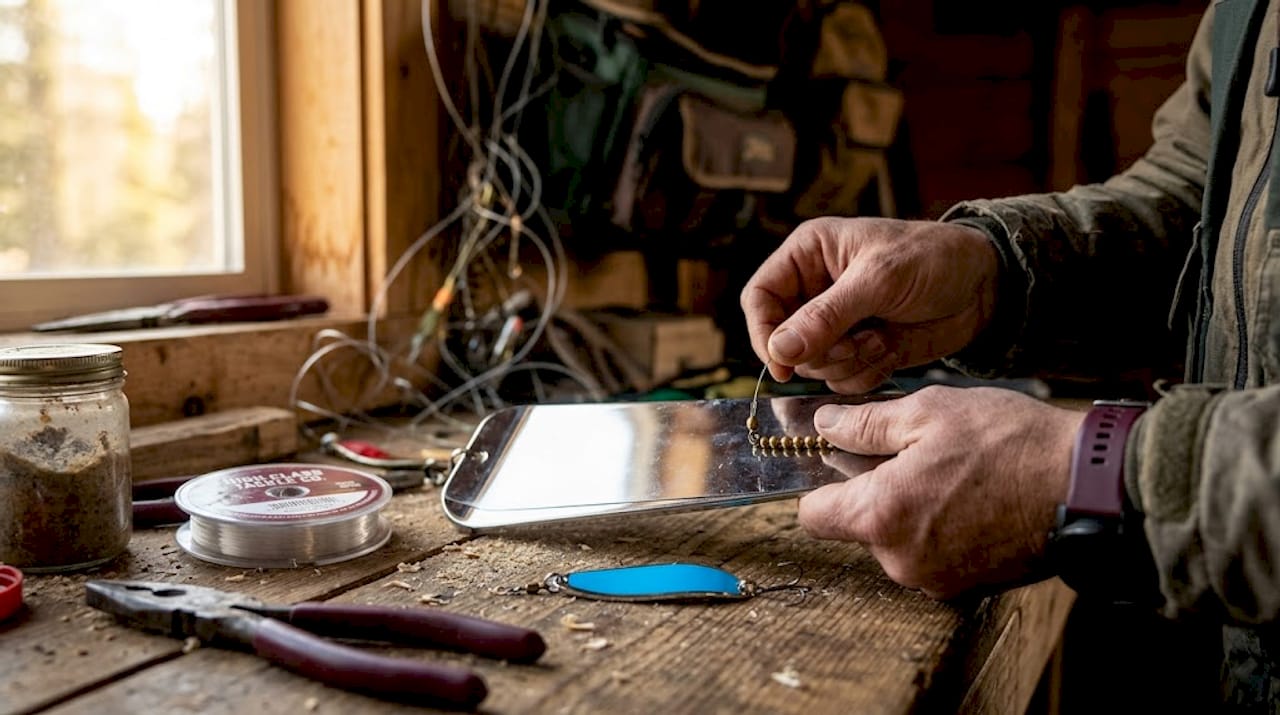
360 flashers mimic a competing predator chasing baitfish, triggering a competitive feeding instinct in nearby salmon. It is not just flash and vibration. It is a full behavioral cue that pulls fish from a distance. That is why this rig dominates at spots like Buoy 10, Ilwaco, and the Strait of Juan de Fuca when conditions are right.
The trade-off? The large surface area creates serious drag. Significant drag from the flasher means you cannot run light gear and expect it to hold depth. That is where setup precision becomes the difference between a hot box and an empty cooler.
Essential gear for your 360 flasher rig
Before you rig anything, get your materials sorted. Running to the tackle shop mid-trip because you forgot bead chain swivels is a painful way to waste prime fishing hours.
Here is what you need on the boat:
- 360 flasher: 11-inch size is the PNW standard for Chinook. 8-inch works well for coho and steelhead in tighter water.
- Cannonball weights: Weights between 16 and 24 oz are non-negotiable. Lighter weights lose the flasher’s position in current.
- Line-lock slider: Clips to your mainline and suspends the weight below the rig without permanent attachment.
- Bead chain swivel: Connects the weight to the bumper and prevents line twist from the spinning flasher.
- Bumper line: 80 to 100 lb monofilament or heavy fluorocarbon, cut to 18 or 24 inches depending on desired action.
- Barrel swivels and snaps: Size 3 or 4 for connecting flasher to leader.
- Leader: 36 to 48 inches of 40 to 60 lb fluorocarbon running to your lure.
- Lure: Cut plug herring, hoochie, or a quality spinfish like the Hanford Reach SpinFish.
| Gear item | Spec | Best for |
|---|---|---|
| 11-inch 360 flasher | Chrome, UV, or glow finish | Chinook in open water |
| 8-inch 360 flasher | Pink, green, or blue | Coho, steelhead |
| Cannonball weight | 16 to 24 oz | All PNW tidal and river trolling |
| Bumper line | 18 to 24 inches, 80 lb mono | Action and tangle control |
| Leader | 36 to 48 inches, 40 to 60 lb fluoro | Presenting lure naturally |
Pro Tip: Pick up extra bead chain swivels before every trip. They are the single most commonly forgotten piece and the one item that will shut the whole rig down if you run out.
How to rig a 360 flasher step by step
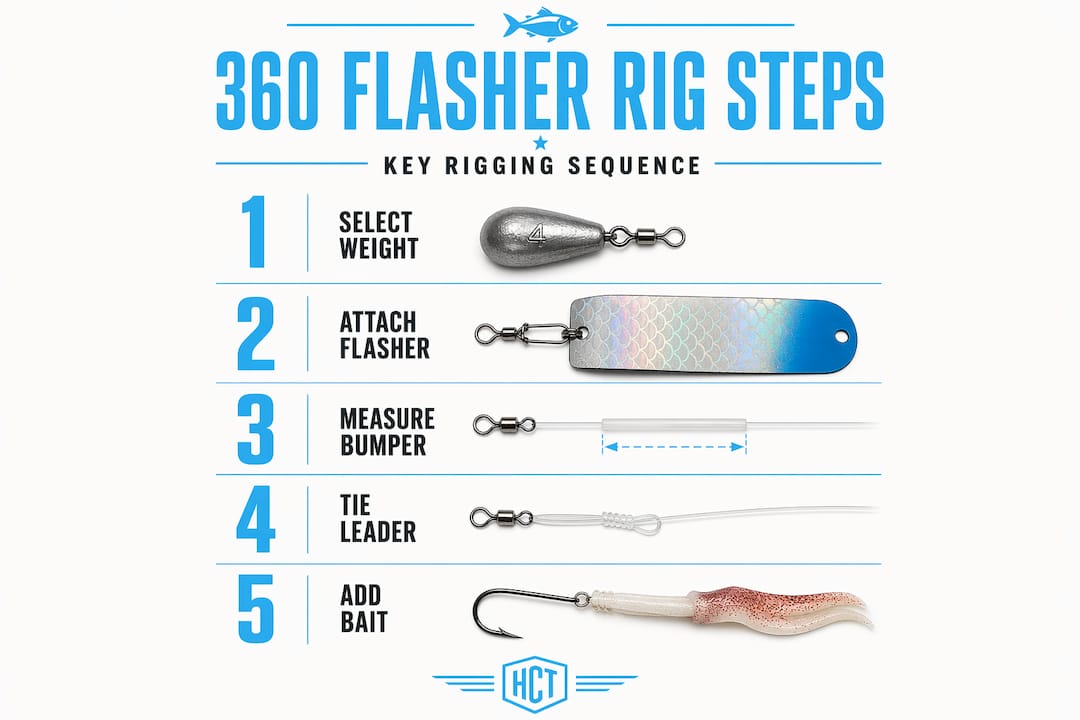
This is the sequence that veteran PNW anglers use. Follow the proper assembly order exactly and you will have a tangle-free, fish-catching rig in under five minutes.
- Thread your mainline (50 to 65 lb braid) through the line-lock slider.
- Attach the cannonball weight to the bottom ring of the line-lock slider. Start with 20 oz as your baseline.
- Tie the bead chain swivel to the top ring of the line-lock slider using a Palomar knot.
- Connect the bumper line (18 to 24 inches of 80 lb mono) from the top of the bead chain swivel.
- Clip a barrel swivel and snap to the end of the bumper line.
- Attach the 360 flasher to the snap. The front clip goes to the snap; the tail clip receives your leader.
- Run your leader (36 to 48 inches of fluorocarbon) from the tail clip of the flasher to your lure.
- Check your knots and make sure no line is crossed or looped before lowering the rig.
The bumper length you choose here directly controls how the flasher behaves. Shorter bumpers of 18 to 24 inches produce a faster, tighter swing. That is great when fish are aggressive or when you are solo and need to net quickly. Longer bumpers slow the arc and reduce the chance of the flasher tangling the leader during sharp turns.
| Bumper length | Flasher action | Best condition |
|---|---|---|
| 18 inches | Fast, tight circles | Aggressive fish, solo fishing |
| 21 inches | Moderate swing | Mixed conditions |
| 24 inches | Slow, wide arc | Calm water, reduced tangling |
Pro Tip: If your rig keeps tangling on turns, shorten your bumper before changing anything else. Most tangles trace back to bumper length, not speed or weight.
Trolling techniques for varying PNW water conditions
Having the right rig means nothing if you are trolling wrong. Speed, depth, and color selection work together. Get one wrong and the whole presentation falls apart.
Speed and depth control
The sweet spot for most 360 flashers is 2.0 to 2.5 mph over the bottom. Below 2.0 mph, the flasher loses its circular action and drags lifelessly. Above 2.5 mph, it blows out and spins erratically. Use your GPS speed and not your speedometer, since currents will skew that reading significantly.
Depth is the variable most anglers under-invest in. Matching depth to fish depth is the most critical factor in PNW salmon fishing. Use your sonar to locate where fish are holding, then adjust your downrigger or weight drop accordingly. During peak tide flows, veteran anglers carry weights up to 24 oz specifically to maintain depth against the current push.
Adjusting for current and tidal conditions
Strong incoming or outgoing tides will push your flasher up and back in the water column. Add weight to compensate. If you are at 20 oz and still losing depth, step up to 24 oz. The flasher needs to stay in the zone, not ride high above the fish. Check your steelhead line selection too, since the wrong mainline diameter adds drag that works against your weight setup.
Color selection based on water conditions
- Chrome: All-purpose and the most reliable starting point in any condition.
- UV and blue: Better in clear or deep water where light penetration is high.
- Chartreuse and glow: Outstanding in low-light conditions, early morning, and overcast Pacific Northwest days.
- Red, pink, and orange: Proven producers in murky, stained water from runoff or tidal mixing.
Pro Tip: Start with chrome on every new spot. Once you get a strike or mark fish on sonar, experiment with UV or glow colors to see if you can increase your bite frequency.
Common mistakes and how to fix them
Most 360 flasher problems come down to four specific errors. Knowing the signs saves you hours of unproductive water.
- Under-weighting the rig. The flasher rides too high, spins erratically, and sits above the fish. Add weight in 2 oz increments until the rig holds depth at your trolling speed.
- Over-weighting the rig. The rig sinks past the target zone and drags bottom. You will feel the line go dead and sometimes pick up debris. Drop weight and recheck depth.
- Bumper too long. The flasher swings wide, wraps the leader on turns, and the lure does not track properly. Short bumpers reduce tangles and are especially critical when fishing alone.
- Blowing out the cut plug. Too much speed combined with an over-long leader causes the bait to spin wildly instead of roll. Shorten the leader to 36 inches and slow down 0.2 mph.
Pro Tip: Pull your rig out and check it every 20 to 30 minutes. Kelp, micro-debris, and small jellyfish can kill your flasher action completely without you knowing it until an hour has passed.
Reading your results on the water
A well-rigged 360 flasher has a rhythm to it. When everything is dialed in, you can feel a steady, consistent pulse through the rod. That thump is the flasher working its circular arc and the lure tracking clean behind it.
Watching fish behavior is just as telling as watching your gear.
- A rod that loads up hard and releases is often a short-striking fish that did not commit. Speed up slightly or switch lure color.
- Consistent marks on sonar at your depth with zero bites usually means the flasher is not generating enough action. Check speed first, then bumper length.
- Marks below your flasher depth mean you need to drop your weight, not change lures.
- When fish are hitting, your speed, depth, and color are right. Do not change anything until the bite dies.
Setting expectations matters. A correctly rigged 360 flasher will produce more consistent results than any single lure choice alone. The flasher brings fish close. The lure closes the deal. Focus on precision in the rig and the strikes will follow. Pairing your flasher with solid spinnerbait tactics can also diversify your presentation when fish get selective.
My honest take on 360 flashers after years on the water
I have watched anglers change flasher brands six times in a single trip while never touching their bumper length or weight. That is like swapping tires on a car that has a broken suspension. The brand matters a lot less than people think.
In my experience, the anglers who consistently put fish in the box are the ones obsessing over weight and bumper length, not chasing the next shiny flasher color. A chrome 11-inch 360 flasher rigged at the right depth with a properly sized bumper will outfish a brand-new specialty flasher that is weighted wrong every single time.
Pacific Northwest water changes constantly. Tides shift, runoff pulses through the system, and current speed varies by the hour at spots like Buoy 10 or the Cowlitz mouth. The anglers I have seen struggle most are the ones who lock in a setup and refuse to adjust. The ones cleaning up are constantly pulling rods, checking feel, and tweaking weight.
My go-to has always been a chrome or UV 11-inch flasher paired with 20 oz of lead and an 18-inch bumper as a starting point. From there, I read the water and adjust. Pair that with proven PNW salmon tactics and you are covering nearly every situation the Pacific Northwest can throw at you.
The gear matters. The adjustment matters more.
— Nick
Gear up with Highclasstackleco
If you are ready to put everything in this guide to work, Highclasstackleco has what you need.
Highclasstackleco is a Pacific Northwest brand built by anglers who fish the same water you do. The flashers, tackle, and accessories in their lineup are designed for real-world PNW conditions, not generic setups that work anywhere and excel nowhere. From premium 360 flashers and quality blades to the purpose-built component tackle box that keeps your bumpers, swivels, and weights organized and ready to deploy fast, everything is tested where it counts. Whether you are chasing Chinook at Buoy 10 or running steelhead water on the Clearwater, Highclasstackleco has the gear that shows up when the fish do.
FAQ
What weight should I use with a 360 flasher?
Use between 16 and 24 oz of cannonball weight to offset the significant drag created by the flasher’s large surface area. Start at 20 oz and adjust based on current strength and depth.
What is the best trolling speed for a 360 flasher?
Troll between 2.0 and 2.5 mph to generate the most effective circular action from 8 and 11 inch flashers. Below 2.0 mph the flasher loses its arc; above 2.5 mph it blows out.
How long should my bumper be on a 360 flasher rig?
Bumper lengths typically run from 18 to 24 inches. Shorter bumpers produce faster, tighter flasher action and reduce tangles, which is especially helpful when fishing alone.
What colors work best for 360 flashers in the Pacific Northwest?
Chrome is the all-purpose starting choice. Use UV, blue, and chartreuse in clear or deep water, and switch to red, pink, or orange when water is murky or stained from runoff or tidal mixing.
Why does a 360 flasher attract more salmon than a standard flasher?
The 360 flasher mimics a competing predator chasing baitfish, triggering a competitive feeding instinct that pulls salmon in from a much greater distance than standard side-to-side flasher action.
Recommended
- Salmon plug fishing rivers: Proven PNW tactics and gear – High Class Tackle Co.®
- Types of fishing line for steelhead: a PNW guide – High Class Tackle Co.®
- Spinnerbait guide: boost your Pacific Northwest fishing – High Class Tackle Co.®
- HANFORD REACH CUSTOM SPINFISH HADIES 2.5’ – High Class Tackle Co.®
0 comments