

Most fishing videos feel like the same reel on repeat. Big fish. Fist pump. Repeat. But a fishing content series is something different entirely. It’s structured storytelling that takes you through the full experience, from pre-dawn scouting on a foggy Puget Sound morning to the decisions made mid-drift when the bite dies. If you’ve ever watched a fishing video and felt like you missed the whole story, this guide is for you. We’re breaking down what a fishing content series actually is, why it works, and how it changes the way Pacific Northwest anglers learn, connect, and grow.
Table of Contents
- What is a fishing content series? Defining the concept
- How episodic storytelling brings fishing content series to life
- Comparing fishing content series formats: episodic, serialized, and hybrid
- Building and engaging with fishing content series: practical tips for anglers and creators
- Why authentic storytelling distinguishes fishing content series from typical fishing videos
- Discover High Class Tackle Co. and gear up your fishing content journey
- Frequently asked questions
Key Takeaways
| Point | Details |
|---|---|
| Defined recurring format | A fishing content series uses consistent themes and posting schedules to build audience familiarity and loyalty. |
| Episodic storytelling | Episodes show the fishing process, including scouting and decisions, making content educational and engaging. |
| Formats vary | Series can be episodic, serialized, or hybrid to balance standalone content with narrative arcs. |
| Consistency matters | Posting episodes regularly at predictable times encourages audience growth and retention. |
| Authenticity drives value | Sharing real challenges and decision-making builds trust and community beyond just catch highlights. |
What is a fishing content series? Defining the concept
A fishing content series is not a random collection of clips. It’s a structured set of recurring episodes built around a consistent format, theme, and release schedule. According to content strategy research, a content series is a set of recurring posts that share a consistent format, topic, and cadence to build audience familiarity over time. That predictability is the whole point. Viewers know what they’re getting and they come back for it.
The key difference between a series and a standalone video is narrative intent. A single video shows you a catch. A series shows you the whole campaign. Think of it like the difference between watching a highlight reel and watching a full season of a show. The highlight reel is entertaining for 90 seconds. The season builds something you actually care about.
Episodic social video content works like a TV show, where viewers follow a larger theme with familiar faces and a predictable cadence. That structure creates loyalty. When you know a new episode drops every Friday morning and it’s always the same host working a different stretch of the Skagit River, you plan your coffee break around it.
Here’s what separates a fishing content series from other formats:
- Standalone video: One-off content, no continuation, no recurring format
- Content campaign: Short-term push around a specific event or product
- Content pillar: A broad topic category, not a structured series
- Fishing content series: Recurring episodes with consistent hosts, format, and storytelling arc
Fishing creators who do this well focus on showing process and decision-making rather than just final catches. That’s what makes a series genuinely useful. You’re not just watching someone catch a coho. You’re watching why they chose that particular bar, what the tide was doing, and what they changed when the first two setups didn’t produce. That’s the kind of content that actually makes you a better angler. You can see a great example of this kind of storytelling energy in the defining fishing content series culture we’re building at High Class Tackle Co.
How episodic storytelling brings fishing content series to life
Episodic storytelling is the engine that makes fishing content series addictive. Serialized content hooks viewers by offering a predictable cadence and familiar narratives that cut through a noisy social feed. When you’re scrolling through a wall of generic fishing clips, a series with a recognizable host and a consistent structure stands out immediately.
The best fishing series follow a narrative arc that mirrors how a real fishing day unfolds. Here’s the typical episode structure that keeps viewers locked in:
- The game plan: Host explains the target species, location logic, and conditions
- The scouting phase: Real-time exploration, reading water, marking fish
- The first setup: Initial tactics, gear choices, and early results
- The decision point: Something changes. Tide shifts, fish move, bite dies. Now what?
- The reset: Adaptation, new approach, new location or technique
- The outcome: Results, honest reflection, and a tease for the next episode
This structure works because it mirrors the actual experience of being on the water. You recognize the frustration of a dead bite. You feel the tension of the decision point. That emotional connection is what keeps you watching.
“Day Tripping by BCFlyguys delivers an unscripted ride-shotgun experience, including scouting, decision points, and setbacks before finding the pattern.” This is exactly the kind of raw, honest storytelling that Day Tripping episodes have built a loyal following around.
The familiar faces matter too. When you watch the same host work through a tough bite on a Columbia River tributary for the fourth episode in a row, you start thinking the way they think. You absorb their decision-making process. That’s not entertainment. That’s mentorship at scale.
Pro Tip: When following a fishing content series, watch each episode twice. First for entertainment, then specifically to track every decision the host makes and why. You’ll pull twice the learning out of the same content.
Consistent recurring video strategies are what separate creators who build real audiences from those who stay stuck at a few hundred views per upload.
Comparing fishing content series formats: episodic, serialized, and hybrid
Not all fishing content series are built the same. The format a creator chooses shapes how you experience and learn from it. Most successful series use one of three formats depending on the content and audience, each with distinct strengths.

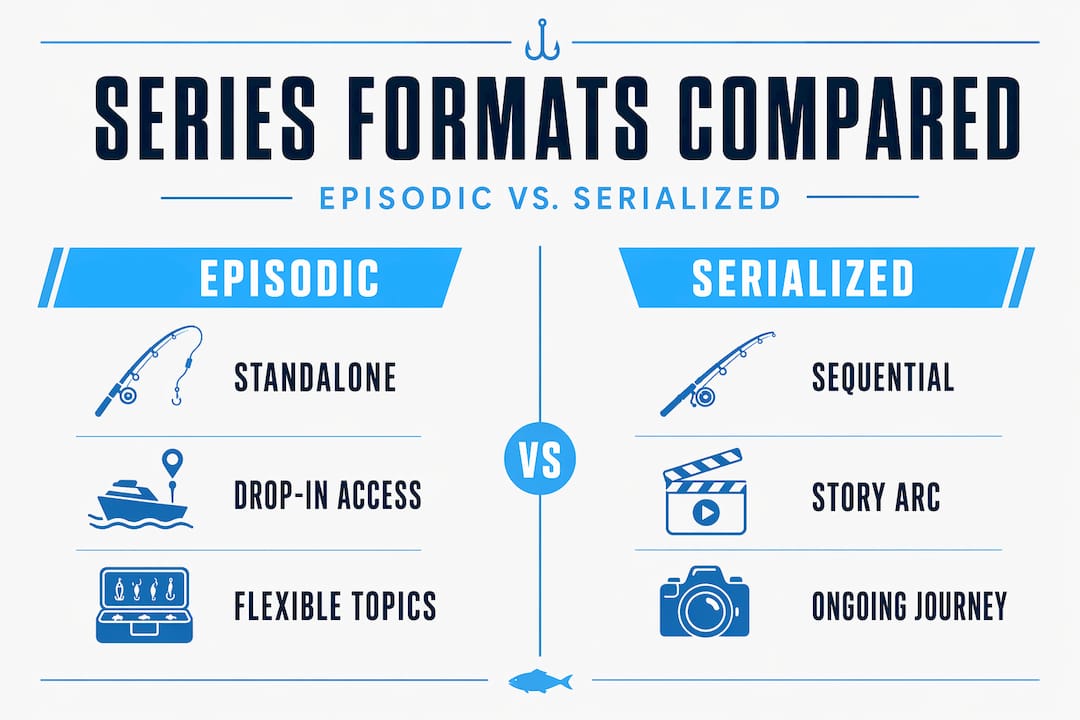
Episodic format means each episode stands alone. You can drop into episode 12 without watching episodes 1 through 11 and still get full value. Great for fishing series focused on different locations or species each episode.
Serialized format means episodes build on each other. A steelhead season series where the host tracks the same run from October through January is serialized. Miss an episode and you’ve missed part of the story.
Hybrid format blends both. Each episode works on its own but rewards loyal viewers with deeper context and callbacks to earlier episodes. This is the sweet spot for most Pacific Northwest fishing series.
| Format | Viewer engagement | Accessibility | Production complexity | Best for |
|---|---|---|---|---|
| Episodic | Moderate | High | Low | Species spotlights, location guides |
| Serialized | High | Low | High | Season-long journeys, species runs |
| Hybrid | Very high | Moderate | Moderate | Most fishing lifestyle series |
Here’s what to look for when choosing which type of series to follow or create:
- Episodic: Jump in anytime, great for beginners exploring new techniques
- Serialized: Best for deep learning, follow the full arc of a fishing season
- Hybrid: Most rewarding long-term, builds community and inside knowledge
The hybrid format is where the most compelling video strategies for fishing content live right now. It rewards casual viewers and obsessive followers equally. And strong recurring video branding ties the whole thing together visually.
Building and engaging with fishing content series: practical tips for anglers and creators
Whether you’re watching or creating, the way you engage with a fishing content series determines how much value you pull from it. These tips apply to both sides of the camera.
For creators, the single biggest factor in growth is consistency. Posting at a set day and time every week builds predictable growth and supports audience retention. Your audience needs to know when to expect you. Treat your series like a TV show with a real air date, not a random upload whenever you get around to editing.
Structure each episode around the fishing process, not the fishing result. Authentic fishing series build episodes around scouting, decision points, and resets rather than just trophy highlights. The fish is the punctuation, not the whole sentence.
Here’s a practical checklist for building your own fishing content series:
- Define your format: Pick episodic, serialized, or hybrid before you shoot a single frame
- Plan a mini-season: Map out 6 to 10 episodes before you launch, like a TV season
- Build in a segment structure: Same recurring segments each episode create familiarity fast
- Show the bad days: A skunked episode with honest reflection builds more trust than a highlight reel
- Tease the next episode: End every episode with a reason to come back
- Engage in the comments: The community around a series is part of the content itself
For viewers, the biggest mistake is treating a series like a playlist of isolated clips. Follow the whole arc. Watch the decision points. Notice what gear the host reaches for when conditions shift. That’s where the real fishing education lives.
Pro Tip: If you’re starting a fishing content series from scratch, film your first three episodes before you post any of them. That buffer gives you breathing room and keeps your release schedule consistent even when life gets in the way.
Consistent posting tips and a tight episode structure are what turn a decent fishing channel into a series people actually follow.
Why authentic storytelling distinguishes fishing content series from typical fishing videos
Here’s our honest take: most fishing videos are built for the creator’s ego, not the viewer’s growth. The trophy shot, the hero pose, the screaming drag. It looks great. It teaches you nothing.
The fishing content series format forces a different standard. When you commit to episodic storytelling, you can’t hide behind highlights. You have to show the scouting that led nowhere. The presentation change that finally triggered a bite. The moment you relocated because the first spot was dead. The series format works best when it reveals the real path, including scouting, decisions, and relocation, not just the fish caught.
That honesty is what builds real community. Pacific Northwest anglers are not looking for a fishing fantasy. They’re looking for content that reflects the actual experience of chasing salmon on a gray October morning when the bite is off and the conditions are tough. They want to see someone else work through that problem because it helps them solve it themselves.
Serialization hooks viewers by offering predictable cadence and familiar narratives in a noisy feed. But the creators who build truly loyal audiences go further. They make you feel like you’re on the boat. That’s the difference between content that gets watched once and content that gets shared, bookmarked, and rewatched before a big trip.
The fishing content series format respects your intelligence as an angler. It treats fishing as a craft with real depth, not a spectator sport. And it builds the kind of community where anglers actually learn from each other, not just watch each other catch fish. That’s the culture we’re pushing at High Class Tackle Co., and it’s what separates the best authentic fishing stories from the noise.
Discover High Class Tackle Co. and gear up your fishing content journey
The fishing culture we’ve been talking about lives on the water, and it starts with the right gear in your hands. At High Class Tackle Co., we build tackle for anglers who take the craft seriously.
Stock your box with our treble hooks pack, trusted by serious West Coast anglers who need reliable hardware when it counts. Rep the culture with the Boats and Cohos Tee, built for anglers who live this lifestyle year-round. And add some mayhem to your spread with our Prime Time Hoochie Squid Skirts, designed to trigger bites when the bite is tough. Gear that matches the passion you bring to every episode, every outing, every fish.
Frequently asked questions
What makes a fishing content series different from a typical fishing video?
A fishing content series features recurring episodes with consistent themes, storytelling, and posting schedules, showing the process and decisions behind fishing rather than isolated highlights. A content series builds audience familiarity through recurring posts with a consistent format and cadence, which a single video simply cannot do.
Why is consistency important in a fishing content series?
Consistent posting at set days and times builds audience trust and anticipation, leading to better engagement and long-term growth. Posting on a set schedule every week supports audience retention and growth for fishing content creators.
How can I start my own fishing content series?
Define a consistent format, plan your episodes like a mini-season, focus on showing scouting and decision-making, and post regularly to build an audience. Treating a series like a TV mini-season with a repeatable format and consistent cadence is the foundation of a series that actually grows.
What content do viewers expect from fishing content series episodes?
Viewers want episodes that show the full fishing experience, from game plan and scouting to critical decisions and results, not just trophy shots. Fishing series episodes built around process and decision-making deliver the real-time application and learning that loyal audiences keep coming back for.
0 comments