

Fishing swivels are defined as small mechanical connectors in terminal tackle that rotate freely to prevent line twist and allow quick lure changes. Every angler fishing Pacific Northwest waters for salmon, steelhead, or kokanee depends on them. The wrong swivel type or size can cost you a trophy fish. This guide breaks down the types of fishing swivels terminal gear demands, from basic barrel swivels to premium ball bearing models, with sizing standards and real-world applications built for PNW conditions.
1. What are the main types of fishing swivels terminal gear requires?
Fishing swivels fall into several distinct categories, each built for a specific job. Knowing which type fits your rig is the foundation of solid terminal tackle selection.
- Barrel swivels: The most common and affordable option. A central spindle connects two wire eyes. Barrel swivels perform best in calm water but struggle to rotate under heavy load, which causes line twist when a spinning lure is involved.
- Crane swivels: A step up from barrel swivels. The crane design improves rotation efficiency, making them a better choice for moderate current and light trolling.
- Ball bearing swivels: The premium option. Ball bearing swivels spin freely even under heavy load because miniature bearings replace the simple spindle. Trollers and anglers using fast-spinning lures rely on these most.
- Snap swivels: Combine a swivel body with a wire snap clip. They let you change lures without retying knots, which saves serious time on the water.
- Three-way swivels: Feature three attachment eyes instead of two. Three-way swivels anchor dropper rigs and paternoster setups where a sinker needs to hang off a separate line from the main rig.
- Solid rings and split rings: Not swivels themselves, but core terminal gear. Solid rings offer maximum strength at connection points. Split rings allow lure attachment without sacrificing action.
Pro Tip: Always carry all three core types: barrel, ball bearing, and snap swivels. Conditions change fast on PNW rivers and bays, and having options means you adapt instead of packing up.
2. How to choose the right swivel size for your line and target fish
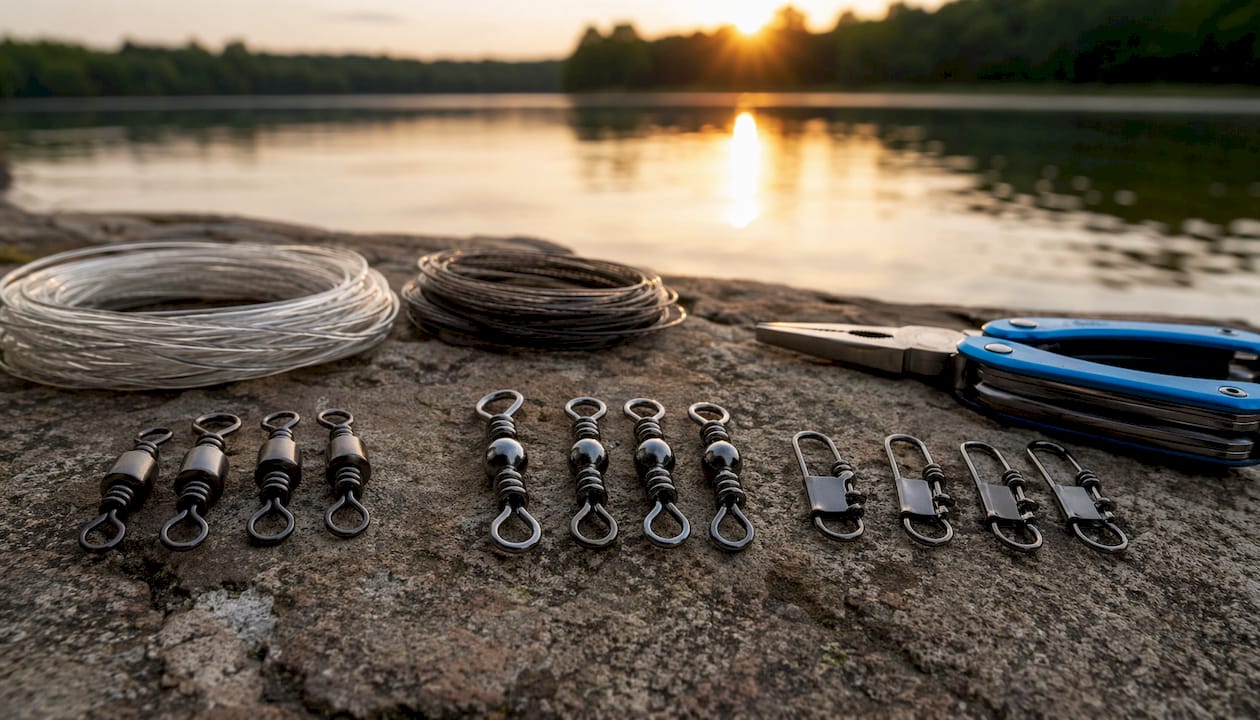
Swivel size is not a detail you can guess at. Matching swivel size to line class prevents drag, line twist, and outright gear failure at the worst possible moment.
The industry standard sizing guidelines work as follows:
| Line Test | Recommended Swivel Size | Best Swivel Type |
|---|---|---|
| 4–6 kg (8–13 lb) | Size 8–10 | Barrel or crane swivel |
| 10 kg (22 lb) | Size 4–6 | Crane or ball bearing |
| 15–25 kg (33–55 lb) | Size 1–3 | Ball bearing swivel |
A swivel that is too large creates visible drag in the water and spooks wary fish like steelhead in clear winter runs. A swivel that is too small fails under load and loses you the fish. Both mistakes are avoidable.
For PNW anglers targeting chinook salmon on 20 lb mainline, a size 3 ball bearing swivel is the right call. For light trout or kokanee setups on 6 lb line, a size 10 barrel swivel keeps the rig clean and unobtrusive. When you add a snap swivel to the equation, always select a snap rated higher than your mainline breaking strength to compensate for the snap’s weaker connection point.
Pro Tip: Write your swivel sizes on a small piece of tape inside your tackle box lid. When you are rigging in low light on a cold morning, you will not have to guess.
3. What are snap swivels and when should you use them?
Snap swivels are the fastest tool in terminal tackle for changing lures without cutting and retying. They attach directly to your leader or mainline and let you clip and unclip lures in seconds. That speed matters when you are jigging multiple depths or switching between spoons and plugs during a salmon bite.
The three main snap types each have a different security profile:
- Coastlock snaps: The strongest option. The positive lock mechanism means coastlock snaps do not pop open under sudden load. Use these for trolling heavy flasher rigs or targeting hard-fighting chinook.
- Duolock snaps: Faster to operate but less secure. Duolock snaps trade speed for reliability and can fail if a fish hits hard or a lure catches structure. Best for lighter applications.
- Cross-lock snaps: A middle ground. They open and close quickly but hold better than duolocks under moderate pressure.
The key limitation of all snap swivels is breaking strength. The snap is always the weakest link in the connection chain. Select a snap rated at least one strength class above your mainline. When strength is the absolute priority, such as targeting large chinook or halibut, skip the snap and tie directly to a solid ring or ball bearing swivel instead.
4. How to build the best terminal tackle combinations for durability
The right swivel alone does not build a reliable rig. Pairing swivels with the correct rings, snaps, and leaders creates a system that holds together under real fishing pressure.
For heavy trolling setups targeting Pacific Northwest salmon, pair a size 2 ball bearing swivel with a solid ring at the lure end. Solid rings do not flex or open under load the way split rings can. That connection stays locked when a 30 lb chinook turns and runs.
- Freshwater setups (steelhead, trout, kokanee): Use crane or barrel swivels in sizes 6–10 with fluorocarbon leaders. Keep hardware minimal to reduce visibility in clear water.
- Saltwater and estuary setups (salmon, halibut): Use ball bearing swivels in sizes 1–4 with heavy monofilament or braided leaders. Add a coastlock snap for fast lure changes between drifts.
- Bottom fishing and dropper rigs: Use three-way swivels for paternoster setups where a sinker hangs below and the hook rig extends horizontally. This keeps your bait off the bottom at the right depth.
- Finish and color: Black-finished terminal gear reduces flash and spooks fewer fish in clear water. Bright chrome finishes can attract strikes in murky or stained water but cost you bites in gin-clear PNW rivers.
Rinse all terminal gear in fresh water after every saltwater session. Corrosion kills swivel rotation fast, and a swivel that does not spin is just dead weight on your line.
Check out the steelhead terminal gear checklist for a full breakdown of how these components fit together for PNW river fishing.
5. Which fishing situations call for specific swivel types?
Not every situation needs a premium ball bearing swivel. Matching the swivel type to the fishing scenario keeps your rig clean and your costs reasonable.
- Trolling or fast retrieves: Ball bearing swivels are non-negotiable here. High-speed trolling with flashers and spoons generates constant rotational force. Only ball bearing swivels handle that load without twisting your mainline into a mess.
- Estuary and calm water fishing: Barrel or crane swivels work fine. The water is slower, the lures are lighter, and the rotational demand is low. A size 8 barrel swivel on a light kokanee rig is all you need.
- Finesse techniques: Skip the swivel entirely for light soft plastic presentations targeting trout or bass. A swivel adds weight and visibility that kills the natural action of small baits. Tie direct to a small hook or jig head instead.
- Heavy bottom fishing: Solid rings and three-way swivels are the right tools. When you need a sinker on a dropper and a bait on a separate arm, a three-way swivel creates that branch without weakening the main connection.
- Salmon and steelhead spinner rigs: Ball bearing swivels paired with quality spinner blades for salmon prevent the blade’s rotation from twisting your leader. This is one of the most common line-twist problems PNW anglers face.
- Jigging: Snap swivels shine here. Fast vertical jigging means constant lure changes as you dial in depth and color. A coastlock snap lets you swap jigs in under ten seconds without cutting your leader.
Key Takeaways
The most effective terminal tackle system pairs the right swivel type to the fishing scenario, with size matched precisely to line class to prevent failure and lost fish.
| Point | Details |
|---|---|
| Match swivel size to line class | Use size 8–10 for light line, size 1–3 ball bearing for 15–25 kg setups. |
| Ball bearing swivels for trolling | Only ball bearing swivels rotate freely under heavy load from flashers and fast lures. |
| Coastlock snaps for security | Coastlock snaps hold under sudden load; duolocks are faster but less reliable. |
| Black finish reduces spooking | Dull black terminal gear minimizes flash in clear PNW rivers and bays. |
| Skip swivels for finesse rigs | Light soft plastics and trout presentations fish better with a direct tie, no swivel. |
Why most anglers underestimate their terminal tackle
I have watched anglers spend $400 on a rod and then clip on a $0.10 barrel swivel that has not rotated properly since the Obama administration. That is the most common and most expensive mistake I see on the water.
Premium ball bearing swivels are the cheapest insurance you can buy against losing a trophy fish. A quality size 2 ball bearing swivel costs less than a cup of coffee. The chinook you lose because your swivel seized up and twisted your leader into a birdnest costs you the whole day.
The second mistake is carrying only one swivel type. Conditions on PNW waters change fast. A morning estuary session might call for a snap swivel on a light spoon. An afternoon troll for chinook demands a ball bearing swivel under a flasher. Anglers who carry only barrel swivels end up improvising, and improvised terminal tackle fails.
My honest advice: build a small terminal tackle kit with barrel swivels in sizes 6, 8, and 10; ball bearing swivels in sizes 2 and 4; coastlock snap swivels in two sizes; and a handful of solid rings. That kit fits in a pocket and covers every scenario you will face from the Columbia to the Strait of Juan de Fuca.
— Nick
Terminal tackle built for PNW anglers at Highclasstackleco
Highclasstackleco carries terminal tackle built for the conditions PNW anglers actually fish. From ball bearing swivels to coastlock snaps, solid rings, and complete component kits, every piece is selected for real-world performance on salmon, steelhead, and saltwater species.
The terminal tackle collection covers hooks, swivels, snaps, and components in the sizes and finishes that work on West Coast water. If you want everything organized and ready to rig, the component tackle box puts the right pieces in one place. Highclasstackleco is built by anglers who fish these rivers and bays every season. The gear reflects that.
FAQ
What is a fishing swivel and what does it do?
A fishing swivel is a small rotating connector used in terminal tackle to prevent line twist and allow quick lure changes. It connects two sections of line or leader while spinning freely to absorb rotational force from lures and current.
Which swivel type is best for salmon trolling?
Ball bearing swivels are the best choice for salmon trolling. They rotate freely under heavy load from flashers and fast-moving lures, preventing the line twist that barrel swivels cannot handle at trolling speeds.
What size swivel should I use for steelhead fishing?
For steelhead on 10 kg line, use a size 4–6 crane or ball bearing swivel. For lighter steelhead setups on 4–6 kg line, a size 8–10 barrel or crane swivel keeps the rig clean and unobtrusive.
Are snap swivels weaker than regular swivels?
Yes. Snap swivels have a lower breaking strength than standard swivels of the same size. Always select a snap swivel rated above your mainline breaking strength to compensate for the snap’s weaker connection point.
When should I skip using a swivel entirely?
Skip the swivel on finesse presentations like light soft plastics, small jigs, or dry fly setups. A swivel adds unnecessary weight and visibility that kills the natural action of small baits and spooks wary fish in clear water.
Recommended
- Steelhead Terminal Gear Checklist for PNW Anglers – High Class Tackle Co.®
- Types of Hooks for Steelhead Fishing: PNW Guide – High Class Tackle Co.®
- Spinnerbait guide: boost your Pacific Northwest fishing – High Class Tackle Co.®
- Salmon plug fishing rivers: Proven PNW tactics and gear – High Class Tackle Co.®
0 comments