

Your GPS speed should read between 1.5 and 3.5 mph for most salmon trolling, and that’s the range to start dialing in today. Chinook prefer the slower half of that band, often 1.8 to 2.8 mph, especially when you’re working structure near bottom. Coho want more speed, typically 2.5 to 3.8 mph, chasing a faster wobble. Running a mixed spread with both species in play? Split the difference around a moderate trolling speed that balances both species.
The number on your GPS is only half the equation. What’s tied to your line changes everything:
- Cut-plug herring or motor mooching: stay slow, often under 2.0 mph
- Spoons and flashers: built for the middle to upper range, 2.0 to 3.5 mph
- Dodgers: lose their action and start spinning out past roughly 2.5 to 2.8 mph
Get the gear-to-speed match wrong, and even the best tackle in your box fishes dead.
Key Takeaways
Holding a steady, gear-appropriate GPS speed between 1.5 and 3.5 mph, adjusted by species, controls both lure depth and strike rate.
| Point | Details |
|---|---|
| Start with the right band | Set GPS speed between 1.5 and 3.5 mph, leaning slower for Chinook and faster for Coho. |
| Match gear to speed | Dodgers spin out past roughly 2.5 to 2.8 mph, while flashers hold action to about 3.5 mph. |
| Consistency controls depth | Small speed changes shift lure depth significantly, so hold your number steady once it’s working. |
| Test before you commit | Run timed passes at incremental speeds, logging strikes and lure action to confirm your setup. |
| Rig gear for your target speed | High Class Tackle Co. flashers and terminal tackle are built to hold action across the Chinook-to-Coho speed range. |
Table of Contents
- What Is the Ideal Trolling Speed for Salmon by Species and Gear?
- How Does Trolling Speed Change Lure Depth and Action?
- What Speed Should You Troll Different Salmon Gear?
- How Do You Measure and Hold a Steady Trolling Speed?
- How Far Behind the Boat Should You Run Salmon Gear?
- When Should You Speed Up or Slow Down While Trolling?
- How Do You Run a Field Speed Test for Salmon Trolling?
- Get Gear Built to Hold Its Action at the Right Speed
- Frequently Asked Questions
- Sources
What Is the Ideal Trolling Speed for Salmon by Species and Gear?
Print this out, laminate it, tape it to your dash. This is the fast-reference chart for setting up before you leave the dock.
| Species | Common Gear | Recommended GPS Speed | Why |
|---|---|---|---|
| Chinook/King | Cut-plug herring, flasher + squid | 1.8–2.8 mph | Slower presentation triggers strikes near bottom and structure |
| Coho | Spoon, dodger + fly | 2.5–3.8 mph | Aggressive feeders respond to faster, flashier action |
| Sockeye | Small spoons, hoochies | 2.0–2.8 mph | Precise, steady speed keeps small gear tracking true |
| Pink | Small spoons, flasher + hoochie | Moderate GPS speeds within the typical salmon trolling window | Similar window to sockeye; erratic action still draws strikes |
| Lake trout | Spoons, flasher + fly | 1.8–2.5 mph | Deep, cold-water fish favor a slower, tighter wobble |
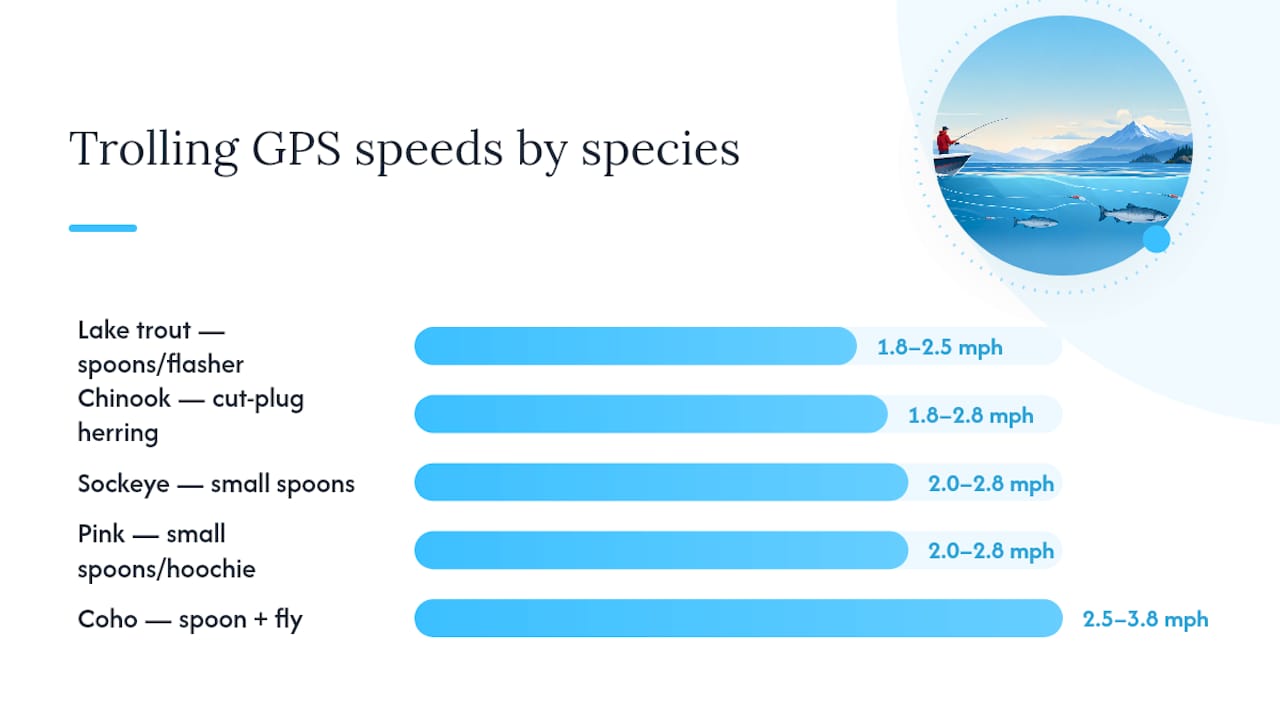
A few ground rules apply no matter what’s tied on. Always run your speed off GPS, not the boat’s speedometer, since current and wind change what your lure actually feels in the water. Wind against current can knock your true presentation speed down even when the dash reads steady. And when you’re running a mixed spread for multiple species, treat that middle-ground speed as a compromise, not a guarantee. It’ll produce fish, just not the peak bite either species would give you alone.
How Does Trolling Speed Change Lure Depth and Action?
Speed doesn’t just control how a lure wobbles. It controls how deep that lure runs, and the relationship is more sensitive than most anglers assume. Bump your GPS speed from 1.5 to 2.0 mph on the same rig, and your lure can rise several feet, sometimes tens of feet shallower, depending on line diameter and weight. Speed up further and your gear lifts even more while gaining a tighter, faster action. Slow down and it sinks deeper, with a wider, lazier swing.
That’s exactly why holding a rock-steady speed matters more than picking the “perfect” number. If you’re working a thermocline at 38 feet and your speed drifts by even half a mile per hour, your lure drifts right out of the strike zone without you ever touching the downrigger.
- A 0.5 mph swing can move presentation depth by a meaningful margin on standard mainline and weight setups
- Consistent speed matters more for depth control than trying to nail an exact “magic number”
- Wind, current, and even boat wake fight to pull your speed off target constantly
Pro Tip: Set your trolling motor or engine trim once you find a speed that’s producing, then leave it alone. Chasing “one more tenth of a mile per hour” usually costs you more fish than it earns.
What Speed Should You Troll Different Salmon Gear?
Every rig has a speed window it was built for, and running outside that window is the single fastest way to waste a good spread.
Cut-plug herring and motor mooching live at the bottom of the range. Washington Department of Fish & Wildlife notes that motor mooching is essentially slow trolling, using frequent small throttle shifts to control depth and bait roll rather than holding one constant number. Most anglers run this under 2.0 mph, sometimes barely idling forward.
Spoons and stickbaits work the middle ground, generally 2.0 to 3.5 mph, with exact speed depending on blade size and thickness. Smaller, lighter spoons want the lower end; bigger, thicker blades can handle more push before they blow out.
Dodgers versus flashers is where a lot of anglers get burned. Push a dodger past roughly 2.5 to 2.8 mph and it stops darting side to side and starts spinning in a useless circle. Flashers are built tougher for speed and stay effective up to about 3.5 mph, which is why they’re the better call for faster Coho spreads.
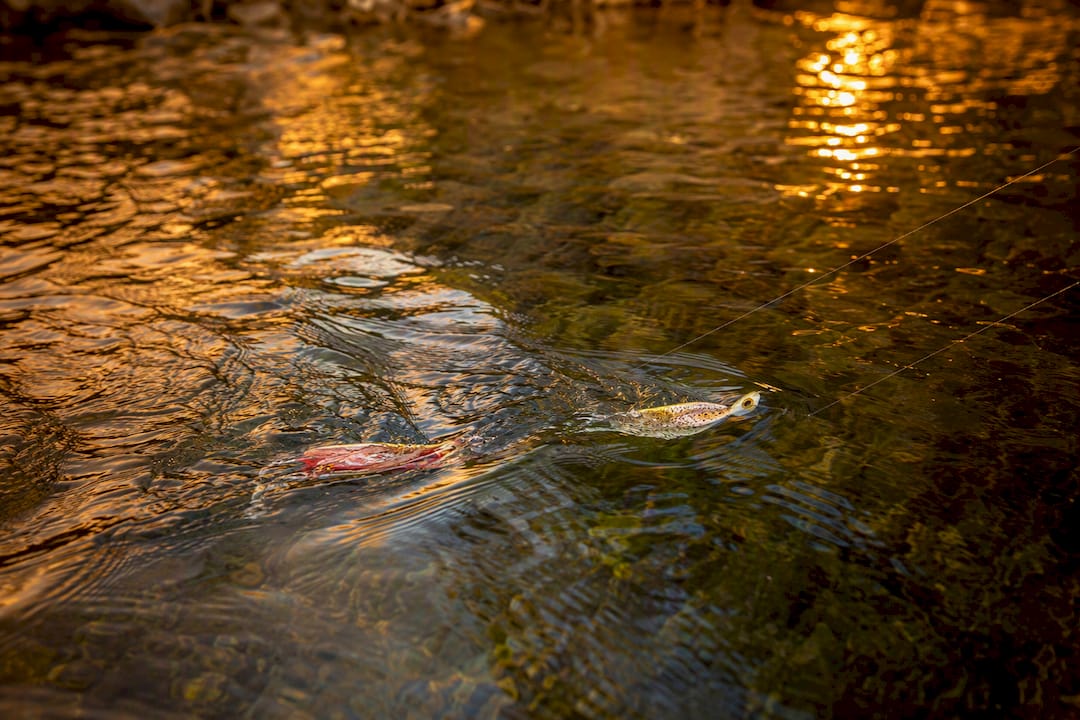
Downriggers and divers change the math entirely. These tools let you fish deep at speeds that would otherwise run your gear too shallow, so match your speed to your downrigger’s depth chart rather than guessing.
The rule that ties it all together: don’t mix cut-plug bait and fast hardware on the same pass. One rig wants 1.8 mph, the other wants 3.2 mph, and running both means one of them is fishing dead the entire time.
How Do You Measure and Hold a Steady Trolling Speed?
GPS speed over ground is your benchmark, full stop. A boat speedometer reads water speed relative to the hull, which gets skewed by current and wind in ways that mislead you about what your lure is actually doing.
Holding that number steady takes a little routine:
- Set your engine trim or trolling motor to a fixed output rather than constantly nudging the throttle.
- Run for at least a full minute at your target speed before judging anything.
- Watch your GPS readout, not the tachometer, and adjust in small increments.
- Confirm lure action at the rod tip or with a temporary shallow test before dropping gear to depth.
- Use spot-lock or autopilot where your platform and local regulations allow it, since holding a line by hand invites drift.
If your speed keeps surging, check for wake interference from following seas, a mismatched prop pitch, or engine lag between shifts. Small, steady inputs beat constant throttle chasing every time.
How Far Behind the Boat Should You Run Salmon Gear?
Line length changes with what you’re fishing and how deep it’s running. Surface baits and shallow divers typically run 20 to 40 feet back. Midwater gear off a diver or planer board often extends to 60 to 100 feet. Deep downrigger gear can run much shorter leaders behind the release clip since the ball is doing the depth work, not the line length.
Leader length shifts by target too. Chinook tend to reward heavier leader material and slightly longer leads, giving big, wary fish more time to commit. Coho, being more aggressive, often hit just as well on shorter, lighter leaders.
- Surface/shallow rigs: 20–40 feet of line behind the boat or board
- Midwater diver setups: 60–100 feet, adjusted for diver angle
- Downrigger releases: shorter leader, typically 6–12 feet behind the ball
As for the hookset, most trolling strikes don’t need a hard sweep. The boat’s forward motion and the rod bend usually set the hook for you. Many anglers simply grab the rod and hold steady pressure rather than yanking back.
Pro Tip: Soft strikes on long leaders are easy to miss. Keep your drag set just loose enough that a light hit pulls line instead of popping the leader before you even notice the rod load up.
When Should You Speed Up or Slow Down While Trolling?
Read the water and the fish, not just the chart. Slow down when you’re working big Chinook holding near bottom or structure, when the water’s cold enough to make fish sluggish, or when bait is sitting deep and unwilling to chase. Speed up when Coho are actively feeding near the surface, when the water’s warmed up, or when you spot tight bait balls with fish boiling on top.
Your spread will tell you when something’s wrong. Spinning dodgers, spoons that roll instead of wobble, or a dead stretch with zero strikes all point to a speed mismatch.
- Check for mixed gear running on the same pass at incompatible speeds.
- Confirm you’re reading true GPS speed, not speedometer or tach numbers.
- Check trim and prop for anything affecting true water speed.
- Physically inspect lure action at the surface before re-dropping to depth.
How Do You Run a Field Speed Test for Salmon Trolling?
This is the fastest way to stop guessing and start knowing what your exact spread wants on a given day. It takes fifteen minutes and it works.
- Pick one test lure and one depth tool, either a diver or a downrigger.
- Set your GPS speed to a starting point based on water temperature, slower in cold water, faster as it warms.
- Hold that exact speed for 90 to 120 seconds to let the lure fully stabilize before judging anything.
- Bump speed in small increments, such as 1.8, 2.2, 2.6, then 3.0 mph, running each pass the same way.
- Log speed, depth, lure action, and strikes for every single pass.
Keep the log simple: speed, depth, water temp, lure behavior, strikes per pass. Whichever speed produced the most solid strikes with correct lure action is your working number for that gear on that day. Run it again next trip, since conditions shift and so does the right answer.
What On-Water Experience Teaches About Trolling Speed
We’ve watched kings shut off the instant a boat crept a quarter mile per hour too fast near bottom structure, then turn right back on the second speed dropped. Coho are the opposite. Slow down too much and they lose interest entirely. The lesson holds across every trip: pick your speed for the fish and gear in front of you, then rig every rod in the spread to match it. Consistency catches more fish than any single “perfect” number ever will.
Get Gear Built to Hold Its Action at the Right Speed
None of this speed math matters if your hardware can’t hold its wobble once you find the right number. That’s where High Class Tackle Co.'s flashers and blades earn their keep. They’re built to run true from the slow end of the Chinook window up through faster Coho speeds, so you’re not fighting gear that blows out or spins the second your GPS creeps past 2.5 mph.
Rigging up terminal tackle to match your leader lengths and speed windows? The terminal tackle and components collection covers the hooks, swivels, and leader materials this guide keeps coming back to, whether you’re running deep for lakers on Lake Ontario or working a fast Coho spread off the Washington coast. Head over, match your gear to the speed you just dialed in, and get your spread back in the water.
Frequently Asked Questions
What is the best trolling speed for salmon overall? Most freshwater salmon trolling works best between 1.5 and 3.5 mph on GPS, with the exact number depending on species and gear.
What speed should I troll for Chinook salmon? Chinook generally respond best to slower speeds, often 1.8 to 2.8 mph, especially when working bottom structure with cut-plug herring or flashers.
Is trolling speed different in the Great Lakes than the Pacific Northwest? The core speed principles stay the same, but regional gear preferences shift. Great Lakes anglers lean on spoons and dodgers, while PNW anglers rely more on cut-plug herring and motor mooching for Chinook.
Should I use GPS speed or my boat’s speedometer? Always use GPS speed over ground. A speedometer reads relative to the hull and gets thrown off by current and wind in ways that mislead your actual lure presentation.
How do I know if I’m trolling too fast? Watch your dodgers. If they start spinning instead of darting side to side, or your spoons roll instead of wobble, you’re likely pushing speed past what that gear can handle.
Sources
- Salmon fishing in marine areas | Washington Department of Fish & Wildlife
- Get down to the salmon’s depth - Game & Fish
- Trolling Speed for Salmon - Lake Ontario Outdoors
- Salmon Trolling Guide: Great Lakes Speed, Depth & Spread
- Golden Rule of Trolling Speed
- What Is the Best Trolling Speed for Salmon? (2026 Guide)
Recommended
- Tide Fishing Salmon Bays: The PNW Angler’s Guide – High Class Tackle Co.®
- Buoy 10 Fishing Guide: Salmon Season 2026 – High Class Tackle Co.®
- Salmon plug fishing rivers: Proven PNW tactics and gear – High Class Tackle Co.®
- Super Bait Secrets: Top Picks for Salmon and Steelhead – High Class Tackle Co.®
0 comments