

Start with a 4 to 6 foot leader for average water depth and drop shorter for sink-tip fly rigs, longer for swinging or deep-pool float presentations. That single rule handles most days on the water, and every technique below just adjusts it up or down.
The angler community has hammered out this consensus over decades of drift boats, gravel bars, and lost fish, and it holds up: shorter leaders keep you connected to your presentation, while longer ones give a swung fly or a slip-floated bait the room it needs to work naturally. Here’s how to dial it in before your first cast.
- Default: Run 4 to 6 feet total leader on rivers averaging 3 to 6 feet deep.
- Sink-tip fly fishing: Go shorter, under 5 feet, so you don’t lose contact with the fly.
- Swinging or unweighted presentations: Lengthen to 9 to 13 feet for a more natural drift.
- Tippet rule: Always add 2 to 4 feet of tippet to a tapered leader instead of cutting into the taper.
- Clarity override: In gin-clear water, lengthen and lighten; in stained or off-color water, you can shorten and go heavier.
- Big or deep rivers: Slip-float rigs can call for leaders up to 12 to 16 feet.
High Class Tackle Co. built its terminal gear lineup around exactly these adjustments, because steelhead don’t care what looks good on a spool. They care what’s in front of their nose when the drift line straightens out.
Key Takeaways
Leader length works best when it’s matched to technique and water depth first, then fine-tuned for clarity, since fixed rules rarely survive contact with real river conditions.
| Point | Details |
|---|---|
| Start at 4 to 6 feet | Use this as your default total leader length on average rivers before adjusting. |
| Shorten for sink-tips | Keep sink-tip fly leaders under 5 feet to preserve bite detection and connection. |
| Add tippet, don’t cut taper | Attach 2 to 4 feet of tippet instead of trimming your tapered leader. |
| Match leader to shallowest spot | Set leader length to your shallowest target depth, then slide your float deeper as needed. |
| Shop terminal gear at Highclasstackleco | Highclasstackleco’s swivels, hooks, and component kits match the rig recipes covered here. |
Table of Contents
- Quick-Reference Leader Length by Technique and Water Clarity
- Why Leader Length Changes Your Presentation
- Leader-Length Rules and Rig Recipes by Technique
- Building a Leader and Choosing the Right Tippet
- Measuring and Adjusting Your Leader on the Water
- Common Leader-Length Mistakes and How to Fix Them
- The Field-Tested Case for Shorter Sink-Tip Leaders
- What I Run and Why
- Get Your Rigging Dialed In With High Class Tackle Co.
- Sources
Quick-Reference Leader Length by Technique and Water Clarity
Steelhead don’t read the same water twice, so your starting leader length should shift with both your technique and what the river looks like that morning. Use this as your on-river cheat sheet, then fine-tune from there.
| Technique | Clear Water | Stained/Cloudy Water | Fast Water | Slow/Deep Water |
|---|---|---|---|---|
| Float/shot-line | 5 to 6 ft total leader | 4 to 5 ft total leader | 4 to 5 ft (shorter shotline) | 8 to 12+ ft with slip float |
| Sink-tip fly | Under 5 ft | Under 5 ft, add tippet | 3 to 4 ft for quick sink | 4 to 5 ft max |
| Swinging fly | 9 to 12 ft | 8 to 10 ft | 8 to 9 ft | 10 to 13 ft |
| Spinner/spoon | 30+ inches | 30 inches | 30 inches | 30 inches |
A few things jump out fast when you look at this side by side:
- Float anglers on rivers averaging 3 to 6 feet deep should treat 4 to 6 feet as a real starting point, not a rough guess.
- Sink-tip riggers should almost never exceed 5 feet of leader when fishing close to bottom.
- Spinner and spoon anglers often need leaders of 30 inches or more with inline weight to keep blade action consistent at depth.
Clear water rewards longer, lighter leaders because spooky fish get a longer look at your terminal gear. Stained water lets you shorten up and fish heavier without blowing your cover.
Why Leader Length Changes Your Presentation
Leader length isn’t cosmetic. It controls how deep your fly or lure rides, how directly you feel a bite, and how natural your presentation looks to a fish that’s already seen a dozen drifts go by that day.
On sink-tip fly rigs, a longer leader lets the fly float up away from the sinking line, which sounds good until you realize you’ve also added slack between you and the take. Steelhead often “peck” a swung fly rather than crush it, and a leader that’s too long turns a solid take into a mushy tap you never feel. That’s the single biggest reason short leaders dominate sink-tip fishing.
Float and shot-line rigs work the opposite direction. Too short a leader and you’re skimming bait or beads just under the surface. Too long and your shot never settles into the strike zone before the float’s already drifted past the seam. The visibility piece matters too. Steelhead in low, clear water get leader-shy fast, and a long, light leader that fades into the current beats a stubby, heavy one every time fish are pressured.
Pro Tip: When you’re fishing a heavy sink-tip and getting soft taps with no hookups, cut your leader down before you touch anything else. A shorter leader restores the direct line between the fly and your rod tip, and that alone turns mushy takes into solid, felt strikes.
Leader-Length Rules and Rig Recipes by Technique
Every technique has its own leader logic. Here’s how to build each one from scratch, whether you’re wading a small tributary or drifting a big-water slot.
1. Float and shot-line rigs
- Shallow water (under 3 ft): Use a 3 ft leader with a shotline roughly 14 to 16 inches shorter than the shallowest spot you’re fishing.
- Average depth (3 to 6 ft): Run 4 to 6 feet total, with your shotline around 16 to 20 inches.
- Deep pools (8 to 12+ ft): Slide your float up and extend total leader length to 8 to 12 feet, or go to a slip-float rig up to 16 feet on big rivers.
The trick that most anglers miss: make the leader the length of your shallowest spot, not the deepest. You can always slide a float up to fish deeper water, but you can’t shorten a leader mid-drift without re-rigging.
2. Sink-tip fly rigs
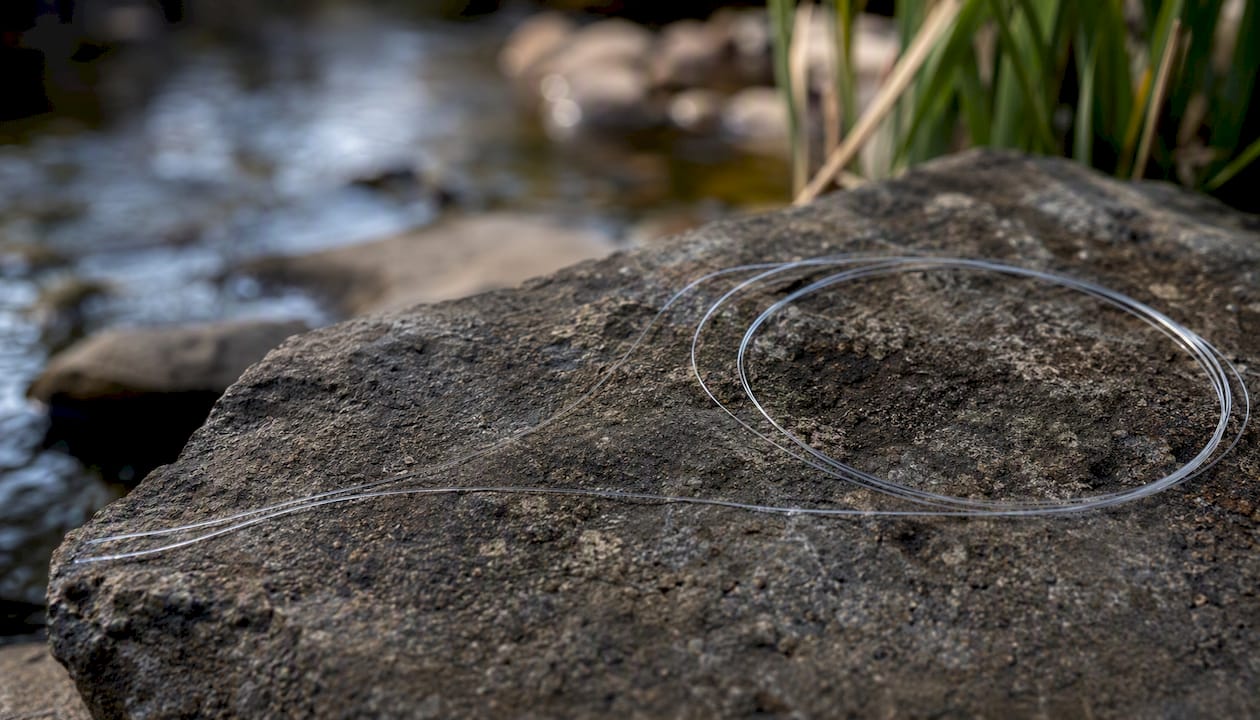
Keep tapered leaders under 5 feet when you’re fishing close to bottom with a heavy sink-tip. Add a 2 to 4 foot tippet section rather than trimming the taper itself, since tradition and modern practice both back this approach for preserving leader life and connection to the fly.
3. Swinging and unweighted flies
Small rivers call for 8 to 9 feet of leader. Medium rivers run 9 to 11 feet. Big, slow water often needs the full 12 to 13 feet to let a fly swing naturally without drag. Common recipes pair a 9 foot tapered leader with 2 to 3 feet of fluorocarbon tippet, landing your total around 10 to 13 feet.
4. Spinner and spoon rigs
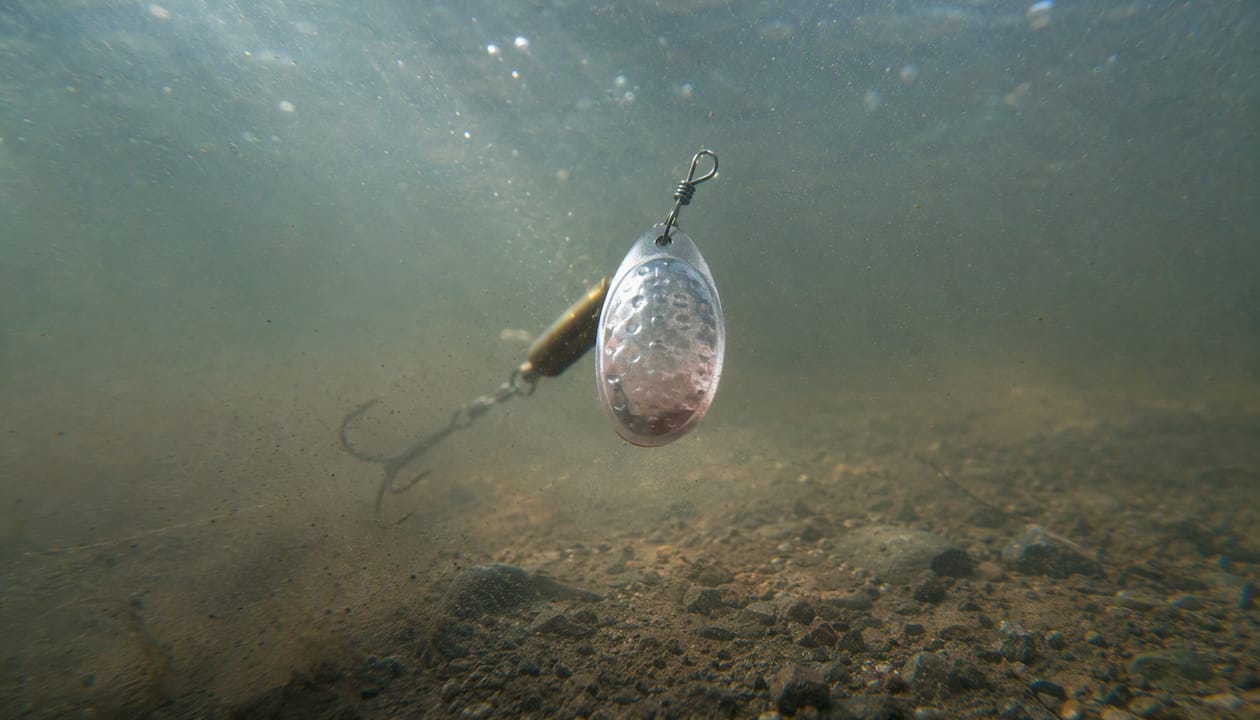
Run leaders of 30 inches or longer with inline weight positioned ahead of the swivel. Before you commit to a drift, test the lure’s thump by reeling it just under the surface. If the blade isn’t turning steadily, adjust your retrieve speed rather than immediately swapping leader length. Matching blade size to river size matters as much as the leader itself here.
5. Weighting notes across techniques
Split shot, inline weights, and slinkies all change how your leader behaves in current. Heavier weight up top means you can often run a slightly shorter leader below it and still reach the strike zone, since the weight does the work of getting you down fast.
Building a Leader and Choosing the Right Tippet
A steelhead leader has three working parts: the butt section (thick, stiff, connects to your mainline), the taper (gradually thinning material that transfers energy smoothly), and the tip or tippet (the thin, often replaceable end where your fly or hook actually ties on).
Here’s the part most anglers get wrong: you should almost never tie flies directly to the end of a tapered leader. Add a 2 to 4 foot tippet section instead. This keeps the taper intact and means you’re cutting back cheap tippet material every time you change flies, not chewing through an expensive tapered leader one fly change at a time.
1. Pick your material
Fluorocarbon sinks faster and resists abrasion better, which makes it the default choice for sink-tip and bottom-bouncing presentations. Monofilament floats higher, stretches more for shock absorption, and works well on float rigs where you want some give on the take. Neither one is universally better. It comes down to what the technique demands.
2. Match tippet strength to the situation
| Setup | Typical Tippet | Best Use |
|---|---|---|
| Clear water float rig | 4X to 5X fluorocarbon | Spooky fish, light presentations |
| Stained water float rig | 8 to 10 lb mono | Faster water, less visibility concern |
| Sink-tip fly | 10 lb fluorocarbon | Direct connection, abrasion resistance |
| Swinging fly | 8 to 10 lb fluorocarbon | Natural drift, moderate strength |
| Spinner/spoon | 12 lb mono | Handling hard strikes, current pressure |
3. Tie strong connections
A blood knot or surgeon’s knot joins tippet to leader cleanly. Whatever knot you choose, wet it before cinching down and check it after every fish. Line and terminal gear selection matters as much as the knot itself, since mismatched diameters between leader and tippet create weak points that fail under pressure.
Measuring and Adjusting Your Leader on the Water
You don’t need a tape measure streamside. You need a few tricks that let you eyeball leader length fast and adjust between drifts.
- Use your rod as a ruler. Most steelhead rods run 9 to 10.5 feet. Lay your leader alongside a section of rod to estimate length quickly.
- Pace the water. A rough step is about 2.5 to 3 feet. Wade or eyeball the shallowest part of your run and count paces to set your starting leader.
- Mark your mainline. A permanent marker at common leader lengths (4 ft, 6 ft, 9 ft) saves you from re-measuring every time you retie.
- Slide before you cut. On float rigs, sliding the float up or down adjusts effective depth without touching your leader length at all.
- Test with two casts. If your float isn’t standing up straight or your fly isn’t ticking bottom occasionally, adjust and recast before committing to a full run.
- If you’re consistently snagging bottom, shorten your leader or slide the float up slightly.
- If your presentation feels too shallow and fish are following without committing, lengthen the leader or slide the float down.
- If you’re fishing a new run with unknown depth, start shallow and work your way deeper rather than starting too long and re-rigging from scratch.
Common Leader-Length Mistakes and How to Fix Them
Most bad days on the river trace back to one of a handful of rigging mistakes. Here’s how to diagnose what’s going wrong fast.
- Symptom: lots of soft taps, no hookups. Usually means your leader is too long for a sink-tip rig, or your tippet diameter is too thick and dulling the connection. Shorten first, then check diameter.
- Symptom: fish following but not committing. Often a visibility issue in clear water. Lengthen your leader and drop to a lighter fluorocarbon tippet before changing anything else.
- Symptom: constant bottom snags. Your leader is too long for the depth you’re fishing, or your weight is positioned too far down. Shorten the leader or reposition split shot closer to the swivel.
- Symptom: float never settles or drags sideways. Check your shotline length against the ontariotroutandsteelhead.com rule of thumb: it should run 14 to 16 inches shorter than your shallowest target depth.
- Symptom: no strikes at all despite good-looking water. Consider a full rig swap. Test fluorocarbon over mono, shorten by a foot, and reposition weight before assuming the fish just aren’t there.
Swivels and snaps deserve a mention too. A stiff, oversized swivel kills the natural drift of a bait or spinner rig. Downsize when you can, and check that every knot is seated properly before you start second-guessing your leader length.
The Field-Tested Case for Shorter Sink-Tip Leaders
Modern high-pressure steelhead water rewards anglers who shorten up, not lengthen out. A long leader on a heavy sink-tip disconnects you from the fly’s depth and dulls the one signal that tells you a fish just ate: the tap you feel through the line.
That insight holds up against decades of angler consensus and against the mechanics of how a sink-tip system actually works. The sinking portion of your line does the heavy lifting to get the fly down. Once that mass is moving through the water column, a long leader adds slack and lag between the fly and your rod hand. Shorten the leader, and that lag disappears. You feel the fly ticking bottom, you feel the take, and you hook more of the fish that would’ve otherwise felt something wrong and let go.
The traditional rule of keeping sink-tip leaders under 5 feet isn’t outdated advice. If anything, it matters more now, on rivers where steelhead see dozens of swung flies a week and have learned to reject anything that feels off. High Class Tackle Co. builds its terminal components around this exact principle, because bite detection is the difference between a good day and a skunked one.
What I Run and Why
My go-to setup for average Pacific Northwest river conditions is a 5 foot leader on sink-tip fly rigs and a 5 to 6 foot total leader on float rigs, adjusting up or down as the water tells me to. I don’t overthink it past that. The water depth and clarity make the decision for me most days.
High Class Tackle Co. gear fits naturally into this system because the terminal components, from swivels to hooks, are built with the same “keep it simple and functional” mindset. There’s no reason to overcomplicate a leader when the fish care more about presentation than fancy hardware.
One habit I’ve picked up: if I get two drifts through a run with zero action and the water looks right, I shorten my leader by a foot before I touch anything else. It’s a small adjustment, but it’s fixed more slow mornings than any lure change ever has.
Get Your Rigging Dialed In With High Class Tackle Co.
High Class Tackle Co. built its terminal tackle lineup for exactly the adjustments covered in this guide: swivels sized right for quick leader changes, hooks matched to tippet strength, and components that hold up when a steelhead runs hard mid-fight.

If you’re putting together a sink-tip rig, start with the terminal tackle and components built to pair cleanly with fluorocarbon tippet. Anglers who want a faster way to swap leaders and tippet streamside should check out the component tackle box, which keeps your most-used swivels, hooks, and shot sorted and ready between drifts instead of buried loose in a tackle bag. And if you’re building out your terminal gear from scratch, the full lineup at Highclasstackleco covers everything from blades to hooks to apparel for your next river day. Browse the terminal tackle collection and stock your box before your next trip.
Sources
- Steelhead Leader Setup: Centerpin and Float Fishing Leader
- Steelhead Leaders: Best Float Leaders With 2 Proven Setups
- How long should a steelhead fly fishing leader be?
- Steelhead Leader Setup Explained - Fishing Gear Insider
- Slow and Deep - Spinner Fishing for Steelhead | Northwest Fishing
For more rigging breakdowns and terminal gear guides built specifically for West Coast steelhead water, check the Highclasstackleco blog for the latest field-tested tips.
0 comments