

Rig a cut plug herring by making one clean angled cut behind the gill, pulling the guts completely, then mounting a tow (front) hook and a trailer (tail) hook spaced so the bait carves a tight, fast roll when it’s trolled or mooched. This is the bait that’s put more Chinook in West Coast boats than almost anything else in the box, and getting the roll right is the whole game. Pinch your barbs where wild salmon are protected, check your local regs before you wet a line, and let’s get your bait spinning like it should. High Class Tackle Co. has been building rigs for this exact fight for years.
Before you drop that bait, run through three checks:
- Clean cut. One smooth slice, no sawing, no ragged edges.
- Guts out. Fully cleared, nothing trailing that can tear the belly.
- Roll tested. Confirmed at your actual trolling or mooching speed, not just eyeballed at the rail.
Key Takeaways
Correct tow-hook placement, not cut angle, determines whether a cut plug herring rolls tight enough to draw Chinook strikes.
| Point | Details |
|---|---|
| Master the cut | One smooth 30-degree slice behind the gill preserves belly skin and controls spin speed. |
| Prioritize the tow hook | Seat it on the short side of the cut. It controls the roll more than any other variable. |
| Space hooks correctly | Keep roughly 3 inches between tow and trailer hooks on a 40 lb fluorocarbon leader. |
| Always test the roll | Check at trolling or mooching speed before deploying. Look for a tight, drill-bit spin. |
| Gear up right | Highclasstackleco’s terminal tackle and leader materials are built to hold that roll through a full fight. |
Table of Contents
- How Do You Rig a Cut Plug Herring Step by Step?
- Brining and Prepping Herring for a Tight Roll
- What Leader and Hooks Work Best for Cut Plug Rigs?
- How Do You Test and Fix the Roll on a Cut Plug?
- Mooching and Trolling: Getting the Most Out of Your Spread
- What Rigging Mistakes Cost You the Most Bites?
- Regulations and Safety Notes Before You Fish
- Frequently Asked Questions
- Sources
How Do You Rig a Cut Plug Herring Step by Step?
Get your station squared away first. A sharp fillet knife, a cutting board, and wet hands make the difference between a clean plug and a mangled one. A cutting jig helps if you’re rigging a dozen baits before first light, but it’s not required once you’ve got the motion down.
- Make the cut. Angle your knife roughly 30 degrees behind the gill plate and slice through in one motion. A steeper angle spins the bait faster; a shallower cut produces a slower, wider barrel roll. Either way, a single slicing motion preserves the belly skin far better than sawing back and forth.
- Clear the cavity. Remove the guts completely with your fingers or the knife tip. If any trail out during the tow, they’ll tear the belly and wreck your roll before the bait even gets deep.
- Set the tow hook. Push it through the cut side of the head, exiting so it pulls from the short side of the slice. This hook does more work than the cut angle itself.
- Set the trailer hook. Space it roughly three finger widths (about 3 inches) back from the tow hook, tucked lightly into the flank so it doesn’t drag or spin off-axis.
- Secure and trim. Snell both hooks tight, then trim tag ends close to the eye. A long tag end acts like a lever that enlarges the hole and blows out the bait early.
If you’re grinding through heavy current or a long downrigger tow, run a toothpick along the spine, exposed slightly at the front corner, to keep the plug from folding.
Pro Tip: Snap a quick photo of the tow-hook exit point on your best-rolling bait each trip. That reference photo saves you from re-guessing the geometry the next time the bite turns on.
- Cut behind the gill, single motion
- Guts fully cleared
- Tow hook seated on the short side
- Trailer hook 3 inches back, tucked
- Tag ends trimmed tight
Brining and Prepping Herring for a Tight Roll
Brining anchovies and herring alike isn’t just tradition. It firms the flesh so scales stay locked in place through a long day of casting and trolling, which keeps your cut plug looking alive instead of shredded. A basic salt and sugar brine, chilled overnight, is the starting point most PNW guides build from.
- Handle bait with wet hands to avoid stripping scales.
- Thaw frozen herring slowly in the fridge, never on the deck in direct sun.
- Steeper cuts spin faster and suit aggressive Chinook; gentler cuts suit a slower presentation when fish are finicky.
- Keep a cooler of pre-brined bait on ice between cuts so you’re never rigging under pressure mid-bite.
Pro Tip: Rig two or three baits in advance during a slow stretch. When the bite turns on, you swap a worn plug for a fresh one in seconds instead of losing water time.
What Leader and Hooks Work Best for Cut Plug Rigs?
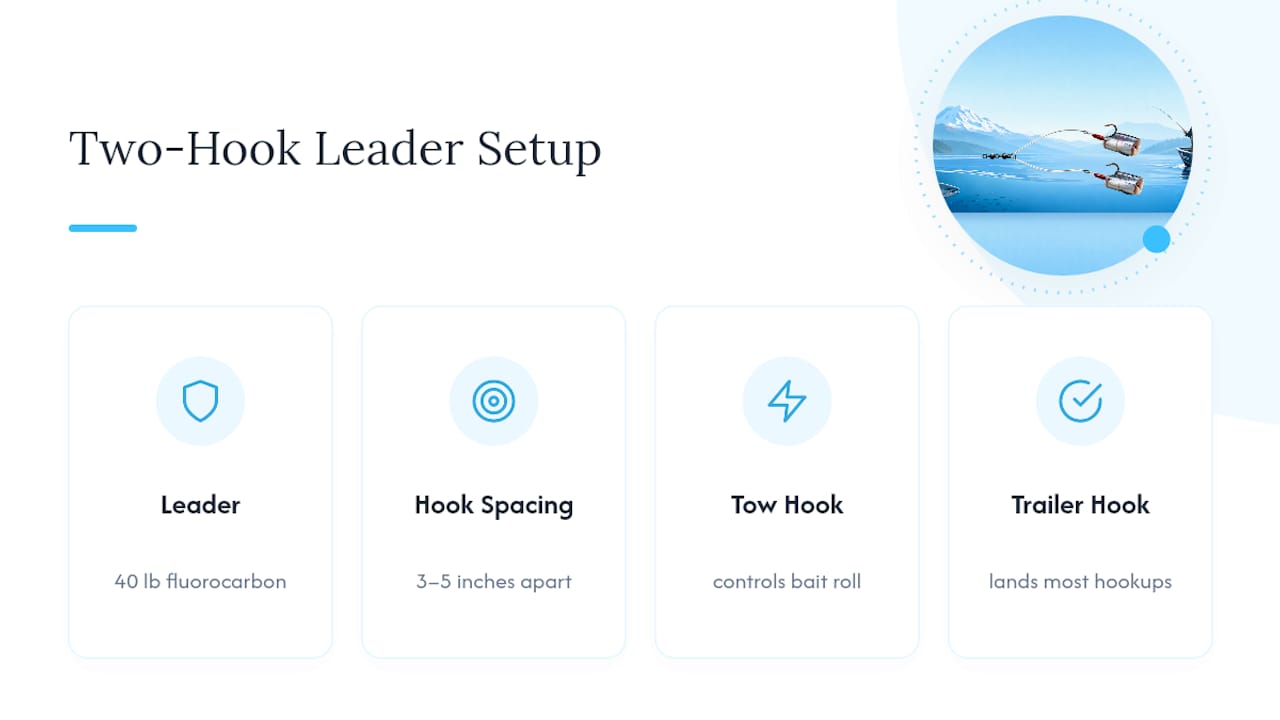
A two-hook leader is the backbone of any cut plug herring rig. Most guides run 40 lb fluorocarbon for the abrasion resistance and low visibility, spacing the tow and trailer hooks roughly 3 to 5 inches apart depending on bait size. The trailer hook lands most of your hookups, but the tow hook is what determines whether the whole bait rolls straight in the first place.
Hook size should track herring size, not guesswork:
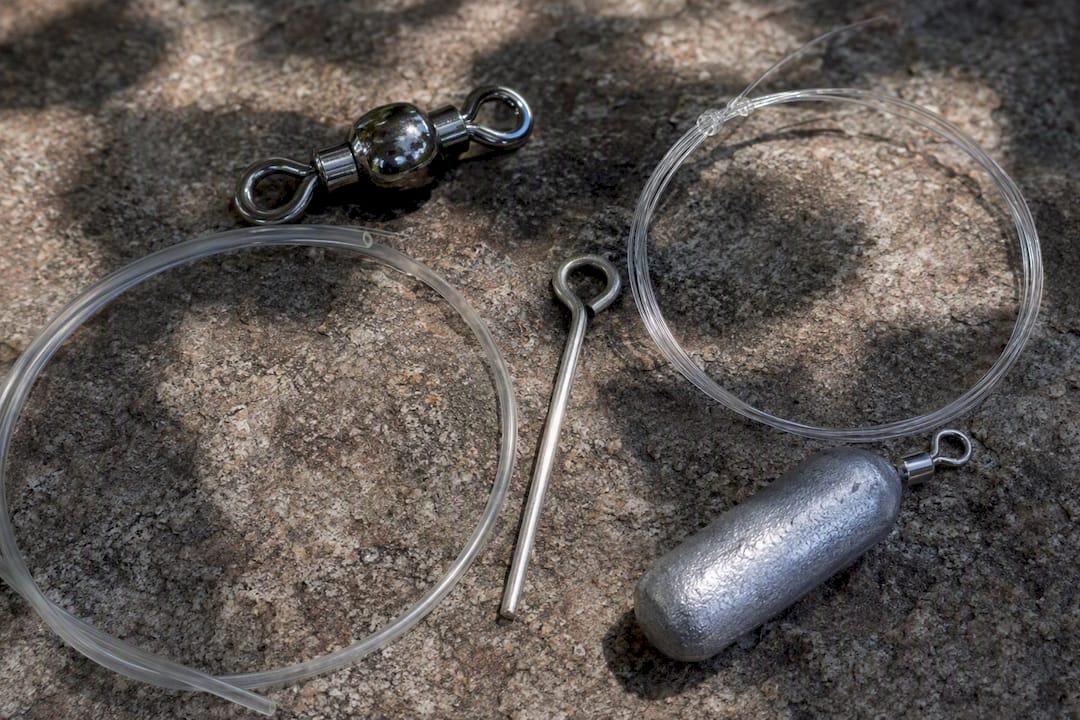
Match your hardware to the job. A ball-bearing swivel above the leader prevents line twist from a spinning bait, and a slider setup with surgical tubing or a crib peg lets your mainline weight run free of the leader for a more natural drop during mooching. For trolling, a fixed dropper weight ahead of a swivel keeps depth consistent behind the boat. Trim every tag end close. A long tail on your snell knot chews a bigger hole in the bait with every strike, cutting your fishing time short on what should have been your best plug of the day.
How Do You Test and Fix the Roll on a Cut Plug?
Drop the bait boatside at your actual trolling or mooching speed before it goes into the spread. You’re looking for a tight, drill-bit-style spin, not a wide propeller wobble. That tight corkscrew is what triggers Chinook.
- Watch the roll for five to ten seconds at speed.
- If it’s too wide or lazy, move the tow hook slightly forward.
- If it’s spinning too fast or thrashing, back the tow hook off a touch.
- If the trailer hook drags the tail down, shift it half an inch closer to the tow hook.
- Re-rig if the belly is torn or the cut has degraded past a clean edge.
- Adjust rather than replace if the roll is just slightly off.
- Check bait every 10 to 15 minutes for weeds, nicks, or slowing spin.
Mooching and Trolling: Getting the Most Out of Your Spread
Mooching calls for a slower presentation, often just enough speed to keep the bait ticking over in a wide, easy roll. Trolling behind a boat pushes speed up and tightens that roll considerably, which is why testing at your actual working speed matters more than any formula. Chinook respond to both, but aggressive fish in stained water often want that tighter, faster spin, while pressured fish in clear water sometimes prefer the slower barrel roll.
- Run cut plugs 30 to 60 feet behind a downrigger ball, adjusted for water clarity and pressure.
- Pair with a flasher or teaser ahead of the leader to add flash without stealing the bait’s natural roll.
- Set drag light enough to avoid pulled hooks on the first run, since Chinook hit hard and dive immediately.
- Use mainline in the 30 to 50 lb range to handle both the fight and the abrasion of gear-heavy trolling setups.
What Rigging Mistakes Cost You the Most Bites?
The biggest culprits are avoidable. Overhandling bait strips scales and dulls the flash. Sawing through the cut instead of slicing it in one motion tears the belly meat. Long tag ends chew bigger holes with every hit. And skipping the roll test means you’re trolling blind on a bait that might be spinning sideways the whole time.
- Overhandled, scale-stripped bait
- Sawed rather than sliced cuts
- Long tag ends left untrimmed
- No roll check before deployment
Pro Tip: Pre-cut a batch of leaders on a rigging board the night before. Rigging speed on the water is what keeps a bait fishing during a short window bite, not scrambling to tie knots while fish are up.
Regulations and Safety Notes Before You Fish
Pinch your barbs in any water with protected wild salmon runs. It speeds release and cuts down on handling damage for fish you can’t keep. Handle knives and hooks with care, and dispose of bait scraps properly rather than tossing them overboard near docks or launches. Cut plugs excel on Chinook but don’t expect the same results from species that feed heavily on krill, like some sockeye, since a rolling plug doesn’t mimic what they’re keying on.
Why Does Tow-Hook Placement Control the Roll More Than the Cut?
Field observations from experienced guides consistently point to one thing: moving the tow hook a small amount changes the roll dramatically, while small differences in cut angle barely register. The hook’s position sets the bait’s rotational balance.
Guide notes on hook alignment back this up directly. Next time your roll looks off, shift the tow hook a quarter inch before you touch the knife again.
A Word From Our Rigging Desk
Cut plug rigging rewards patience over perfection. Anglers chase the “ideal” cut angle for years when the fix is almost always the tow hook. Get comfortable adjusting that one variable and your hookup rate climbs fast. For a deeper walk-through with photos, check Nick’s cut plug guide.
Build Your Rig With the Right Components
A cut plug is only as good as the hardware holding it together. Cheap swivels twist your leader, dull hooks miss the hookset, and mismatched sizes ruin your roll before the bait even hits the water. Highclasstackleco stocks the terminal gear built specifically for this rig: ball-bearing swivels, snelled hooks sized right for herring from 5 to 8 inches, and fluorocarbon leader material that holds up through a full day of Chinook fights.
Start with the terminal tackle and components collection to grab hooks, swivels, and leader in one order, then round out your kit at the Highclasstackleco storefront before your next trip out.
Frequently Asked Questions
What’s the best hook size for cut plug herring rigging? Match hook size to bait length. A 5 to 6 inch herring typically pairs with a 3/0 to 4/0 hook, while a 7 to 8 inch bait calls for 4/0 to 5/0.
How far apart should the tow and trailer hooks be? Roughly 3 inches, or about three finger widths, works for most Chinook-sized herring, though some guides stretch to 5 inches on larger bait.
Why won’t my cut plug roll correctly? Nine times out of ten it’s tow-hook placement, not your cut angle. Nudge the hook forward if the roll is too wide, or back if it’s spinning too fast.
Is cut plug herring better than whole bait or strip bait for Chinook? Cut plug gives you a tighter, more controllable roll than whole bait and holds up longer under a tow than most strip cuts, which makes it the go-to choice for serious Chinook trolling.
Do I need to brine herring before cutting it? Brining firms the flesh and locks in scales, which keeps your cut plug looking fresh through a longer day on the water compared to bait fished straight from frozen.
Sources
- How to Rig a Cut Plug Herring | The Outdoor Line Blog
- Cut Plug Herring Rig for Trophy Chinook Salmon Fishing
- How to Rig Cutplug Herring – Salmon University
- HOW TO CUT & RIG A HERRING - Chinook Shores Lodge
Recommended
- Salmon plug fishing rivers: Proven PNW tactics and gear – High Class Tackle Co.®
- Brad Cut Plug Mastery: Expert Rigging Guide for PNW Anglers – High Class Tackle Co.®
- Types of Hooks for Steelhead Fishing: PNW Guide – High Class Tackle Co.®
- What Is a Salmon Teaser? Rigging & Tuning Guide – High Class Tackle Co.®
0 comments