

Barbless hooks are required in Oregon for all ocean salmon sport fisheries and for specified Columbia River salmon, steelhead, and sturgeon fisheries. Outside those fisheries, whether you’re legal with a barbed or barbless hook comes down to zone regulations and waterbody-specific exceptions listed in the current Oregon fishing regulations.
That’s the answer. Now here’s how to make sure it applies to your water, your target species, and your exact trip date.
Three sources carry the actual authority here: the Oregon Department of Fish and Wildlife (ODFW), the eRegulations digital pamphlet at eregulations.com, and the Oregon Fish and Wildlife Commission, which sets and revises the rules. Printed pamphlets go stale fast. In-season and emergency rule changes override anything you’re holding on paper, so treat every trip as a fresh check.
Before you launch:
- Pull up the eRegulations zone page or the ODFW site for the exact waterbody you’re fishing.
- Check ODFW’s in-season update page for anything posted after the printed pamphlet.
- Call the nearest ODFW field office if the zone table language is ambiguous.
- Carry needle-nose pliers so you can crimp a barb dockside if you’re not sure.
Quick sequence for trip-day confidence:
- Search the specific waterbody name in eRegulations.
- Cross-reference the zone table for exceptions.
- Check the in-season update feed for anything newer than your printed copy.
- When in doubt, fish barbless. It’s legal everywhere barbed is, and it’s never the wrong call.
Pro Tip: Screenshot the regulation page for your target water the night before you fish. If a trooper asks, you’ve got a timestamped record showing you checked, not just a claim that you did.
Key Takeaways
Barbless hooks are legally required for Oregon ocean salmon fisheries and specified Columbia River salmon, steelhead, and sturgeon fisheries, while other waters follow zone-specific rules and named exceptions.
| Point | Details |
|---|---|
| Mandatory fisheries | Ocean salmon and specified Columbia River salmon, steelhead, and sturgeon fisheries require barbless hooks statewide. |
| Zone exceptions exist | Youngs Bay and Gnat Creek allow barbed hooks despite barbless rules in nearby Columbia Zone water. |
| Gear limits are numeric | Single-point hooks max out at a 1-inch gap; multiple-point hooks at 9/16 inch outside the ocean fishery. |
| Rules change mid-season | Emergency and in-season updates on ODFW’s site override anything printed in a paper pamphlet. |
| Crimping is legal compliance | Flattening a barb with pliers satisfies the legal definition without buying new hooks. |
| Gear up compliant | Highclasstackleco’s terminal tackle collection offers barbless-ready hooks sized for Oregon salmon and steelhead rigs. |
Table of Contents
- Where Barbless Hooks Are Required by Fishery and Zone
- What Counts as Barbless, and What the Gear Limits Actually Say
- How to Check Current Oregon Fishing Regulations Before You Launch
- Penalties for Fishing With the Wrong Hooks in Oregon
- Making Hooks Barbless and Handling Fish for Better Survival
- Why Oregon Keeps the Barbless Rule, and What Could Change It
- A Working Angler’s Take on Oregon’s Hook Rules
- Where to Find Barbless-Ready Tackle for Oregon Waters
- Frequently Asked Questions
- Sources
Where Barbless Hooks Are Required by Fishery and Zone
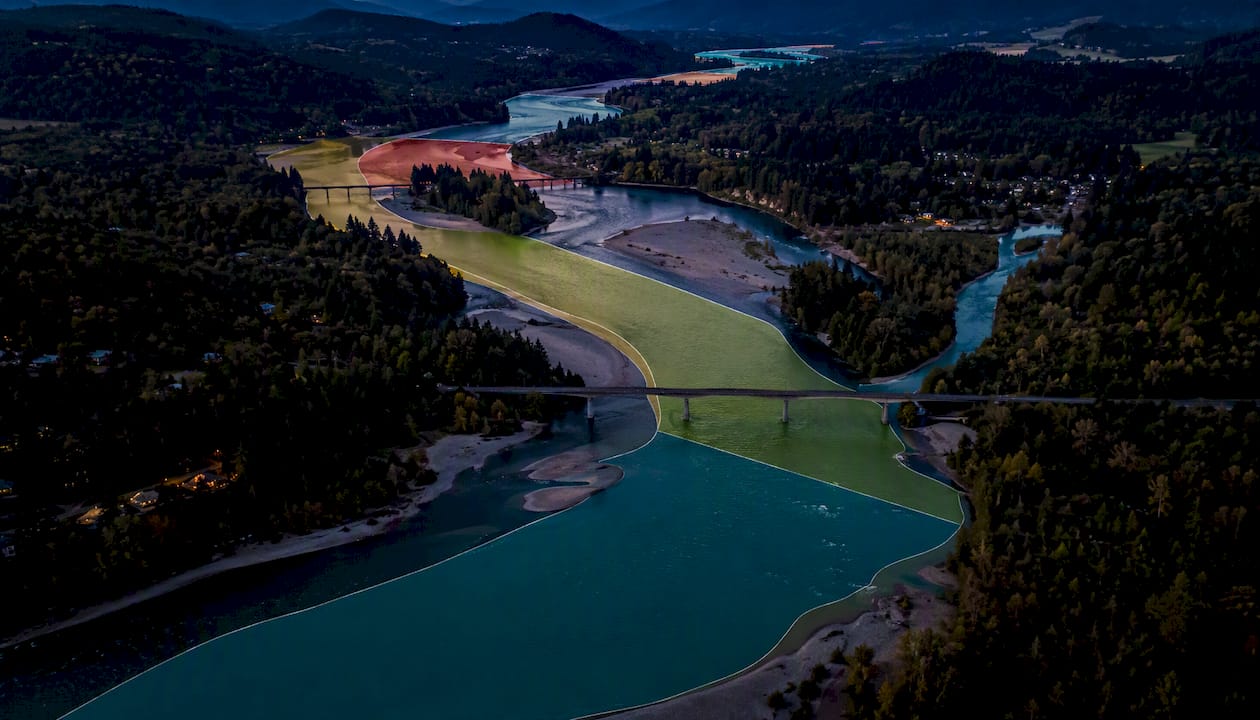
Oregon doesn’t run one blanket hook rule. It runs a layered system: statewide baseline regulations, then fishery-specific overlays, then zone tables, then named waterbody exceptions that can flip the rule in either direction. Understanding that stack is the difference between guessing and knowing.
Fisheries where barbless is mandatory
Two categories carry a hard barbless requirement across the state, regardless of what zone table you’re standing next to.
Ocean salmon sport fisheries. Every angler fishing for salmon in the ocean, and any angler aboard a boat with a salmon on board, is limited to no more than two single-point barbless hooks per line, with no more than one line per angler, according to ODFW’s ocean salmon sport regulations. That two-hook, one-line ceiling applies whether you’re trolling a plug or drifting bait behind a flasher.
Specified Columbia River fisheries. Recreational salmon, steelhead, and sturgeon fisheries on designated stretches of the Columbia also carry the barbless mandate. This isn’t a suggestion from ODFW biologists. It’s written into the zone-specific rule text you’ll find on the Columbia River hook regulations page, and it applies across the mainstem sections where these fisheries run.
Where zone rules and exceptions take over
Outside those two categories, Oregon defaults to a “check the table” system. Barbed hooks are generally permitted in waters where nothing specifically restricts them, including the Willamette River and many Columbia River tributaries. That’s a meaningful distinction for anglers who assume the whole Columbia system runs one rule. It doesn’t.
Here’s where it gets easy to trip up. A “listed exception” in the zone table doesn’t mean the water is unregulated. It means the regulation for that specific stretch differs from the surrounding zone’s default, and it was written into rule for a reason, usually tied to a hatchery return, a select-area fishery, or a historical concurrence agreement with Washington.
The clearest real-world example: Youngs Bay. Rule text established effective February 1, 2017, carved out select-area exceptions allowing barbed hooks in Youngs Bay and Gnat Creek, even though barbless hooks remain mandatory in the nearby Columbia Zone waters surrounding them. Fish an area a few miles off without checking the table, and you can go from fully legal to non-compliant without changing anything except your GPS coordinates.
- Ocean salmon fisheries: barbless required, two single-point hooks max, one line per angler.
- Specified Columbia River salmon, steelhead, and sturgeon fisheries: barbless required per zone table.
- Willamette River and many Columbia tributaries: barbed generally allowed unless a specific rule says otherwise.
- Youngs Bay and Gnat Creek: named exceptions permitting barbed hooks despite barbless-mandatory water nearby.
- Every other water: default to checking the current zone table before you rig.
Translating a rule table into an on-the-water decision
A regulation table lists waterbody names, not GPS pins, and that’s where anglers get tripped up mid-trip. When you’re standing on a gravel bar wondering if you’ve crossed from one management zone into another, use ODFW’s published zone boundary descriptions, which typically reference bridges, confluences, or river mile markers rather than vague landmarks. The eRegulations site lets you search by waterbody name and pulls the specific zone language instead of making you dig through a PDF. If a boundary is described by a bridge or tributary mouth you can’t visually confirm, that’s exactly when a call to the local ODFW field office earns its five minutes.
Pro Tip: When a zone table lists an “exception” waterbody, read the effective date next to it. Some exceptions were added years ago and are permanent; others are temporary responses to a specific run and may sunset. The date tells you which one you’re looking at.
What Counts as Barbless, and What the Gear Limits Actually Say
A barbless hook, under Oregon rule, is one that’s either manufactured without a barb or made barbless by crimping or flattening the barb down with pliers. Both methods satisfy the legal definition equally. You don’t need to buy new tackle to comply. You need a pair of pliers and thirty seconds per hook, a detail the Oregon statewide regulations spell out directly.
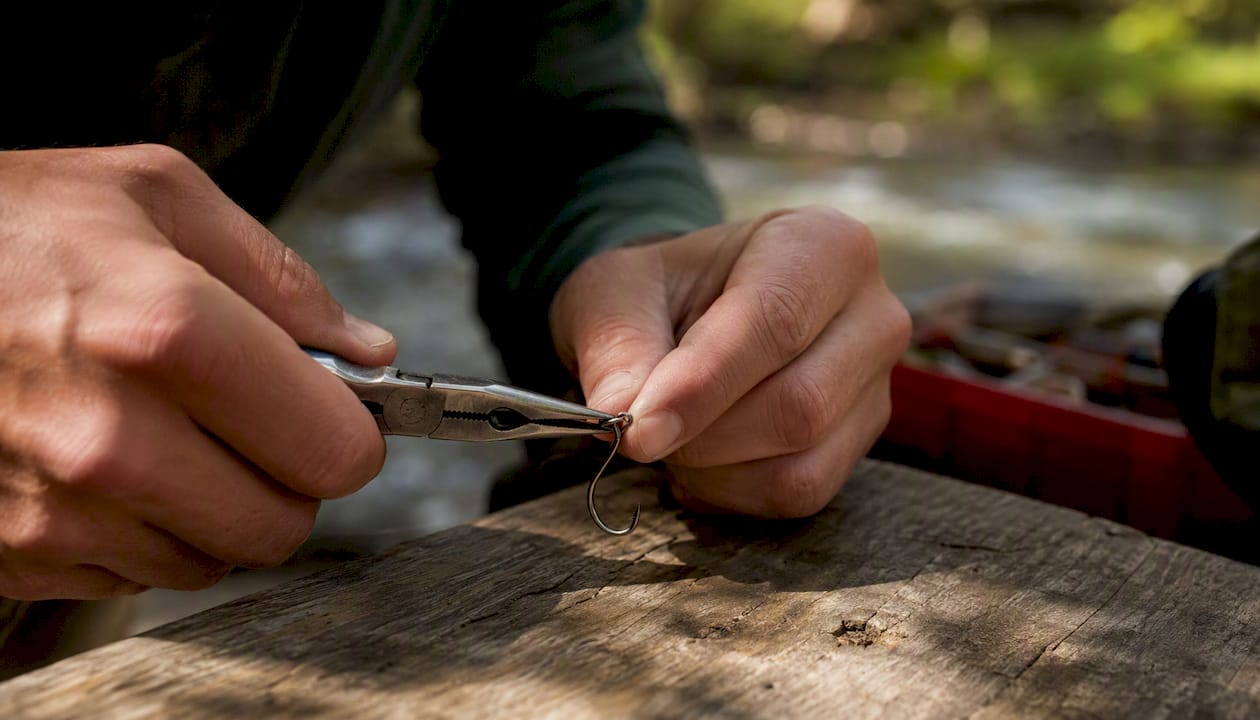
Oregon also distinguishes between single-point hooks (one point, like a standard J-hook or octopus hook) and multiple-point hooks (trebles and similar configurations). That distinction matters because the gap size limits differ between the two, and mixing them up is one of the more common ways anglers end up illegally rigged without realizing it.
The numbers that actually govern your rig
For salmon and steelhead fishing outside the ocean, anglers are restricted to one line per angler. On top of that, hook gap limits apply: single-point hooks can’t exceed a 1-inch gap, and multiple-point hooks can’t exceed a 9/16-inch gap, in these fisheries.
Here’s what that looks like rigged versus not:
- Legal: A single-point barbless hook with a 3/4-inch gap, fished on one line, for Columbia River steelhead.
- Illegal: A treble hook with a 3/4-inch gap fished in the same fishery. Even though the gap is under an inch, the multiple-point limit of 9/16 inch applies, not the single-point limit.
- Legal: Two single-point barbless hooks on one line for ocean salmon, per the two-hook ceiling.
- Illegal: Two lines rigged simultaneously with a salmon already in the boat.
Bait rigs and artificial lure rigs both fall under the same gap and count limits. A bait angler running a Corky-and-yarn setup with a single-point hook checks the 1-inch gap rule. A plug angler running a treble on a wrapped diver checks the 9/16-inch multiple-point rule instead. Adding weight, beads, or a leader swivel doesn’t change either threshold. Those numbers apply to the hook itself, not the terminal rig around it.
By the numbers: Ocean salmon anglers are capped at two single-point barbless hooks per line, one line per angler. Salmon and steelhead anglers elsewhere face a 1-inch gap ceiling on single-point hooks and 9/16-inch on multiple-point hooks.
Before you launch, run this checklist:
- Confirm the fishery type (ocean vs. specified Columbia River vs. general zone water).
- Count your hooks per line and your lines per angler.
- Measure or estimate your hook gap against the 1-inch or 9/16-inch threshold depending on hook style.
- Crimp any barb you’re unsure about. It costs nothing and it’s always legal.
How to Check Current Oregon Fishing Regulations Before You Launch
Printed pamphlets are a snapshot, not a guarantee. Here’s the sequence that actually holds up.
- Start with eRegulations. Search the exact waterbody name on the Oregon fishing regulations site and pull the zone table for that stretch.
- Check ODFW’s in-season updates. Temporary and emergency rules get posted here as they’re adopted, and they supersede whatever’s printed in your pamphlet.
- Cross-reference the zone PDF. For Columbia River fisheries specifically, ODFW publishes detailed hook-regulation tables and zone maps as standalone PDFs. Read the effective dates and footnotes, not just the headline rule.
- Call the field office if anything’s unclear. Ask for the exact waterbody boundary (bridge, river mile, or confluence), the effective date of the current rule, and whether any temporary rule is active for your date.
- Screenshot or save what you find. A dated screenshot of the zone page takes five seconds and settles most disputes on the water before they start.
When you call, keep it simple: name the waterbody, name your target species, and ask directly whether barbless hooks are required for that stretch on that date. Write down the name of whoever you spoke with and the date of the call. That’s your paper trail if a rule interpretation ever gets questioned.
Penalties for Fishing With the Wrong Hooks in Oregon
Oregon State Police Fish and Wildlife troopers and ODFW staff run routine checks during active salmon, steelhead, and sturgeon seasons, especially at popular access points and boat ramps. Compliance with barbless rules runs high, reportedly above 90% in some ODFW materials, but that still leaves a meaningful number of anglers cited during routine encounters.
Noncompliance typically results in a citation, and enforcement officers can confiscate illegal gear on the spot. Exact fine amounts run through Oregon state code and vary by violation, so verify current fine schedules directly with Oregon State Police rather than relying on secondhand numbers from other anglers.
A few things help if you’re ever flagged:
- Carrying a dated screenshot of the zone page you checked before launching.
- Knowing the name of the waterbody zone you’re fishing, not just “the Columbia.”
- Having pliers on hand to correct a barbed hook immediately.
- Understanding that “I didn’t know” doesn’t hold up. The responsibility to know current rules sits with you, not the officer.
Pro Tip: Keep needle-nose pliers clipped to your vest or tackle bag all season. If a trooper flags a barb you missed, crimping it right there, in front of them, shows good faith and often turns a tense moment into a warning.
Making Hooks Barbless and Handling Fish for Better Survival
Complying with Oregon’s hook rules is the easy part once you know the numbers. Doing it well, in a way that also improves your catch-and-release success, takes a little more technique.
Step-by-step: making a hook legally barbless
- Grip the hook shank firmly with needle-nose pliers positioned right at the base of the barb.
- Squeeze steadily until the barb flattens against the hook point. Don’t hammer it. A slow, even crimp holds better than a rushed one.
- Run your fingernail across the point where the barb used to be. If you feel any ridge, crimp again.
- Check the hook under good light before you tie it on. A half-crimped barb still counts as a barb.
Field inspection checklist
- Visually confirm no barb ridge remains on the hook point.
- Measure the gap against the 1-inch (single-point) or 9/16-inch (multiple-point) thresholds if you’re fishing outside the ocean.
- Confirm hook count per line and lines per angler match your fishery’s limit.
- Re-check hooks after landing a fish. Barbs can partially reform on softer wire hooks if they’re bent back rather than fully crimped.
For hook selection, a quality barbless-friendly hook built for steelhead and salmon holds up better to crimping than cheap stamped hooks, which can crack at the barb point under pressure. A solid barbless setup also depends on the rest of your rig, so a full terminal gear checklist built specifically for Pacific Northwest conditions helps you avoid showing up under-rigged.
Handling fish for better release survival
Barbless hooks make hook removal faster, which matters more than most anglers realize. ODFW technical materials note that removal ease and reduced handling time from barbless hooks can lower fish stress, even though hook location and handling technique often drive survival outcomes more than hook type alone.
Practical steps that actually move the needle:
- Keep the fish in the water as much as possible. Air exposure over 30 seconds measurably increases stress.
- Wet your hands or use rubberized gloves before touching a fish you’re releasing. Dry hands strip protective slime.
- Back the hook out quickly with needle-nose pliers rather than working it loose by hand.
- If a fish is deep-hooked and the hook isn’t visible, cut the leader close to the hook rather than digging for it. A barbless hook left in place has a much better chance of working free on its own.
Artificial lure rigs, particularly spinning setups with trailing trebles, benefit the most from barbless conversion since treble hooks tend to grab multiple points on a fish. If you’re running spinning lures for salmon, crimp every point on the treble, not just one, since a partially barbed treble still fails the legal definition.
Pro Tip: Match your drag setting to your leader strength before you ever hook a fish. A barbless hook holds fine under pressure, but a fish that gets slack line during a head shake can throw it. Tight, consistent drag keeps fish buttoned up without needing a barb to do the work.
Why Oregon Keeps the Barbless Rule, and What Could Change It
ODFW’s own technical reviews are candid about a nuance most anglers miss: anatomical hook location, handling technique, and water temperature often influence post-release survival more than whether the hook itself has a barb. That finding comes straight from ODFW’s Columbia River hook regulations materials, and it’s a fair question anglers raise: if barb status isn’t the biggest variable, why keep the rule?
The answer is partly about managed risk. ODFW modeling suggests that rescinding barbless requirements could shorten season lengths in some fisheries, because current season length calculations already assume the lower incidental mortality that barbless rules provide. Loosen the hook rule, and biologists have to rebudget for higher release mortality, which usually means trimming days on the water instead.
By the numbers: Compliance with barbless requirements runs above 90% in some ODFW enforcement materials, yet routine checks still turn up infractions regularly enough that troopers treat hook inspections as a standard part of any water access stop.
There’s also active policy conversation happening right now. Some commissioners and angler advocacy groups have pushed ODFW to revisit Columbia River hook rules and consider a return to angler’s-choice hooks on shared water with Washington. Concurrency between the two states matters on a river that forms the border for hundreds of miles. A rule mismatch between Oregon and Washington on the same stretch creates exactly the kind of confusion this whole guide is trying to prevent.
- ODFW findings: hook location and handling often outweigh barb status in survival outcomes.
- Compliance: high overall, but infractions persist during routine checks.
- Policy activity: ongoing commission-level discussion about revisiting Columbia River rules.
- Season stability: a key reason managers are cautious about loosening barbless requirements.
A Working Angler’s Take on Oregon’s Hook Rules
The barbless debate misses the point when it turns into an argument over survival percentages. Barbless rules exist because Oregon’s fishery managers are budgeting for mortality across an entire season, not just your one fish. That’s a management tool, not a referendum on whether your barb would have killed that steelhead.
What frustrates me is how many anglers treat the zone table like optional reading. The Youngs Bay exception isn’t a loophole. It’s proof the state already builds flexibility into these rules where the biology supports it. Complaining about the barbless requirement in the Columbia Zone while ignoring that a named exception exists a few miles away tells me the angler never opened the table in the first place.
Crimp your barbs, know your zone, and stop treating the pamphlet as gospel the day it’s printed.
Where to Find Barbless-Ready Tackle for Oregon Waters
Once you know your fishery’s hook rules, the fastest path to compliance is starting with terminal tackle built to convert cleanly. Highclasstackleco stocks hooks and terminal components designed for exactly this: hooks that crimp clean without cracking at the barb, sized right for Columbia River steelhead and ocean salmon rigs.
Browse the terminal tackle and hook components built for Pacific Northwest salmon and steelhead conditions, then double-check the current zone rules for your target water before you rig up. Regulations shift mid-season more often than most anglers expect, and no hook selection replaces a five-minute check on eRegulations. Once you’ve confirmed your water, gear up at Highclasstackleco and get your lines in the water knowing you’re rigged legal from the first cast.
Frequently Asked Questions
Do I need barbless hooks everywhere in Oregon? No. Barbless hooks are required for ocean salmon fisheries and specified Columbia River salmon, steelhead, and sturgeon fisheries. Elsewhere, including the Willamette River and many Columbia tributaries, barbed hooks are generally permitted unless a specific waterbody exception says otherwise.
How do I make a barbed hook legal without buying new tackle? Crimp the barb flat with needle-nose pliers. ODFW treats a hook manufactured without a barb and a hook with a properly crimped barb as equally legal.
What’s the hook gap limit for Oregon steelhead fishing? Outside the ocean fishery, single-point hooks can’t exceed a 1-inch gap and multiple-point hooks can’t exceed a 9/16-inch gap for salmon and steelhead.
Are Youngs Bay and Gnat Creek really exceptions to the barbless rule? Yes. Rule text effective February 1, 2017, permits barbed hooks in these select areas even though barbless hooks remain required in the surrounding Columbia Zone.
What happens if I’m caught fishing with the wrong hooks? You risk a citation and possible gear confiscation from Oregon State Police Fish and Wildlife troopers or ODFW staff. Exact fines run through state code, so verify current amounts directly with Oregon State Police rather than relying on angler forums.
How many hooks can I use for ocean salmon fishing? Up to two single-point barbless hooks per line, with a limit of one line per angler, whether you’re targeting salmon directly or simply have one aboard your boat.
This article is general information, not a substitute for advice from a qualified lawyer. Consult a qualified legal professional about your own circumstances before acting on anything here.
Sources
- General Statewide Regulations - Oregon Fishing
- Oregon ocean salmon sport regulations | Oregon Department of Fish & Wildlife
- OAR 635-014-0090 — Sport fishing rules and exceptions
0 comments