

Winter steelhead enter freshwater sexually mature and often spawn within days of arrival. Summer steelhead enter immature and stage for months before spawning — and that single biological difference drives everything: their size, where they hold, how aggressively they bite, and how you should fish them.
- Run timing: Winter fish push in November through April; summer fish arrive May through October and can stage for up to 10 months before spawning.
- Maturity on entry: Winter steelhead arrive near-reproductive maturity and spawn quickly; summer fish develop gonads in freshwater over an extended staging period.
- Size and condition: Winter fish generally run larger and fuller-bodied; summer fish enter bright silver and lean.
- Tactics: Cold, off-color water demands heavier leaders and slower presentations for winter fish; summer fish respond to lighter gear and more aggressive retrieves.
- Conservation: Both run-types occupy different seasonal niches — protecting that portfolio diversity buffers the species against catastrophic seasonal failures.
Table of Contents
- How winter and summer steelhead differ in run timing and lifecycle
- What sexual maturity at river entry actually means for each run
- How to tell winter and summer steelhead apart in the field
- Where each run holds and how actively they feed
- How to fish winter vs. summer steelhead: tactics and gear
- Why run-type diversity matters for steelhead conservation
- The genetics behind why these runs are different
- Key Takeaways
- A field perspective on reading the run
- Useful sources for deeper reading
How winter and summer steelhead differ in run timing and lifecycle
The calendar is the first thing that separates these fish. Winter-run steelhead typically enter freshwater between November and April, arriving ripe and ready to spawn. Their freshwater residence as adults can be as short as a week or two in some coastal systems before they reach spawning gravel. Summer-run fish show up between May and October, but don’t confuse their arrival with spawning readiness — they can hold in freshwater for up to 10 months before the spawn.
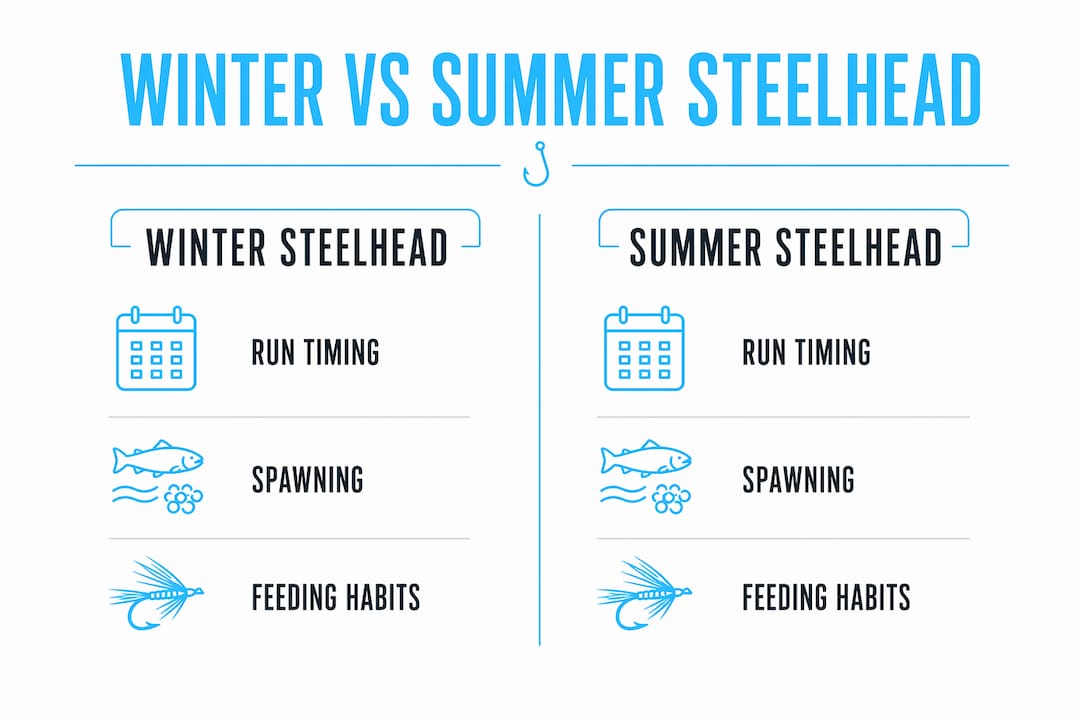
| Run Type | Typical Freshwater Entry | Spawning Window | Freshwater Residence |
|---|---|---|---|
| Winter | November – April | February – May | Days to a few weeks |
| Summer | May – October | February – May | Extended months |
| Coastal winter | November – March | March – April | Short; spawn near tidewater |
| Inland/Columbia Basin summer | June – September | March – May | Extended; overwinter in river |
Geography matters a lot here. Coastal watersheds — think Oregon’s Siletz or Washington’s Hoh — tend to host shorter migrations and tighter timing windows. Inland systems, particularly the Columbia Basin, are almost exclusively summer-run because the fish need to arrive early to survive the long push to high-elevation headwaters. Inland populations face dams, warm mainstem temperatures, and migration distances that would be impossible for a fully ripe fish to survive. Some rivers host both run-types; most are dominated by one. Learn your local system — it changes everything about when to show up and what to expect.
- Coastal rivers with short migration distances tend to host winter-dominant runs.
- Long-migration inland rivers favor summer-run fish that arrive early and mature in freshwater.
- Some systems host overlapping runs, requiring anglers to read current conditions and signage carefully.
What sexual maturity at river entry actually means for each run
“Mature on entry” isn’t just a biology term — it has real consequences on the water. Winter steelhead arrive with developed eggs and milt, meaning their bodies are already burning through reserves to fuel reproduction. They’re not feeding to grow; they’re running on fumes toward the gravel. Summer fish, by contrast, enter the river in a physiologically immature state and spend months developing gonads while holding in freshwater. Their bodies store and manage fat to fuel that long staging window.
The metabolic difference shows up in how each fish looks and acts. A ripe winter hen will have a distended belly, softening flanks, and skin that’s already shifting toward spawning color. A summer buck fresh from the ocean looks like a chrome missile — tight, muscular, and aggressive. As summer fish stage through the warmer months, they gradually develop the darker hues, pronounced kype, and lateral stripe that signal approaching spawning condition.
- Winter fish: Gonads fully developed on entry; energy allocated toward rapid spawning, not feeding.
- Summer fish: Gonads develop over months in freshwater; fat reserves fuel the extended staging period.
- Appearance shift: Summer fish enter silver and brighten; winter fish can shift to spawning color quickly after entry.
- Vulnerability: Ripe winter fish are physiologically stressed — handling time matters more than ever.
Pro Tip: For ripe winter fish, keep them in the water as much as possible. Wet your hands before touching the fish, skip the grip-and-grin if the belly is soft, and point the fish upstream in moderate current until it kicks away strong. A fish that close to spawning is carrying the next generation.
How to tell winter and summer steelhead apart in the field
Winter steelhead generally run larger than summer fish on average, a product of their different life-history demands. They enter the river with more body mass because they’ve been maturing at sea longer and need reserves for a compressed spawning window. Summer fish tend to be leaner and more athletic-looking on entry, though they can put on condition during their long freshwater staging.
Visual cues to watch for:
- Coloration: Summer fish enter bright silver with a faint pink lateral stripe; winter fish often show more color on arrival and darken fast.
- Body shape: Winter fish tend to be deeper-bodied and heavier through the midsection; summer fish look more streamlined.
- Kype development: Males of both runs develop a hooked jaw as spawning approaches, but winter fish often show it on entry.
- Belly condition: A soft, distended belly on a hen almost always signals a winter fish close to spawning.
- Scale and skin condition: Fish that have been in freshwater for months (summer staging fish) may show more scale wear and skin abrasion.
One honest caution: hatchery influence, river-specific genetics, and year-to-year variation mean size alone is a shaky identifier. A big summer buck can outweigh a small winter hen. Learn the run composition of your specific river before drawing conclusions from a single fish.
Where each run holds and how actively they feed
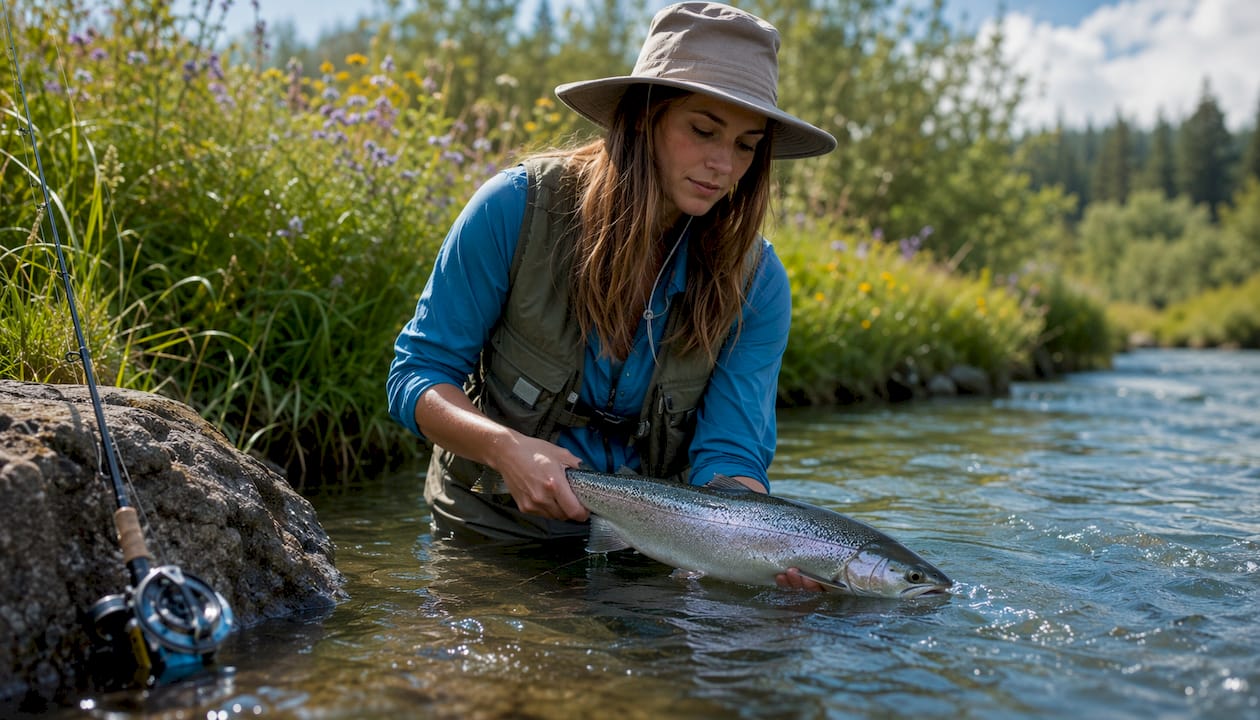
Holding water preferences split sharply between run-types, and understanding that split is how you stop fishing empty water. Winter steelhead push upriver hard, often moving through faster water and holding in deeper pools and bucket-style tailouts where they can rest. Cold water — often below 45°F — slows their metabolism and compresses the bite window to the warmest part of the day, usually late morning into early afternoon. When water temps drop into the low 40s or below, winter fish can go nearly lockjaw.
Summer fish stage differently. They seek temperature refuge aggressively, holding in cold-water tributaries, deep shaded pools, and cold-water plumes during warm mainstem conditions. River temperatures above 20°C (68°F) can halt migration entirely. But when conditions are right, summer fish are often more aggressive biters — they’ve been in the river long enough to acclimate, and they’ll move for a well-presented lure. Learning to read steelhead holding water is the single skill that separates productive days from blank ones, regardless of run-type.
- Winter fish: Deep pools, bucket tailouts, slower inside seams; bite window tied to daily temperature peak.
- Summer fish: Cold-water refuges, shaded deep runs, tributary mouths; more willing to move for a lure when comfortable.
- Ripe winter fish: Less aggressive as spawning approaches; focus on fish that have just entered, not fish on the redds.
- Temperature rule: Below 45°F, slow everything down for winter fish. Above 68°F, summer fish may stop moving entirely.
How to fish winter vs. summer steelhead: tactics and gear
The biology tells you what to throw and how to fish it. Winter steelhead in cold, off-color water need presentations that get down fast and stay in the zone. Drift baits like cured roe, sand shrimp, and beads are workhorses. Jigs under a float excel in slower pools. Spoons and spinners work when fish are actively moving — a Colorado blade spinner pulsed slow and deep through a tailout can trigger a strike even from a sluggish winter fish. Yes, winter steelhead bite spinners — they’re often more effective than bait when fish are fresh and moving.
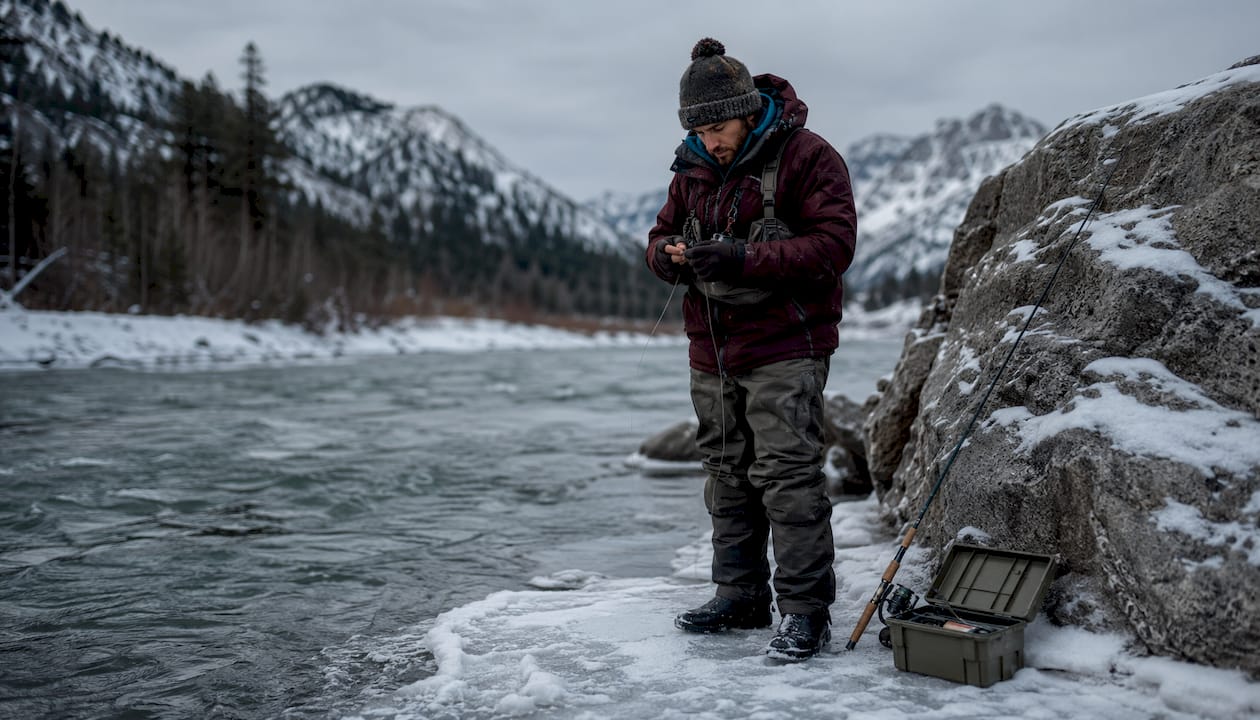
Summer fish in clear, warmer water call for a lighter touch. Drop leader weight, go longer on your leader, and fish smaller presentations. Spinners and spoons shine here because summer fish are more aggressive and willing to chase. Drift fishing with lighter beads or small jigs in clear water can be deadly. The right fishing line matters — fluorocarbon is the standard for steelhead leaders because of its low visibility, and 10–20 lb fluorocarbon covers most winter scenarios depending on water clarity and fish size. Summer fish in clear low flows often call for dropping to 8–12 lb.
| Tactic Category | Winter Steelhead | Summer Steelhead |
|---|---|---|
| Primary presentations | Roe, shrimp, jigs, heavy spoons | Spinners, small spoons, light jigs, beads |
| Leader material | Fluorocarbon, 10–20 lb | Fluorocarbon, 8–12 lb |
| Retrieve speed | Slow; keep bait in the zone | Moderate to aggressive; fish will chase |
| Depth focus | Deep pools, bottom of tailouts | Mid-column to surface in clear runs |
| Water clarity adjustment | Fish heavier in off-color water | Go lighter and longer in clear conditions |
Pro Tip: Set your drag lighter than you think you need to. A ripe winter fish that surges downstream in cold current will snap 15 lb fluorocarbon on a locked drag before you can react. Give it line, trust the hook, and fight the fish on the reel.
Terminal gear checklist for winter steelhead:
- Fluorocarbon leader, 10–20 lb, 18–36 inches
- Size 1/0 to 3/0 octopus or egg hook (barbless where required)
- Pencil lead or slinky rig for drift fishing
- Float sized to the current speed
- Swivel to prevent line twist on spinners
Check the full steelhead terminal gear checklist for a complete PNW-specific breakdown.
Why run-type diversity matters for steelhead conservation
Having both winter and summer runs in a watershed isn’t redundancy — it’s insurance. The two run-types occupy completely different seasonal niches, which means a drought that hammers summer flows doesn’t necessarily wipe out winter spawners, and a warm winter that disrupts winter-run timing doesn’t touch summer fish staging in cold headwater tributaries. That portfolio effect is exactly what conservation organizations like Trout Unlimited and the Wild Steelhead Coalition point to when arguing for protecting both timings.
Regional assessments, including studies of the Klamath Mountain Province, treat winter and summer runs as distinct life-history variants with different habitat needs and separate management requirements. NMFS manages some populations by run-timing under the Endangered Species Act. That means the rules on your river may differ by run-type — check local regulations and signage every season, not just once.
Angler best practices:
- Use barbless hooks wherever regulations allow or require them.
- Minimize time out of water — 15 seconds or less for ripe fish.
- Avoid fishing on or near active redds; spawning fish are not a target.
- Report unusual observations (early/late fish, distressed fish) to your state fish and wildlife agency.
- Follow all seasonal closures; some runs are managed separately and closures protect specific timing windows.
The genetics behind why these runs are different
This isn’t just a behavioral quirk — it’s written into the fish’s DNA. Research has identified a major-effect genomic region, associated with loci including GREB1L, ROCK1, and Omy5, that strongly predicts whether a steelhead follows the ocean-maturing (winter) or stream-maturing (summer) life history. The same genomic region appears across multiple populations, confirming this is a heritable life-history strategy, not a plastic response to local conditions.
The evolutionary logic is clean. Summer runs likely evolved to access distant, high-elevation spawning grounds that a fully ripe fish could never survive to reach. Arriving months early, maturing in freshwater, and waiting out harsh conditions is an adaptive solution to a long, obstacle-filled migration. Winter runs, by contrast, mature at sea where food is abundant, then sprint to spawning gravel shortly after entering freshwater. Two strategies, same species, both shaped by millions of years of selection pressure.
For anglers and managers, the practical takeaway is this: you cannot manage one run-type as a proxy for the other. River-specific genetics mean some systems are dominated by one run-type, and local run composition should drive both your fishing strategy and your conservation expectations.
Key finding: The GREB1L/ROCK1/Omy5 genomic region is one of the strongest known genetic predictors of migration life history in Pacific steelhead — a single chromosomal region with outsized influence on when and how a fish returns to spawn.
Key Takeaways
Winter steelhead enter freshwater mature and spawn quickly; summer steelhead enter immature and stage for months, and that biological split drives every meaningful difference in size, behavior, and angling tactics.
| Point | Details |
|---|---|
| Run timing split | Winter fish enter November–April; summer fish enter May–October and can stage up to 10 months. |
| Maturity on entry | Winter fish arrive ripe and spawn fast; summer fish develop gonads over months of freshwater staging. |
| Size and condition | Winter steelhead generally run larger; summer fish enter bright silver and leaner. |
| Tactics by run-type | Use heavier leaders (10–20 lb fluorocarbon) and slow presentations for winter; go lighter and more aggressive for summer. |
| Conservation action | Both run-types need protection — portfolio diversity buffers the species against seasonal catastrophes. |
A field perspective on reading the run
There’s a moment on the river that tells you everything. You’re watching a pool in late June, and the fish holding there are chrome-bright, barely moving, stacked in the coldest seam they can find. Those are summer fish. They’ll be there in August. They might still be there in October. Compare that to a February morning when the river’s running green and cold after a rain push — the fish you’re seeing are moving, dark, and urgent. They showed up last week and they’re already looking for gravel.
That contrast is the whole game. Summer fish reward patience and precision. Winter fish reward showing up when the river is right and fishing fast water hard. When I’m targeting winter fish in off-color conditions, I go heavier on the leader, slow the drift down, and keep the bait on the bottom longer than feels comfortable. For summer fish staging in clear low water, I drop to lighter fluorocarbon and let a spinner work the current rather than forcing it.
Gear that performs in both conditions matters. Highclasstackleco’s terminal tackle and components are built for real PNW river conditions — the kind of water that tests your knots, your hooks, and your patience in the same drift.

Useful sources for deeper reading
- Oregon Department of Fish & Wildlife — How to Fish for Steelhead: Covers run timing, maturity differences, and Oregon-specific regulations and seasons.
- Wild Steelhead Coalition — Steelhead 101: Accessible primer on steelhead biology, including winter vs. summer run distinctions and conservation context.
- Wild Steelhead Coalition — The Run Isn’t Just Smaller, It’s Simpler: Explains why run-type diversity matters for population resilience.
- Trout Unlimited — Summer versus Winter Steelhead: Angler-friendly breakdown of the biological and behavioral differences between run-types.
- Prince et al. — PMC Genetic Study (PMC10853649): Peer-reviewed research on the GREB1L/ROCK1/Omy5 genomic region and its role in steelhead migration life history.
- Wild Steelheaders United — Science Friday: Genetic Differences: Angler-accessible synthesis of the genetic research on run-timing differences.
- CalTrout — Klamath Mountain Province Winter Steelhead Assessment: Regional conservation assessment treating winter and summer runs as distinct management units.
- Oregon DFW — Steelhead Flyer: Quick-reference state document covering size, run composition, and local regulations.
- Yakima Bait — Drift Fishing for Winter Steelhead: Practical guide covering leader weights, terminal rigging, and presentation techniques for winter fish.
- PLOS One — Environmentally Triggered Shifts in Steelhead Migration Behavior: Research on temperature-driven migration delays in Columbia River summer-run steelhead.
Always confirm current season dates, closures, and regulations with your state fish and wildlife agency before fishing. Rules change by river, run-type, and year.
Recommended
- How Steelhead Enter Rivers: Migration Guide for Anglers – High Class Tackle Co.®
- Reading Steelhead Holding Water: River Guide 2026 – High Class Tackle Co.®
- Why Steelhead Fight Hard: Biology, Instinct, and Power – High Class Tackle Co.®
- Current’s Role in Steelhead Fishing: 2026 River Guide – High Class Tackle Co.®
0 comments