

Start with hi-vis braid to a mono bumper, an 8 to 12 lb fluorocarbon leader, and a size 2 to 4 hook behind a sliding slinky or pencil lead sized to the current. Run it on an 8.5 to 9 foot rod with a baitcaster or matched reel. This works because it keeps bottom contact, telegraphs subtle bites, and holds a drag-free drift better than a fixed-weight rig. Mend the second your line lands, then watch for any hitch in the tick. That hitch is your fish.
TL;DR:
- Using a sliding slinky drift rig with hi-vis braid or mono on an 8.5 to 9-foot rod improves bite detection and bottom contact.
- Matching weights, leader length, and bait presentation to water depth and current speed is crucial for neutralizing common drifting issues.
- Proper mend technique and water coverage most significantly influence hook-ups more than gear upgrades or knot quality.
- Short, pre-tied leaders and systematic coverage of seams help prevent leader wear and missed opportunities in varying river conditions.
- Staggered casting order and communication in boat drifts optimize line management and reduce tangles during team fishing.
Table of Contents
- Quick Setup Checklist and Rigs at a Glance
- Gear Breakdown: Rods, Reels, and Lines That Perform for Drift Fishing
- Rig Recipes and Terminal Tackle: How to Tie Effective Drift Rigs
- Presentation and Strike Detection
- Side-Drifting Specifics and Team Drift Etiquette
- Reading Water: Where Steelhead Hold and How to Fish Lanes Effectively
- Common Mistakes and Troubleshooting
- Field Notes From Nick and High Class Tackle Co.
- What Actually Separates Good Drifts From Great Ones
- Gear That Matches This Rig, Ready to Tie
- Sources
Quick Setup Checklist and Rigs at a Glance
Before you rig anything on the bank, get your bag squared away. Miss one item and you’re wading back to the truck while fish are biting.
- Rod (8.5 to 9 ft, moderate action) and matched reel
- Hi-vis braid or mono mainline, spare leader material
- Pre-tied leaders in 8 to 12 lb fluorocarbon
- Assorted hooks (sizes 2 to 4), slinky and pencil weights
- Needle-nose pliers, split shot, swivels, bead stops
- Stream thermometer, extra spools of leader
Three rigs cover most situations. The bobber and jig rig shines in slow, deep pockets where you want a natural, suspended presentation. The sliding slinky drift rig is your all-around workhorse for classic gravel runs and seams. The bottom-bounce rig earns its keep in heavier, boulder-strewn water where a slinky would hang up constantly. In freezing weather, carry a spare leader spool pre-tied at home. Tying knots with numb fingers on a riverbank at 28°F is a lesson you only need to learn once.
Gear Breakdown: Rods, Reels, and Lines That Perform for Drift Fishing
Rod choice comes down to where you’re standing. Bank anglers benefit from a longer rod, 8.5 to 9 feet, that stretches your reach across seams you can’t wade to and cushions the shock of a hot fish on light leader. Side-drifters from a boat can go slightly shorter since the boat itself does the positioning work. Many experienced steelhead anglers settle on an 8.5-foot rod rated for 8 to 12 lb test as the general-purpose standard, adjusting up or down based on lure weight and river size.
Reels split into three camps. Baitcasting or level-wind reels give you thumb control over the spool, which matters when you’re feeding line into a drift instead of just casting it out. Spinning reels handle light lures and finesse casts better, especially for smaller creeks. Center pin reels are a specialist’s tool, built for anglers who float bait through long runs with almost zero drag, but they demand practice most weekend anglers won’t put in right away.
Mainline is where anglers argue the most, and for good reason.
- Braid with a mono bumper: near-zero stretch, excellent sensitivity, but braid freezes in cold weather and its low visibility underwater cuts against you in gin-clear conditions unless you run hi-vis colors above the waterline.
- Straight mono: forgiving, doesn’t freeze, but the stretch dulls your feel for the bottom tick.
A short mono bumper joined to braid with an Alberto knot solves the freeze problem and softens the “shadow line” that spooked fish notice in ultra-clear water. Set your drag light enough to give line on a sudden take, but tight enough to keep contact with the lead.
Pro Tip: Check your leader knot before every third or fourth drift. Bottom rock chews through fluorocarbon faster than most anglers realize, and a nicked leader is the quiet difference between landing a fish and losing your whole rig.
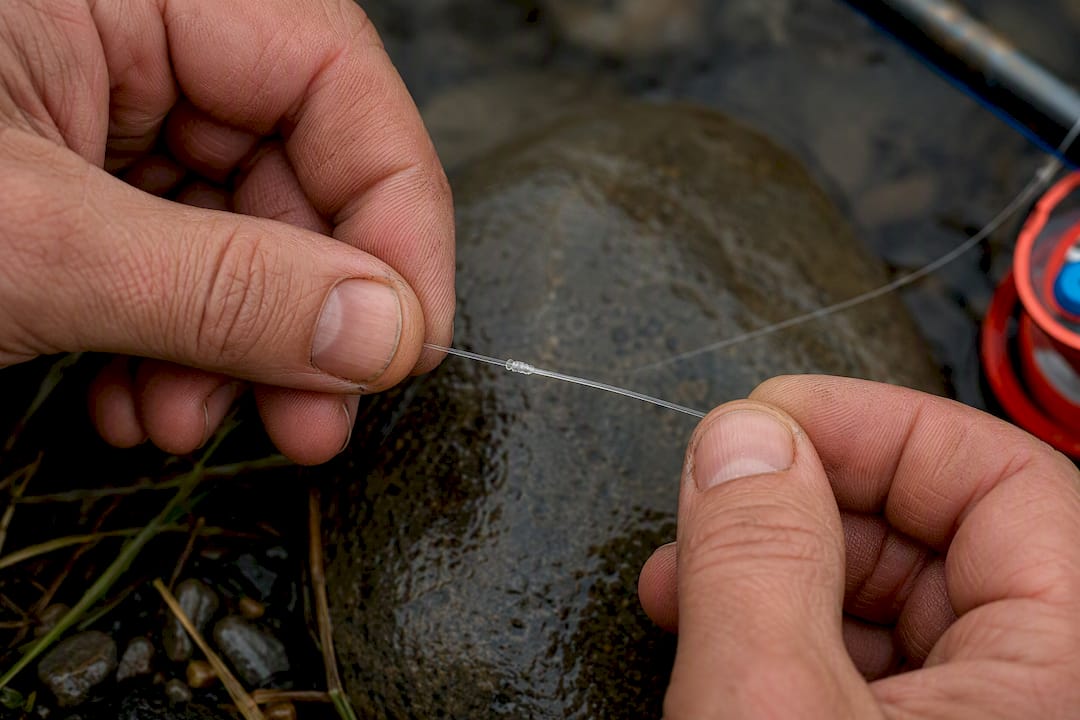
Rig Recipes and Terminal Tackle: How to Tie Effective Drift Rigs
These three rigs cover nearly every situation you’ll run into on a steelhead river.
- Sliding slinky drift rig. Thread a bead onto your mainline, tie on a barrel swivel, then attach a dropper line of 4 to 6 inches to your slinky weight. Below the swivel, tie 3 to 5 feet of 8 to 12 lb fluorocarbon leader to your hook. A slinky between 1/4 and 3/4 ounce handles most steelhead rivers, and because it slides freely on the mainline rather than sitting fixed, it telegraphs bites far better than a rigid sinker and shakes free of rocks instead of hanging up.
- Float and jig rig. Set your float stop so the jig rides 6 to 12 inches off bottom, adjusting as the depth of the run changes. Use a short leader, 18 to 24 inches, between the float’s terminal weight and the jig itself. This rig wins in slow, deep holes where a bait needs to hang and hover rather than tumble.
- Bottom-bounce rig. Swap the slinky for a pencil lead pinned into a dropper loop, and shorten your leader slightly to keep the bait tracking close to the lead in boulder-heavy water.
Hook size and bait pairing matter as much as the rig itself. Size 2 to 4 hooks handle single eggs, egg clusters, and beads well. Corkies paired with a small piece of yarn or a wax worm work as a searching bait when scent alone isn’t drawing strikes. For a dropper fly presentation, tie a small marabou or Glo Bug 4 to 6 inches above your main hook on a short tag line. Drop your leader length in low, clear water and lengthen it when the river runs off-color.
Presentation and Strike Detection
Cast at roughly a 45 degree angle upstream and let the weight sink before the current sweeps your line downstream. The instant your rig lands, throw an upstream mend. This single habit fixes more missed bites than any piece of gear you could buy. In fast current, that first mend can be swallowed by the flow in three to four seconds, which means a second mend is often necessary to keep the drift natural through the whole run.
From there, follow your rod tip downstream at the same pace as the current, feeling for the steady tick of your lead bouncing bottom. Experienced anglers build a mental baseline for that rhythm. Any hesitation, softness, or dead stop in the tick gets treated as a potential fish, and the response is a quick reel-tight rather than a big sweeping hookset that can rip the hook free.
- Solid, rhythmic tick = bottom contact, all normal
- Sudden mushy stop = likely a fish, reel tight immediately
- Line goes slack = weight lifted off bottom, mend again
- Sharp tap-tap = smaller fish testing the bait, hold steady
Water temperature changes how aggressive that take feels. Guides consistently point to the 41 to 50°F window as when steelhead hit hardest and most obviously. Below 40°F, expect takes so subtle they barely register as a hesitation, which means your bait placement has to be closer to perfect and your attention has to be sharper. Let every drift finish with a controlled swing near the tail-out. Fish often grab on the hang-down when the bait rises off bottom.
Side-Drifting Specifics and Team Drift Etiquette
Side-drifting from a drift boat or jet sled solves a problem bank anglers can’t: it lets you match boat speed to current speed, producing a longer, nearly drag-free drift through narrow slots that a stationary angler simply can’t reach. Leaders tend to run slightly shorter than a bank setup, since the boat itself is doing the drifting work instead of the current alone.
Casting order matters more in a boat than most new anglers expect. The angler in the back casts first and shortest, the middle angler casts next and slightly farther, and the front angler casts last and longest. This staggered sequence keeps three lines from crossing into one tangled mess.
- Weight should tick bottom every six to eight feet through the drift
- Present baits 15 to 30 inches off bottom in narrow pockets and slots
- Call out “fish on” immediately so the guide can clear other lines
- Keep hands and rod tips inside the boat rails once a fish is running
Read more on boat-based tactics and gear adjustments in our side-drifting steelhead guide.
Reading Water: Where Steelhead Hold and How to Fish Lanes Effectively
Steelhead don’t spread evenly through a river. Effective drift fishing comes down to finding the small percentage of water they actually hold in: current breaks, tail-outs, seams behind boulders, and the soft edges tucked against undercut banks and root wads.
- Tail-outs where a run flattens into a pool
- Seams where fast and slow water meet behind a rock
- Root wads and log jams offering current relief
- Soft, slower water tight against the bank
Match your weight and leader length to depth and speed. Shallow, quick riffles call for a lighter slinky and shorter leader so the bait tracks near bottom without constant snags. Deep, slow pools need more weight and a longer leader to let the bait fall naturally into the strike zone. Fish each run systematically, close, then middle, then far, stepping downstream a few feet between drifts so you cover the entire lane instead of just the water directly in front of you. For a deeper breakdown of seam types and current breaks, see our guide to reading steelhead holding water.
Common Mistakes and Troubleshooting
Most drift fishing problems trace back to one of a handful of fixable habits.
- Over-weighted rig: constant drag instead of a rhythmic tick means drop to a lighter slinky
- Horseshoe line: skipped mend or bad cast angle, mend immediately and adjust your upstream angle
- Braid freeze in cold weather: switch to a longer mono bumper section or run straight mono
- Missed subtle takes: shorten your hookset to a quick reel-tight instead of a full sweep
- Bites suddenly stop: check leader for nicks, confirm depth, and vary retrieve speed slightly
Pro Tip: When bites dry up mid-run, don’t just change bait first. Check your weight size against the current speed. A slinky that was perfect in the last run might be dragging or bouncing wrong in this one.
Field Notes From Nick and High Class Tackle Co.
Years spent chasing steelhead through Pacific Northwest rivers shaped how the terminal tackle lineup is built, from hook gap to bead sizing. For deeper technique breakdowns, check our guides on hook types for steelhead and reading holding water.
What Actually Separates Good Drifts From Great Ones
Most drift fishing advice obsesses over the perfect rig diagram and skips the part that actually catches fish: what happens in the first three seconds after your bait hits the water. The mend matters more than the knot. I’d rather hand a beginner a simple slinky rig and drill the immediate-mend habit into them than hand them a complicated multi-weight setup they’ll fumble on the bank.
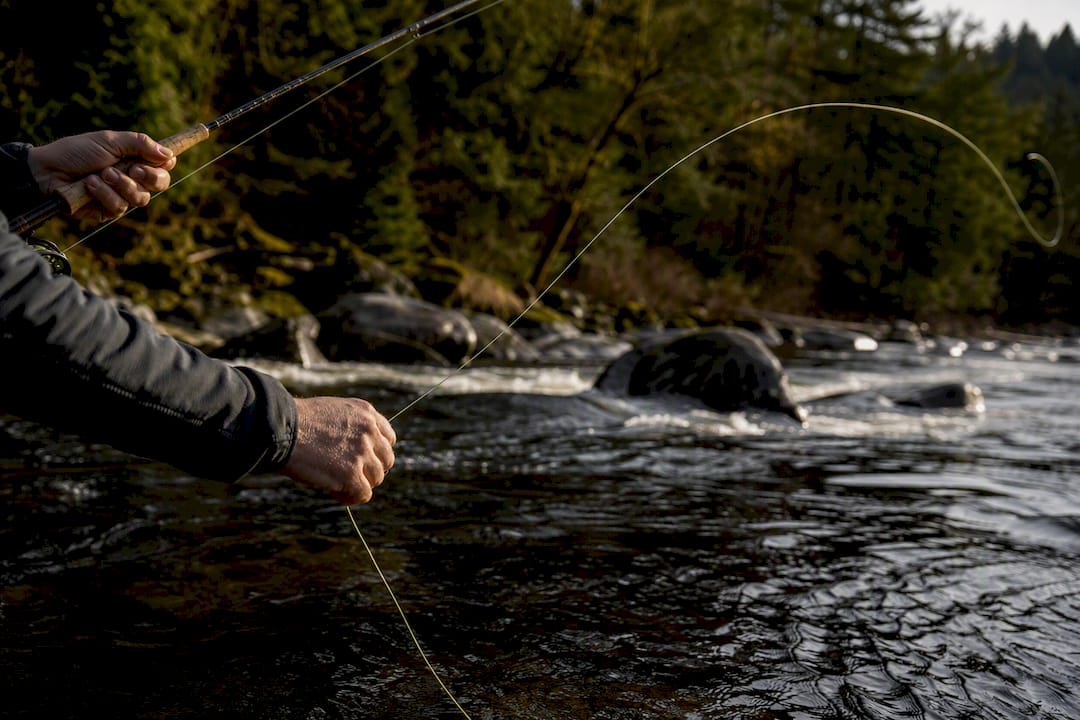
The conventional wisdom oversells gear precision and undersells repetition. You don’t need six leader lengths in your vest. You need one solid rig, tied right, fished through enough seams that reading the tick becomes automatic. Where anglers actually lose fish isn’t a wrong hook size. It’s hesitating on a soft take because they weren’t sure if that was a rock or a fish.
Prioritize the mend, the tick rhythm, and covering water systematically before you chase gear upgrades. Everything else is a smaller lever.
— Nick
Gear That Matches This Rig, Ready to Tie
Every rig in this guide runs on the same short list of components: sliding weights, hooks in the right sizes, quality leader, and beads that won’t crack in cold water. High Class Tackle Co. built its terminal tackle and components collection around exactly that list, with hook sizes and leader materials sized for real steelhead water instead of generic assortments padded with sizes you’ll never use.

If you’d rather skip tying leaders one at a time on a cold riverbank, the new component tackle box packs pre-sorted hooks, beads, and small parts so you can rig on the water instead of at the vise. Grab what your next run calls for and go find that tick.
Sources
- Proven tactics to catch more steelhead in the Pacific Northwest - Game & Fish
- Drift fishing for steelhead (LakeErieFish)
- How to drift fish for steelhead without missing bites - Master Fishing Mag
0 comments